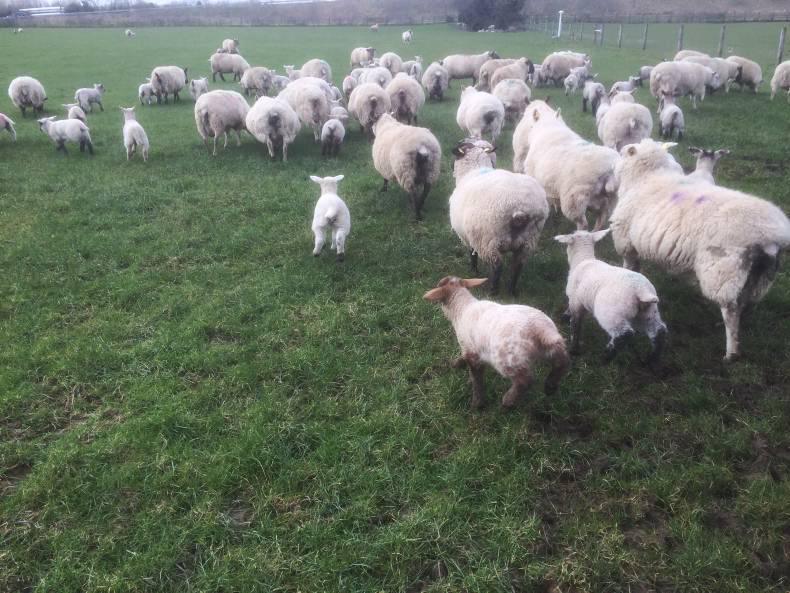
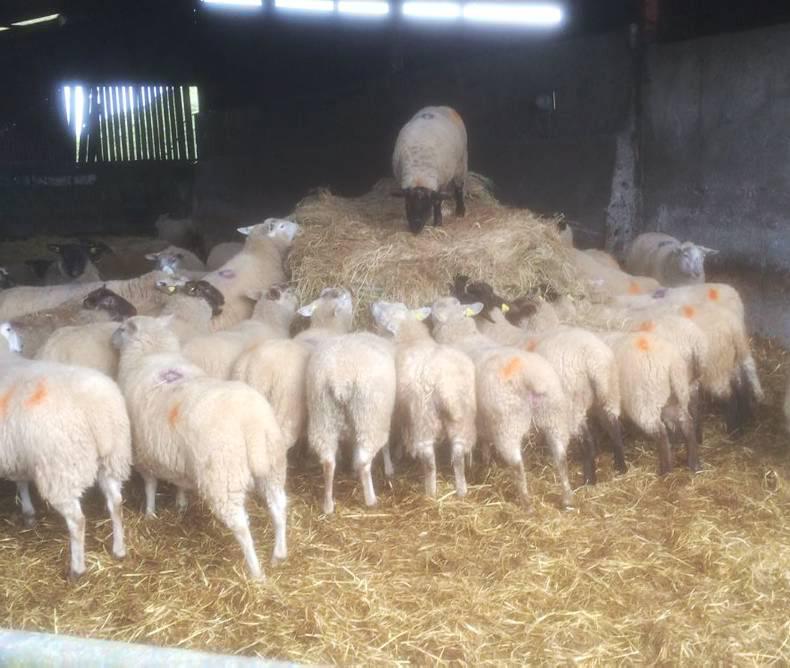
We only have 16 mature ewes left to lamb, with the ewe lambs due to lamb from 25 March onwards.
Lambing went as quick and as good as I can remember in a long time. Apart from four caesarean sections, we had very little bother. Ewes and lambs are all at grass. The only ones receiving meal are six ewes that are all rearing triplets we didn’t get fostered.
Two of my key criteria for judging lambing are:
How much colostrum we had to buyHow many pets we have (A lamb that cannot be fed by its mother; dead or no milk)The answer to question one was one small container, and question two is two pets so far.
I know a lot of you will say that they might be funny or stupid criteria to be judging a lambing season on, but they are two vitally important ones.
If you have to buy a lot of colostrum or get in a lot of cow’s colostrums, then there is a big question to be asked.
Tight margins
If the ewes don’t have enough colostrum it puts everything on the back foot straight away in terms of lamb viability, health issues (ie watery mouth), and most of all it takes up huge time and labour trying to mind lambs that the ewe cannot.
You should not have to be going around stomach-tubing lambs 24/7. The margins in sheep farming are tight. You want a ewe that can lamb down largely unassisted and be turned out within 24 hours to grass and to rear her lambs – job done.
With this in mind, when it comes to drafting your first load of lambs in May/June, hold back the first 20 or 25 ewe lambs, or whatever the number you need for replacements. These ewe lambs off the first few drafts will have come from the best/milkiest ewes with the best growth rates.
I know it’s very hard to do. It’s possibly the first cheque of the year coming in, but sometimes you have to play the long game.
Working at a high percentage
The reason I use the number of pets as a criteria for a successful lambing is much the same as question one.
We have not got a massively prolific flock and unless you are lambing a high percentage of triplets you should not be ending up with many pets.
Obviously you will have ewes with no milk or a ewe dies and you end up with more pets, but with scanning figures for most of the country at the 1.75 to 1.90 your ewe should be able to rear her lambs. We want a flock of ewes here that will scan 1.85 or a bit better in future years. With figures like this we should not be having many pets. If we do, something is going wrong somewhere.
Lambing markets
You don’t have to buy easy keep ewes to have an easy keep system.
Now is the time to think about the past few weeks and its problems and put in place a plan to improve things for next year.
I note with interest John Fagan’s article in the Irish Independent earlier this week that triplets are just “hassle” and they are; he is one hundred percent correct.
There is no unending market out there for lamb meat. If every flock in Ireland was lambing two hundred percent you don’t need to be a genius to figure out what price lambs would be.
I do not want sheep quotas or the like but as with all commodities, there is a limit to the price achievable depending on volumes produced and volume demanded by the consumer.
Read more
Farmer Writes: The business of farming and Q1 results
Farmer Writes: Spring has finally sprung
We only have 16 mature ewes left to lamb, with the ewe lambs due to lamb from 25 March onwards.
Lambing went as quick and as good as I can remember in a long time. Apart from four caesarean sections, we had very little bother. Ewes and lambs are all at grass. The only ones receiving meal are six ewes that are all rearing triplets we didn’t get fostered.
Two of my key criteria for judging lambing are:
How much colostrum we had to buyHow many pets we have (A lamb that cannot be fed by its mother; dead or no milk)The answer to question one was one small container, and question two is two pets so far.
I know a lot of you will say that they might be funny or stupid criteria to be judging a lambing season on, but they are two vitally important ones.
If you have to buy a lot of colostrum or get in a lot of cow’s colostrums, then there is a big question to be asked.
Tight margins
If the ewes don’t have enough colostrum it puts everything on the back foot straight away in terms of lamb viability, health issues (ie watery mouth), and most of all it takes up huge time and labour trying to mind lambs that the ewe cannot.
You should not have to be going around stomach-tubing lambs 24/7. The margins in sheep farming are tight. You want a ewe that can lamb down largely unassisted and be turned out within 24 hours to grass and to rear her lambs – job done.
With this in mind, when it comes to drafting your first load of lambs in May/June, hold back the first 20 or 25 ewe lambs, or whatever the number you need for replacements. These ewe lambs off the first few drafts will have come from the best/milkiest ewes with the best growth rates.
I know it’s very hard to do. It’s possibly the first cheque of the year coming in, but sometimes you have to play the long game.
Working at a high percentage
The reason I use the number of pets as a criteria for a successful lambing is much the same as question one.
We have not got a massively prolific flock and unless you are lambing a high percentage of triplets you should not be ending up with many pets.
Obviously you will have ewes with no milk or a ewe dies and you end up with more pets, but with scanning figures for most of the country at the 1.75 to 1.90 your ewe should be able to rear her lambs. We want a flock of ewes here that will scan 1.85 or a bit better in future years. With figures like this we should not be having many pets. If we do, something is going wrong somewhere.
Lambing markets
You don’t have to buy easy keep ewes to have an easy keep system.
Now is the time to think about the past few weeks and its problems and put in place a plan to improve things for next year.
I note with interest John Fagan’s article in the Irish Independent earlier this week that triplets are just “hassle” and they are; he is one hundred percent correct.
There is no unending market out there for lamb meat. If every flock in Ireland was lambing two hundred percent you don’t need to be a genius to figure out what price lambs would be.
I do not want sheep quotas or the like but as with all commodities, there is a limit to the price achievable depending on volumes produced and volume demanded by the consumer.
Read more
Farmer Writes: The business of farming and Q1 results
Farmer Writes: Spring has finally sprung
SHARING OPTIONS