


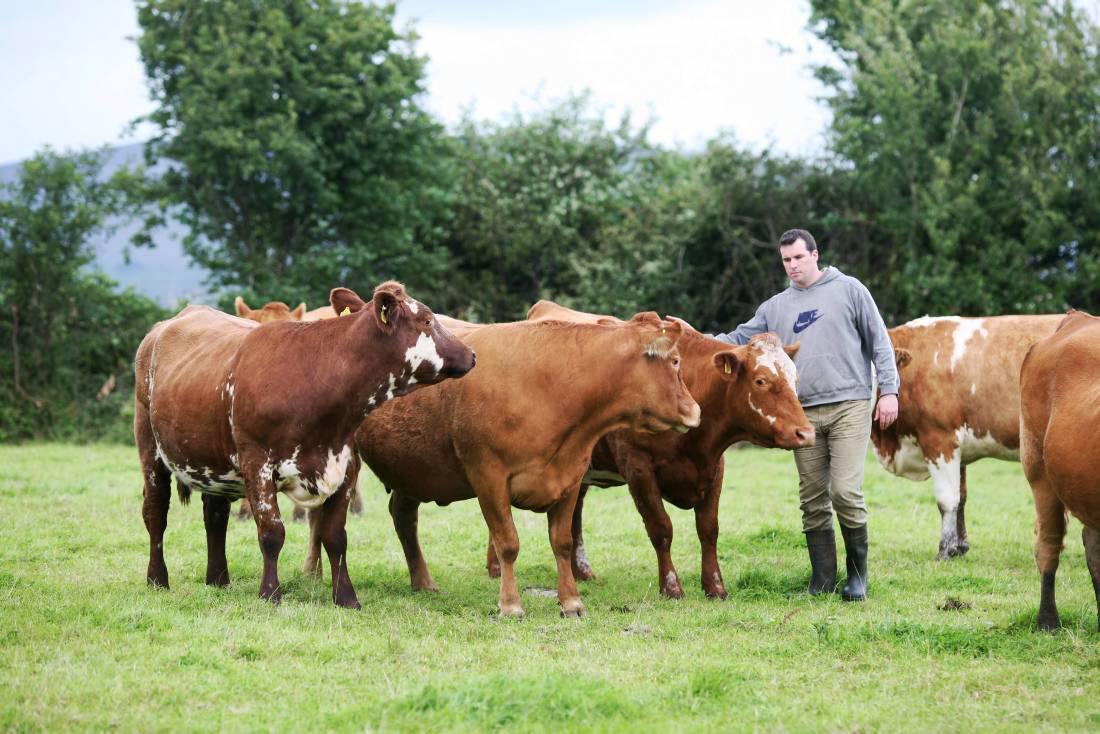
Breeding of cows and heifers started six weeks ago and so far all cows calved over forty days have been presented for artificial insemination (AI). All heifers have also been served either by AI or by the Saler stock bull.
If these all hold in calf, I will achieve a tight calving spread next year. While there are still a few cows to serve that calved later in the autumn, I am hoping to get these served over the next six weeks, which will give me a calving spread next year of 12 weeks. That’s the plan anyway!
Saler bull
The Saler bull was purchased locally last March with the intention of breeding replacement heifers. I choose the Saler breed because I saw from the couple of Saler cows in the herd at the time what good mothers they make.
On further research, I found they are easy calving, generally have good maternal instincts and I have noticed no temperament issues with them. All important traits in a suckler cow for a part-time farmer.
While I will continue to use AI to ensure I am using the best available genetics, the stock bull should help ease the work load in picking up cows and heifers that are in heat, especially later in the breeding season when they are harder to notice.
Body condition
At the moment, cows are in good body condition and showing strong heats. I would be disappointed if they were not. Calves are only allowed suck twice a day, mineral boluses and doses have been administered and silage quality is good. Results from my silage analysis show a DMD of 72 and protein content of 15%.
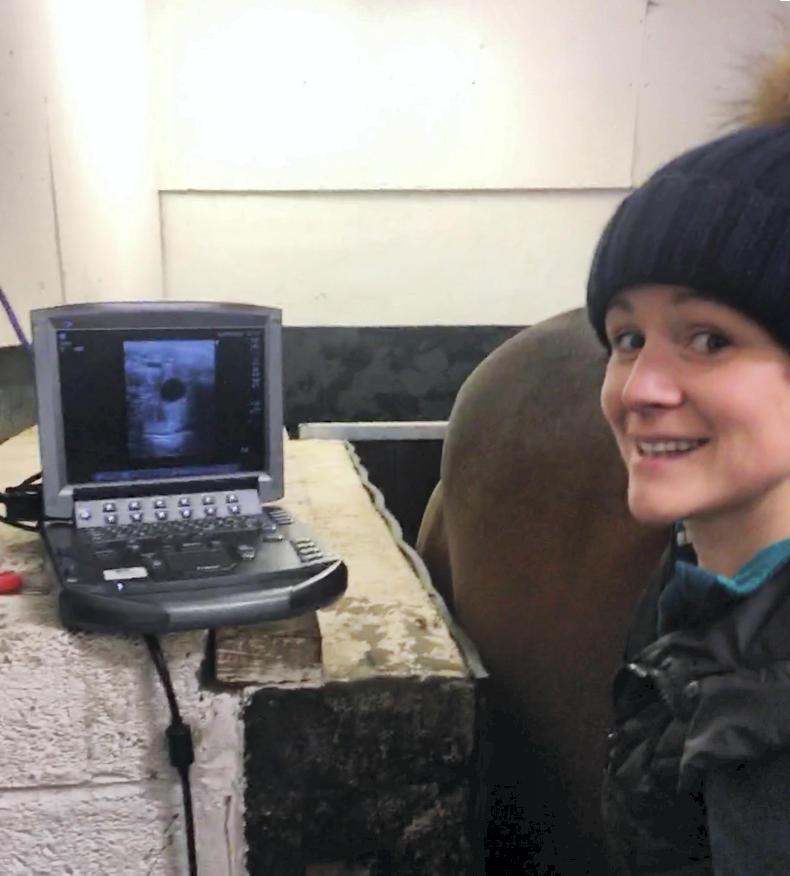
I will scan all cows and heifers early in the New Year to determine exactly how proficient my skills were at picking those ready for serving. While trying to build the number of cows in the herd and get to a 12 week calving spread is difficult to achieve simultaneously, every year I am getting a little closer.
Calving two-year-olds
Each year I am also calving more heifers as two-year-olds. Figures from my last ICBF report show I calved 29% of heifers as two-year-olds. However at the moment I have 46% of my heifers served to calve between 22 and 26 months. Heifers calved as two-year-olds to date are showing no adverse effects of calving younger and there is plenty of research out there to support the practice. The key is to use an easy calving sire on the heifer.
A tighter calving pattern and more heifers calving as two-year-olds are two targets for 2015. This should help ease the work load around the farm next year, and may even free up a bit of time for Christmas shopping.



SHARING OPTIONS