


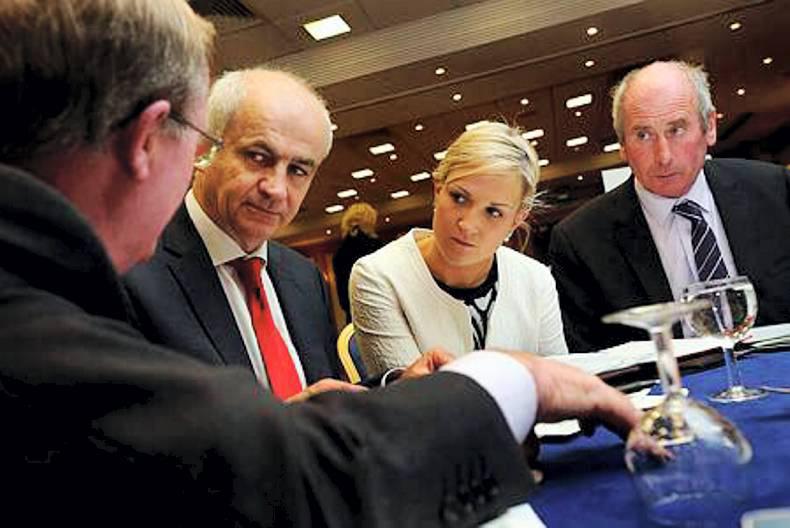
Farmers who are representing other farmers’ interests at a political level must register their interactions with politicians and civil servants under new legislation.
Legislation was passed earlier this year regarding how people interact with politicians and local representatives, as well as senior civil servants.
The new laws will be enacted from 1 September.
Speaking exclusively to the Irish Farmers Journal, Sherry Perreault, head of the new lobbying commission in Ireland, outlined some of the key responsibilities for those representing farmers.
“To be considered a person lobbying for the purposes of the act, you must be one of the following: a professional lobbyist; or an employer with more than 10 employees; or a representative or advocacy body with at least one paid employee; or anyone communicating about the development or zoning of land,” Perreault said.
“Designated public officials are ministers and ministers of state; members of the Dáil and the Seanad; Irish members of the European Parliament; members of local authorities; special advisers and senior civil servants, including secretaries general, assistant secretaries and director grades in local authorities.
“Relevant matters include the initiation, development or modification of policy, programme or legislation; the awarding of any grant, loan, contract, or of any licence or other authorisation involving public funds; or any matter involving the development or zoning of land.
‘‘If all of the above criteria are met, the person must register and file returns of their lobbying activities every four months in the online registry. Returns would disclose who is lobbying, who is being lobbied, the subject matter of the communication, the method and frequency of communication, and the intended result,” Perreault added.
Interaction
This means that if a farmer is representing other farmers and makes an inquiry regarding, for example, the distribution of State funds, then that interaction must be registered with the farmer’s organisation.
Perreault laid out what actually constitutes lobbying and why farmers might be lobbying without realising it.
“It is worth noting that lobbying activity can take many forms. A quick email, a chat on the phone or a chance encounter in the shop or on the street may be just as effective, and frequently used, as formal meetings in Leinster House. Regardless of the venue or level of formality, it must be registered,” Perreault concluded.
Related stories
New lobbying rules “add bureaucracy”, say farm organisations


SHARING OPTIONS