


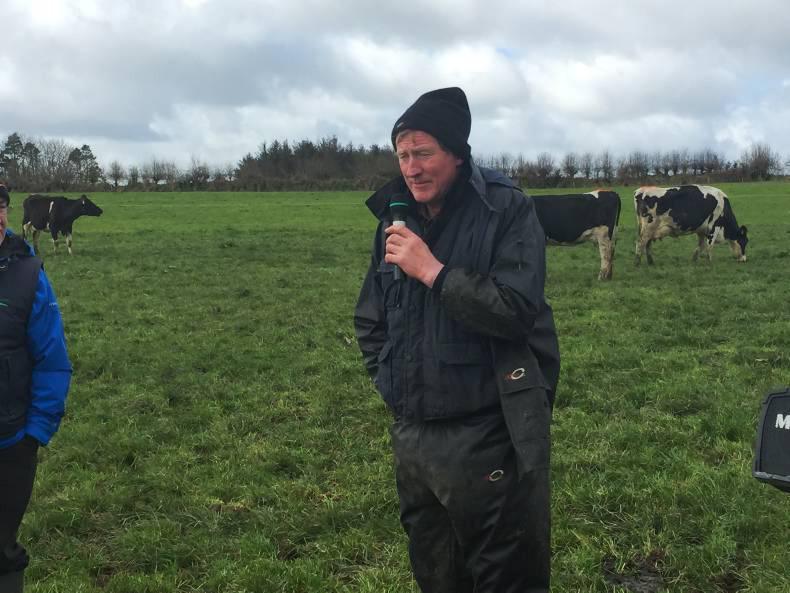
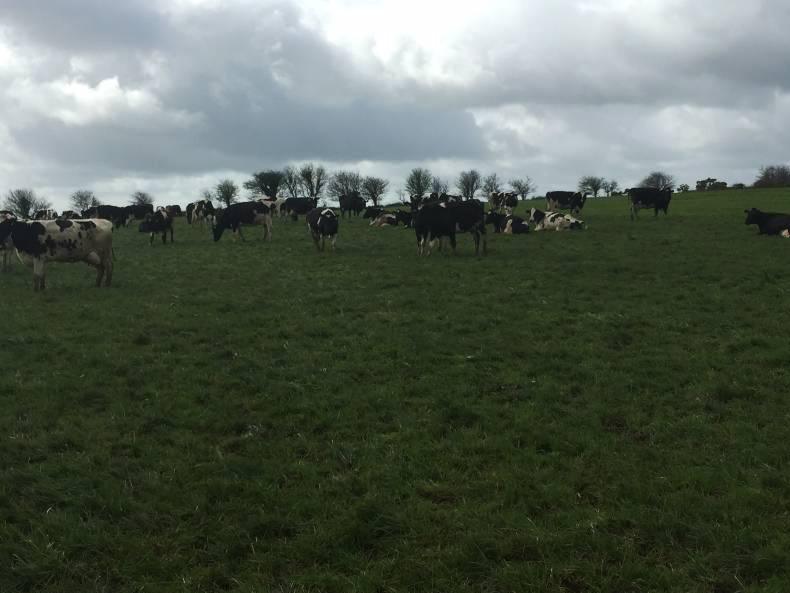
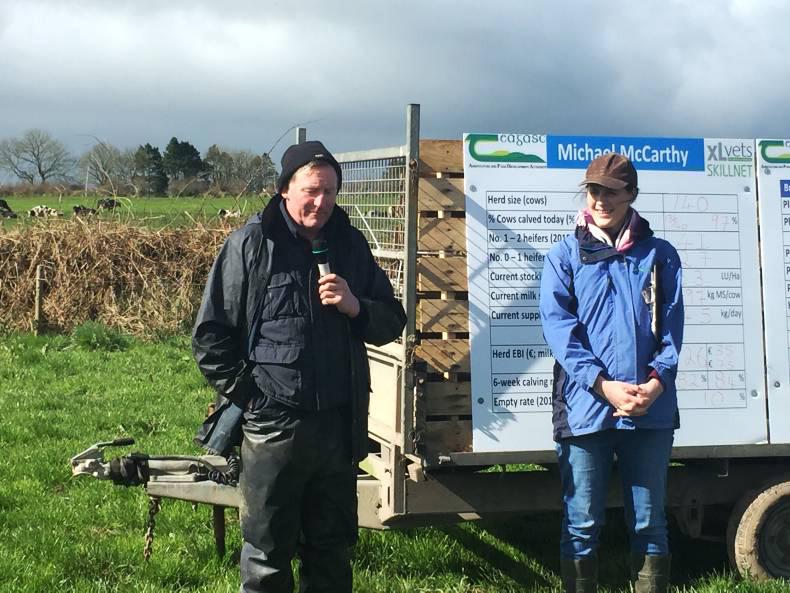
The rain held off for the Teagasc fertility farm walk held on Micheál McCarthy’s farm near Innishannon in west Cork. Speakers included local Teagasc adviser Grainne Hurley and fertility specialist Stephen Butler from Moorepark, along with Kevin O’Sullivan from XL Vets, who partnered Teagasc for the event.
Stephen Butler said the best measure of fertility performance is body condition score, and this is the case regardless of cow type or production system.
He said cows that are below condition score 2.75 at the start of the breeding season only have a 50% chance of going back in calf within the first two cycles or six weeks. Cows that lose more than 0.5 of a body condition score are most at risk, he said.
“Every cow will lose body condition score after calving, as her energy intake is less than her energy demand. Cows reach peak milk production between five and seven weeks after calving but only reach peak intake 10 to 12 weeks post calving. Having cows in the right condition score at calving is crucial.”
He said if cows are below condition score 2.75 now, they should be put on once-a-day milking for four or five weeks, or until they are bred, as this will reduce their energy demands.
“This is the best way of tackling this problem now, but overall, managing body condition score starts in the autumn by drying off thin cows earlier and calving cows down in the right condition score,” he said.
Strategy
This has been the strategy adopted by host farmer Micheál, who routinely dries off and feeds thinner cows earlier. He does this from September onwards. Last year he dried off seven or eight, mostly first or second calvers, and gave them an extra-long dry period.
Micheál is milking 136 cows on a 37ha milking platform (3.77 cows/ha). He has 53ha in total, supporting 27 heifer calves and 41 maiden heifers. Heifer calf numbers are back this year, as bull calves outnumbered heifers 2:1. Average EBI is on the low side, at €126, and this is something Micheál says he is working to improve.
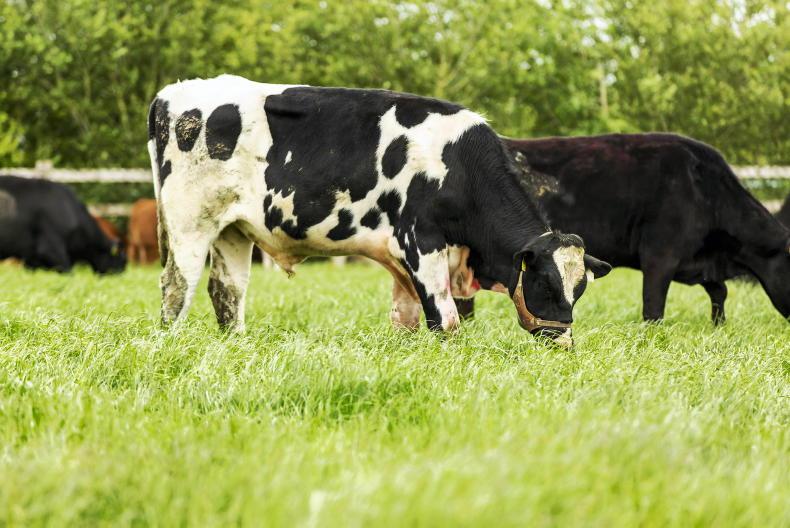
At the moment, he has eight cows on once-a-day milking, all second-calvers. They are still in the herd but are only being milked in the morning. They have tape on their tails, so he knows not to milk them at the evening milking, but they still come into the parlour and get meal.
Putting thin cows on once-a-day milking before breeding is something Micheál has been doing for a few years – with good results. As soon as the cows are inseminated, they go back milking twice a day. With 97% of the herd calved now, and 84% calved after six weeks this year, it looks as though the policy is working for Micheál.
Nutrition
Stephen Butler said breeding goals should be aimed at achieving long lactations from predominately grass-based diets. Average lactation length should be in excess of 285 days, he says, and to achieve this, compact calving is necessary.
This allows for more milk to be produced from grass. It also improves fertility, as the time period between calving and breeding is longer and cows have more time to cycle before going back in calf. All of which leads to increased profitability.
Stephen says every 10% increase in six-week calving rate for a 100-cow herd is worth €8,000.
“Nutrition has a role to play. Grass-based diets are high in protein, so high-protein concentrates should be avoided – definitely not any higher than 15% crude protein when there is sufficient grass in the diet,” he advised.
He said that energy may be a limiting factor in many herds at present because there is insufficient grass in the diet due to adverse weather, leading to difficult grazing conditions and a shortage of grass on many farms.
On minerals, he said that cows and grass should be sampled for mineral status.
In a study conducted on farms in 2013, he said there was a wide variation in the amount of minerals available to cows from grass-only diets, so some form of mineral supplementation is required on most farms.
Minerals
On average, grass-only diets provided between 38 and 85% of the mineral requirements of the cow.
The minerals tested were copper, phosphorus, iodine, zinc and selenium, all of which have an impact on fertility performance.
To get an accurate picture of the mineral status of your herd, and what your grass can provide, he encouraged farmers to blood sample a portion of the cows and take samples of pre-grazing yields from the second round of grazing and get them tested for minerals.
Management
Vet Kevin O’Sullivan was speaking about management at breeding and what farmers can do to improve results.
He encouraged farmers to check for endometritis, or dirty cows, four weeks before the start of breeding.
He said farmers can do this themselves by using a metricheck device. Any cows with dirty discharge should then be handled by a vet or a given a washout.
“Pre-breeding heat detection is a great way to identify non-cyclers and have them treated at the start of breeding, which will increase the submission rate.
“Review submission rate after three weeks; the target is 90% of the herd. Good records – from calving right through to breeding – are essential,” he says.
Kevin recommends getting non-cycling cows handled by a vet and using a CIDR or PRID synchrony programme and fixed-time AI if they are more than 30 days calved.
The programme of choice for Kevin is to give the cow a CIDR or a PRID and a shot of GnRH (Receptol). Pull the CIDR at day seven and give a shot of PG. After 56 hours, give another shot of GnRH, and 18 hours later inseminate the cow.
For heifers, the cheapest and most effective synchrony programme is to AI to standing heat for six days and then give a shot of PG to those not served and AI them to standing heat.
Any heifers not bulling after this period could be injected with PG on day 17 and should come bulling after this.




SHARING OPTIONS