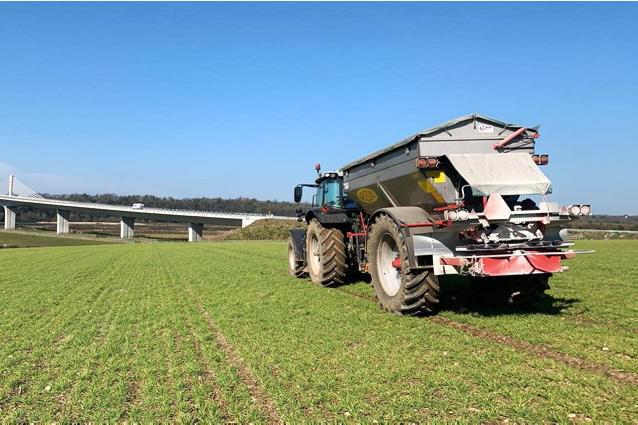
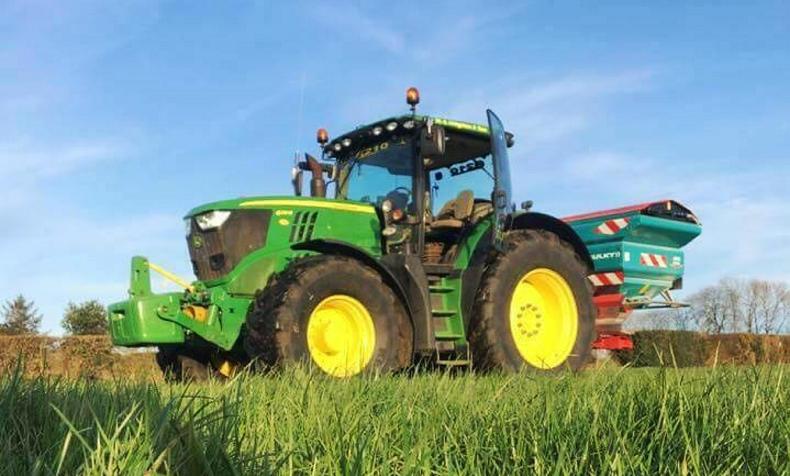
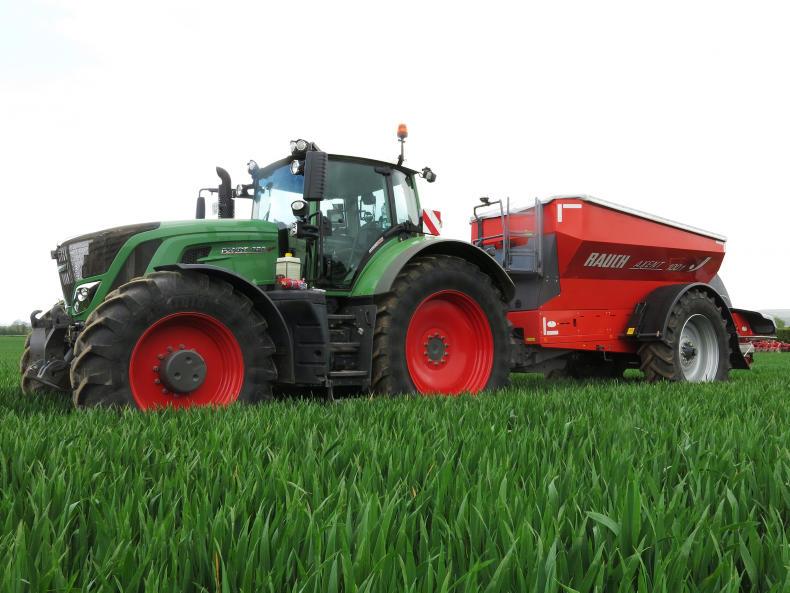
Modern spreaders now have the capability to work over much larger widths.
ADVERTISEMENT
This week, we look at the use of fertiliser from two angles: the role of machinery and understanding of what the soil needs.
Soil health and fertility are vitally important to produce high-yielding grass and cereal crops. Teagasc data suggests that the some soils in Ireland are still approximately 50% below where they to be need in terms of phosphorus (P), potassium (K) and soil pH. More alarming is that only 10% of soil samples analysed show optimum levels for all three of these. That means that 90% of them were somewhat deficient in one or a combination of these key soil fertility factors.
It is extremely important to analyse soil regularly, not just with soil testing but also to examine the structure. Underlying problems can affect the uptake of nutrients and crop performance, while the cost of fertiliser is significant on any farm.
ADVERTISEMENT
Modern spreaders now have the capability to work over much larger widths. In this section we look at the spreading performance on 24m bout widths in marginal conditions. Results were alarming, proving that wider working widths need all components involved to be correct. Fertiliser size and density, good weather conditions and a well-set machine are essential.
Technology is an ongoing expense on farms, and is likely to be aided with government support. However, this won’t solve the problems of poor fertiliser, worn machines, or poor decision making by the farmer and contractor.
This content is available to digital subscribers and loyalty code users only. Sign in to your account, use the code or subscribe to get unlimited access.
The reader loyalty code gives you full access to the site from when you enter it until the following Wednesday at 9pm. Find your unique code on the back page of Irish Country Living every week.
CODE ACCEPTED
You have full access to the site until next Wednesday at 9pm.
CODE NOT VALID
Please try again or contact support.
This week, we look at the use of fertiliser from two angles: the role of machinery and understanding of what the soil needs.
Soil health and fertility are vitally important to produce high-yielding grass and cereal crops. Teagasc data suggests that the some soils in Ireland are still approximately 50% below where they to be need in terms of phosphorus (P), potassium (K) and soil pH. More alarming is that only 10% of soil samples analysed show optimum levels for all three of these. That means that 90% of them were somewhat deficient in one or a combination of these key soil fertility factors.
It is extremely important to analyse soil regularly, not just with soil testing but also to examine the structure. Underlying problems can affect the uptake of nutrients and crop performance, while the cost of fertiliser is significant on any farm.
Modern spreaders now have the capability to work over much larger widths. In this section we look at the spreading performance on 24m bout widths in marginal conditions. Results were alarming, proving that wider working widths need all components involved to be correct. Fertiliser size and density, good weather conditions and a well-set machine are essential.
Technology is an ongoing expense on farms, and is likely to be aided with government support. However, this won’t solve the problems of poor fertiliser, worn machines, or poor decision making by the farmer and contractor.
If you would like to speak to a member of our team, please call us on 01-4199525.
Link sent to your email address
We have sent an email to your address. Please click on the link in this email to reset your password. If you can't find it in your inbox, please check your spam folder. If you can't find the email, please call us on 01-4199525.
ENTER YOUR LOYALTY CODE:
The reader loyalty code gives you full access to the site from when you enter it until the following Wednesday at 9pm. Find your unique code on the back page of Irish Country Living every week.






SHARING OPTIONS