


The Department of Agriculture, Food and the Marine (DAFM) and Agri-Food and Biosciences Institute (AFBI) released their live fluke forecasts mid-November. Both organisations point to a high risk of liver fluke infestation over the coming months.
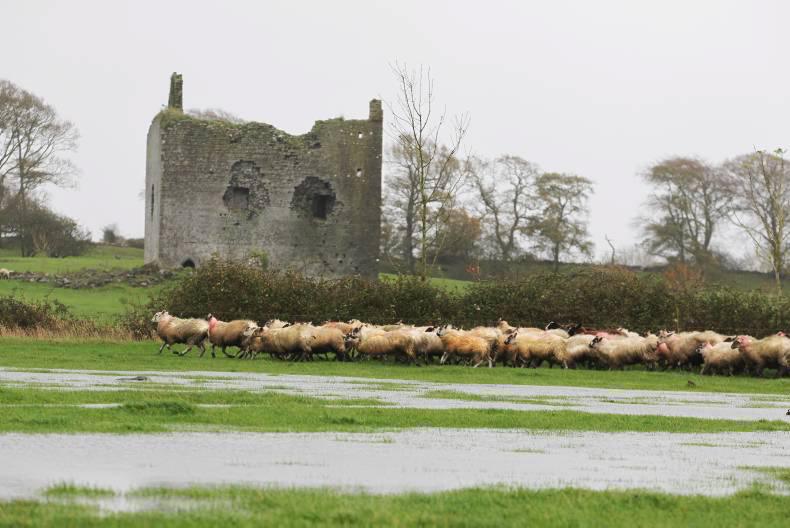
The DAFM forecast warns of a high risk along the Atlantic coastline with the northwest, west and south most at risk and a moderate threat in the east of the country. A similar situation is present in Northern Ireland, with AFBI forecasting a high overall risk of liver fluke with western areas particularly at risk.
Understanding the nature of liver fluke infestations and correct product choice is critical to preventing losses.
Once ingested, the larvae penetrate the intestinal wall, making their way to the liver.
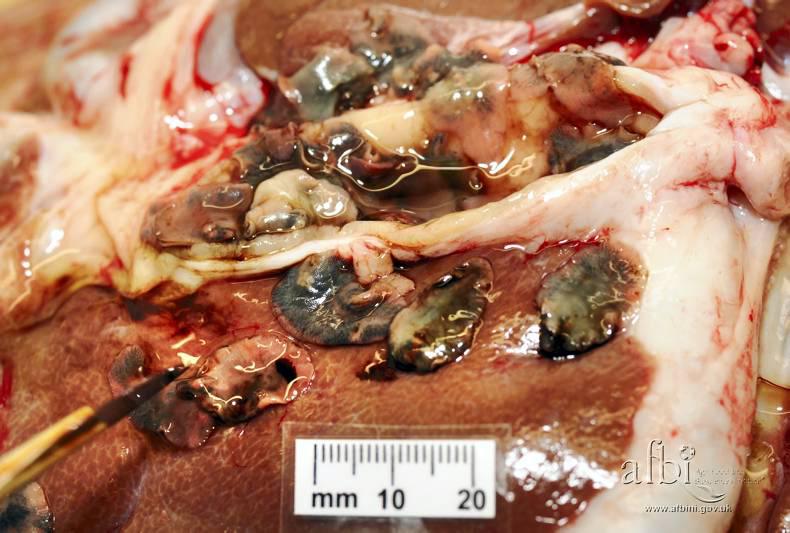
Once in the liver, parasites migrate through the liver tissue for a number of weeks, causing huge damage. Parasites then move to the bile duct where they mature and start to lay eggs.
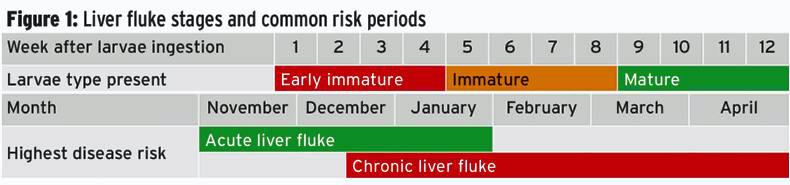
The process from ingestion to maturing takes about eight weeks. The greatest risk is in the back end of the year when high numbers of larvae are ingested leading to a fatal condition known as acute live fluke.
Acute liver fluke
Acute liver fluke presents a severe risk to sheep from October through to January. It is frequently fatal as unlike with other diseases there is generally no readily identifiable symptoms (anaemia can occur but is hard to identify).
Large numbers of immature fluke parasites within the liver cause huge damage to the tissue of the liver. This can lead to liver failure or haemorrhaging with sheep often found dead without exhibiting any illness. A telltale sign is often ewes in good body condition suddenly dying when put under stress.
Chronic live fluke
Chronic liver fluke is caused by the presence of large numbers of adult fluke parasites in the bile ducts. Their presence interferes with the transfer of bile and digestion of dietary fats while adult liver fluke also feed on the blood of hosts.
In comparison to acute live fluke, there are symptoms which include weight loss, poor performance and in severe cases bottle jaw and signs of anaemia (pale eyes, gums, etc).
Predicting a risk
Figure 1 gives a diagrammatic view of the stages of the liver fluke parasite and the main risk periods.
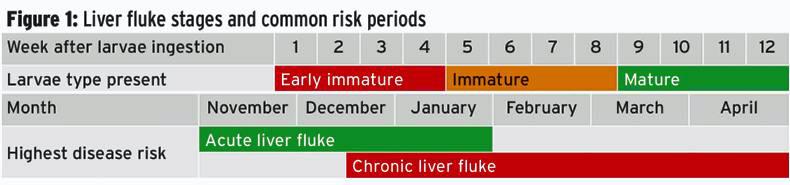
While acute liver fluke is the most immediate threat, chronic liver fluke can also occur at the same time if animals have not been treated (low risk predicted) or if treatment was unsuccessful.
It is important where acute liver fluke is the main threat to use a product that kills either early immature or immature larvae. The only time when a product that kills only adult fluke can be used with total confidence is when sheep are housed for at least eight weeks.
In ewes outwintered on heavy soils or lands with a history of liver fluke, treatment will be required at four- to six-week intervals. For those outwintered on lands with a low risk, there may be scope to delay treatment and use a product that kills immature and mature parasites, but given the risk, consult your vet first.
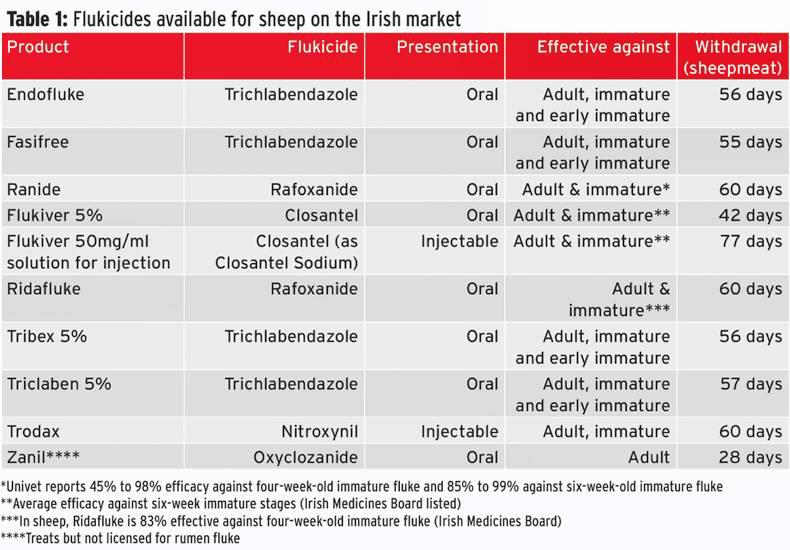
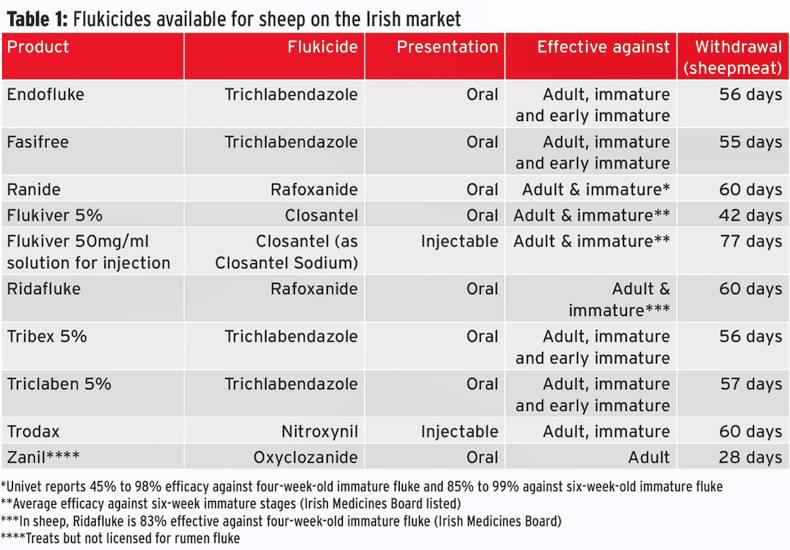
Table 1 (flukicides) and Table 2 (combination products) detail all the products on the market for treating liver fluke, their active ingredient and the stage of liver fluke they will treat.
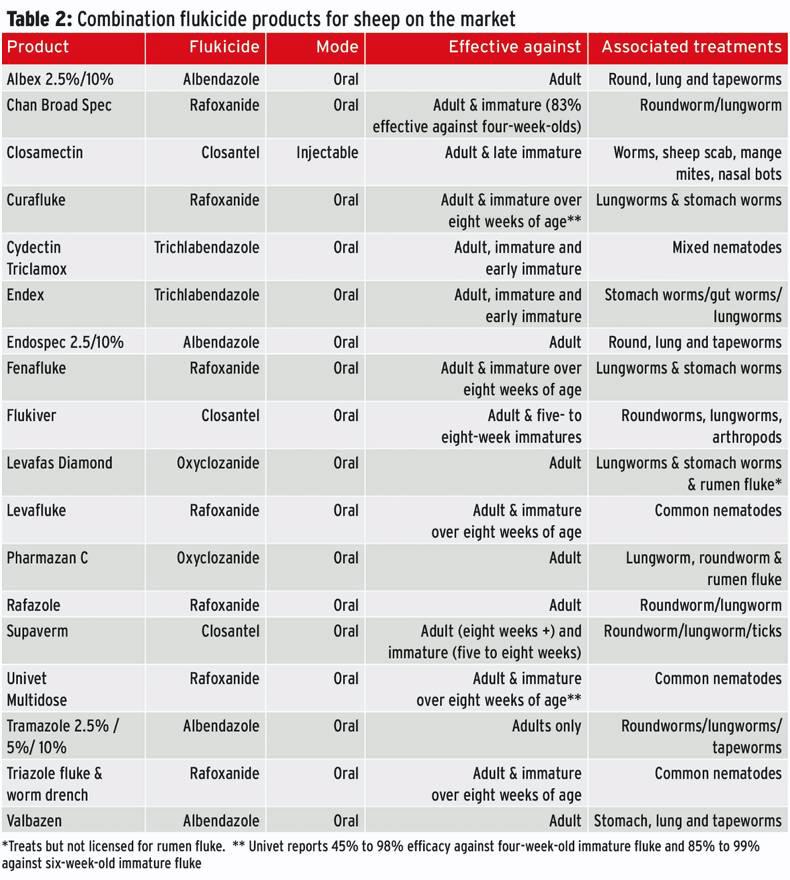
Some companies report a wider scale of protection than listed on their product guidelines (see table footnotes), with a similar situation of a small number of products containing oxyclozanide also capable of treating rumen fluke although not licensed to do so.




SHARING OPTIONS