Last week, I painted a picture of the enormous potential within the Ukraine for development in agriculture. In this article, I report on one farm that has undergone enormous growth with plans for this to continue.
Mriya is Ukrainian for ‘dream’. This has proved to be an apt description for the success achieved by Ivan Guta, along with his wife Klaudiya and family, when they founded their company farm back in 1992.
Having started out with only 50ha at Ternopil in western Ukraine, the farm size has grown 6,000-fold to almost 300,000ha today. And the plan is to double in size within the next two years.
This article outlines potential opportunities and threats from this type of development for Irish companies and farmers.
Today, Mriya is cultivating 300,000ha of some of the best land in the world with the intention to double this area within the next two years. Even the current acreage is almost 1,200 square miles or roughly the same area as Co Louth.
The success of the past 21 years has turned the dream into reality and now some of the best agri-engineering, technology and food processing groups in the world want to be associated with the Mriya success story.
Large scale – low cost
Mriya is a family farming company cultivating an area of top quality agricultural land roughly the same size as the entire Irish cereal acreage in one tillage farm.
This is not a ‘run-of-the-mill’ farming operation and deserves special attention. Indeed, the Mriya business provides an excellent case study and a useful template for anyone interested in modern, large-scale, precision farming systems.
Irish farmers should have more than a passing interest in the development of large agricultural companies like Mriya.
There are an increasing number of international agri-investment groups around the world who want to invest in modern, large-scale farming enterprises.
Irish agricultural engineering and technology companies should also be aware of both the risks and the opportunities which these developments present.
More scale, added value
Mriya AHG currently sees itself as ‘a low cost producer of agricultural commodities’. However, the company plans to add value to its basic agricultural crop output.
Large-scale livestock enterprises are at the centre of these plans. To begin with, a 10,000 dairy cow unit is to be up and running within two years.
Breeding stock are currently being sourced from high yielding Holstein herds in America.
Milk is in short supply in both Ukraine and Russia. Consequently, dairy farming is consistently a very profitable enterprise in these countries.
Currently, the farm-gate price for top quality milk is €0.50/l. Therefore, this 10,000 unit is only the start for dairy production on Mriya farms, and others, in the Ukraine.
The next phase of development in Mriya will be the establishment of new large-scale food processing businesses.
Then will come the development of new export markets for these products to complete the circle for this modern Ukrainian farming company.
Innovative resources
Groups like Mriya can bring a whole new package of resources, services and systems to modern, large-scale farming units. Examples include:
Low labour costs.Innovative precision agricultural technologies.Large, highly sophisticated but efficient machinery fleets.Diversity in farm enterprises and operational systems.Enormous scale due to land availability.High level of agri-business and farm management expertise.Leverage to maximise farm-gate sales and prices. Robust buying power to minimise prices / costs.Big food demand from home and global markets.These factors combine to provide a substantial reduction in production costs, which are the basis for the successful development of Mriya Agro-Holdings.
Relevance to Irish farmers
Even a simple analysis of Mriya’s operations poses some serious questions for Irish farmers, co-ops, farm organisations, food processors and agricultural policy makers.
How many Irish farmers and agri-businesses can compete with large, completely integrated, well-financed, highly efficient, agro-industry groups like Mriya?Are our much-vaunted low-cost, grass-based, livestock production systems enough?What extra resources do Irish farmers and agri-businesses need to compete on the international stage, which is tilted so steeply against them?Is it time for our dairy co-ops / PLCs and meat processors to get actively involved inside the farm gate to help ensure their farmer suppliers achieve critical economies of scale?Is there any other way to compete with such modern, large-scale, highly efficient, international agro-industry groups like Mriya?Management systems
The efficiency and productivity of Mriya’s agricultural enterprises is based on seven main pillars:
1. A very large and fast-growing land bank of highly fertile soils.
2. Strong capital base plus sound financial management.
3. Teams of experienced farming agronomists and agri-business managers.
4. A large, ultra-modern farm machinery and equipment fleet.
5. A 24/7 farm machinery and equipment repair, maintenance and service centre.
6. Logistics facilities to get grains direct from combine to ships at minimum cost.
7. GPS control of all machinery operations from ‘seed-to-feed’, ie precision farming.
Precision farming
Precision farming systems are at the heart of Mriya’s success. Computerised-monitoring and control technology is used on all machinery and equipment, which is controlled by RTK GPS systems.
The precise monitoring extends to the machines themselves and small teams of ICT specialists do 24/7 shifts to supervise this monitoring and control process.
This monitoring is continuously looking at:
Application and work rates for fertilizer, agrochemical and seeding.Work rates for ploughing and cultivation.Crop harvesting rates, both in terms of area and tonnes. The fuel consumption rate for each machine based on area and time.The operating cost of each piece of machinery based on area and time.In addition to the use of computers and electronic farm management systems, the Mriya operation also uses remote sensing via satellite, smartphone apps, GPS, robotics, etc.
Machinery investment
Mriya’s large machinery and equipment fleet is ultra-modern and replaced on an annual basis (they can use an 80% depreciation rate on all machines).
The current annual machinery replacement cost is about €250m and this is expected to increase to €500m in the next two years.
The Mriya fleet of 2,100 different machines is sourced from John Deere, Claas, Holmer, Grimme and other leading international suppliers. The equipment includes:
147 John Deere tractors.45 Grimme potato harvesters.66 Holmer sugar beet harvesters.107 combines (89 Claas and 18 John Deere).150,000 bar-coded spare parts (€3.5m).554 trucks.Facing facts
Land and labour are the two lowest cost items on Ukrainian farms. This means less pressure to push for maximum output with scale being a relatively easy option.
These help efficiency against lower yield potential and enable big savings on fertilizer in the natural fertility of Ukraine’s black earth soils.
Farm machinery and working capital are the two biggest costs in Mriya’s farming operation. Equipment prices are broadly similar to Germany and the US but interest rates are over 20%.
For these reasons, no effort is spared to cut every single item of cost. The target on Mriya farms is that these costs be minimal per hectare and per kilogramme of crop produced.
Machinery and interest costs are minimised in eight main ways:
1. Mriya’s scale of operations gives enormous buying-power to the group.
2. A completely transparent tendering process in used for all farm purchases.
3. Machinery purchase and maintenance is well-planned and professionally managed.
4. A staff of 140 mechanics keep equipment operating. These mechanics were originally trained in Holland and Germany but now Mriya has its own training facility on site, as well as tractor driver and machine operator training.
5. The spare parts section is managed like a modern supermarket. The company carries approximately €3.5m worth of spare parts as 150,000 bar-coded items.
6. The crop rotation is designed to make maximum use of Mriya’s machinery pool.
7. All of the above enable down-time and total costs to be minimised on Mriya’s farms.
8. Tight management helps to ensure that machine output and operating efficiency is optimised for every machine.
Farming operations
As low cost is a primary management objective, Mriya grows the full range of temperate climate crops on ‘a strictly rotational, low cost basis’. A team of agronomists direct the complete operation and precision farming tools are used to help achieve these objectives.
The tight control systems measure every machine activity and its cost. For example, fuel consumption is continuously measured as litres of diesel per hectare cultivated, per tonne fertilizers distributed, per litre or kilogramme of agrochemicals applied and per hectare or per tonne of crop harvested.
Machine depreciation, plus wear and tear of the main moving parts of each machine, are also measured 24/7 as per fuel consumption. The use of GPS auto-steer helps to get the most from machinery to have it working at full capacity.
Crops and markets
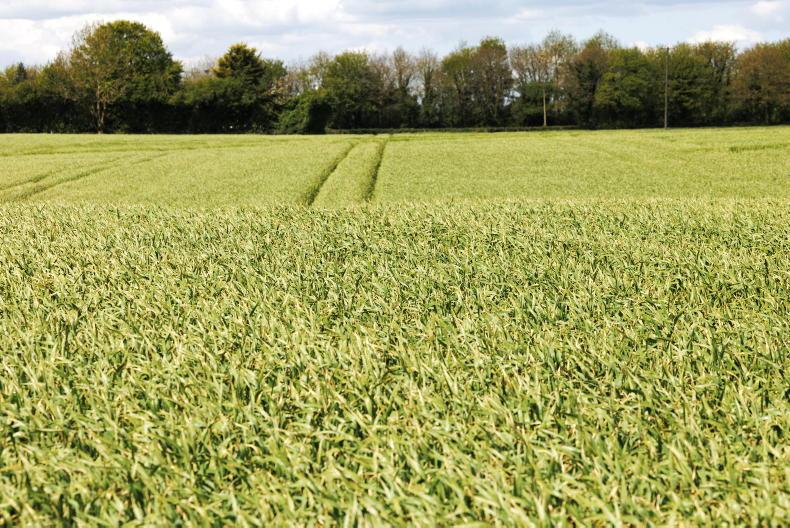
Mriya grows barley, wheat, maize, rye, buckwheat, sunflower seed and rapeseed for home and global markets (see Figure 1).
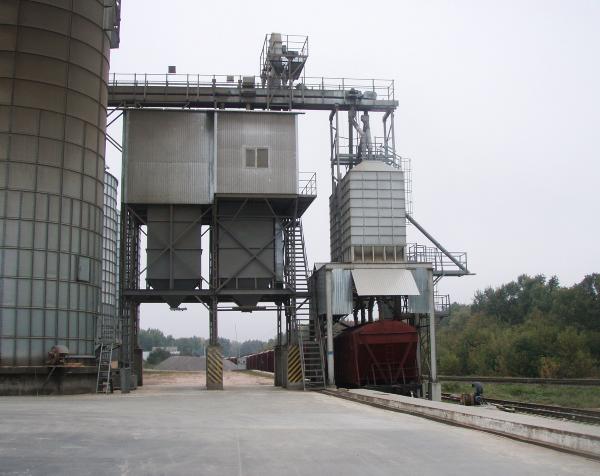
Grains are taken direct from the combine to silos for cleaning and preparation for railing to the Black Sea ports.
The rail line goes right in beneath the grain silos where large grain wagons are loaded by gravity round-the-clock. The grain trains go direct to large grain ships at the Black Sea ports.
Ultimately, grain from Mriya ends up in the Middle East, North Africa, Spain, Holland and France, plus other global destinations.
Exports are conducted through the main international conglomerates, such as Cargill, Glencore Xstrata, Toepfer, Bunge and CHS Inc. (USA).
Sugarbeet is produced for processing locally. Mriya regard potatoes as ‘a strategic crop’ for them. Potatoes are grown for processing to be used in the full range and variety of high value products.
The farm supplies a big range of markets such as elite and commercial seed potatoes, chips and crisps, convenience / fast foods and snacks, table potatoes for retail and catering, ware potatoes for production of starch, alcohol, biofuels and animal feeds, etc.
Mriya customers in the International Convenience Foods’ area include crisp production by KRAFT and Uni-Snack.
Yields and costs
There is considerable scope for improved productivity in Ukrainian farming. But despite the fact that Mriya is not targeting high output, the general yield levels produced from the main crops in recent times are still higher than average for the country (Figure 2).
More importantly, the cost of production is considerably lower than average and this contributes more to profitability (Figure 3).
World Bank in Ukraine
The World Bank / International Finance Corporation (IFC) is a major investor in the Ukrainian agricultural and agribusiness.
In recent years, the IFC has supported investments totalling $2.1bn in these sectors, which are about one-third of its total investments in that country.
These World Bank / IFC investments span across the whole Ukrainian food chain, from farmers’ fields to food factories to consumers’ forks.
The key areas in the Ukrainian food chain that are financed by IFC include farmers, farm agri-infrastructure and logistics, farm input suppliers, food processors and marketers, agricultural credit services, agricultural advisory services, etc.
IFC advisory services are also working in close partnership with Mriya to promote sustainable agricultural investment and development throughout the Ukraine.
Specifically, World Bank / IFC is using Mriya’s agri-business model as their global template for improved resource efficiency, better business practices and operational efficiency and transparency in agri-business planning, management and accounting.
The Mriya Agro-Holdings Group is the flagship for World Bank / IFC activities in Ukraine. Over the last three years, they have invested $65m in Mriya AHG.
And investments from the same source are set to increase in the future. Other major stakeholders in Mriya AHG include Credit Suisse Bank, European Bank for Reconstruction and Development (EBRD) and a consortium of German and French banks and credit institutions.
Last week, I painted a picture of the enormous potential within the Ukraine for development in agriculture. In this article, I report on one farm that has undergone enormous growth with plans for this to continue.
Mriya is Ukrainian for ‘dream’. This has proved to be an apt description for the success achieved by Ivan Guta, along with his wife Klaudiya and family, when they founded their company farm back in 1992.
Having started out with only 50ha at Ternopil in western Ukraine, the farm size has grown 6,000-fold to almost 300,000ha today. And the plan is to double in size within the next two years.
This article outlines potential opportunities and threats from this type of development for Irish companies and farmers.
Today, Mriya is cultivating 300,000ha of some of the best land in the world with the intention to double this area within the next two years. Even the current acreage is almost 1,200 square miles or roughly the same area as Co Louth.
The success of the past 21 years has turned the dream into reality and now some of the best agri-engineering, technology and food processing groups in the world want to be associated with the Mriya success story.
Large scale – low cost
Mriya is a family farming company cultivating an area of top quality agricultural land roughly the same size as the entire Irish cereal acreage in one tillage farm.
This is not a ‘run-of-the-mill’ farming operation and deserves special attention. Indeed, the Mriya business provides an excellent case study and a useful template for anyone interested in modern, large-scale, precision farming systems.
Irish farmers should have more than a passing interest in the development of large agricultural companies like Mriya.
There are an increasing number of international agri-investment groups around the world who want to invest in modern, large-scale farming enterprises.
Irish agricultural engineering and technology companies should also be aware of both the risks and the opportunities which these developments present.
More scale, added value
Mriya AHG currently sees itself as ‘a low cost producer of agricultural commodities’. However, the company plans to add value to its basic agricultural crop output.
Large-scale livestock enterprises are at the centre of these plans. To begin with, a 10,000 dairy cow unit is to be up and running within two years.
Breeding stock are currently being sourced from high yielding Holstein herds in America.
Milk is in short supply in both Ukraine and Russia. Consequently, dairy farming is consistently a very profitable enterprise in these countries.
Currently, the farm-gate price for top quality milk is €0.50/l. Therefore, this 10,000 unit is only the start for dairy production on Mriya farms, and others, in the Ukraine.
The next phase of development in Mriya will be the establishment of new large-scale food processing businesses.
Then will come the development of new export markets for these products to complete the circle for this modern Ukrainian farming company.
Innovative resources
Groups like Mriya can bring a whole new package of resources, services and systems to modern, large-scale farming units. Examples include:
Low labour costs.Innovative precision agricultural technologies.Large, highly sophisticated but efficient machinery fleets.Diversity in farm enterprises and operational systems.Enormous scale due to land availability.High level of agri-business and farm management expertise.Leverage to maximise farm-gate sales and prices. Robust buying power to minimise prices / costs.Big food demand from home and global markets.These factors combine to provide a substantial reduction in production costs, which are the basis for the successful development of Mriya Agro-Holdings.
Relevance to Irish farmers
Even a simple analysis of Mriya’s operations poses some serious questions for Irish farmers, co-ops, farm organisations, food processors and agricultural policy makers.
How many Irish farmers and agri-businesses can compete with large, completely integrated, well-financed, highly efficient, agro-industry groups like Mriya?Are our much-vaunted low-cost, grass-based, livestock production systems enough?What extra resources do Irish farmers and agri-businesses need to compete on the international stage, which is tilted so steeply against them?Is it time for our dairy co-ops / PLCs and meat processors to get actively involved inside the farm gate to help ensure their farmer suppliers achieve critical economies of scale?Is there any other way to compete with such modern, large-scale, highly efficient, international agro-industry groups like Mriya?Management systems
The efficiency and productivity of Mriya’s agricultural enterprises is based on seven main pillars:
1. A very large and fast-growing land bank of highly fertile soils.
2. Strong capital base plus sound financial management.
3. Teams of experienced farming agronomists and agri-business managers.
4. A large, ultra-modern farm machinery and equipment fleet.
5. A 24/7 farm machinery and equipment repair, maintenance and service centre.
6. Logistics facilities to get grains direct from combine to ships at minimum cost.
7. GPS control of all machinery operations from ‘seed-to-feed’, ie precision farming.
Precision farming
Precision farming systems are at the heart of Mriya’s success. Computerised-monitoring and control technology is used on all machinery and equipment, which is controlled by RTK GPS systems.
The precise monitoring extends to the machines themselves and small teams of ICT specialists do 24/7 shifts to supervise this monitoring and control process.
This monitoring is continuously looking at:
Application and work rates for fertilizer, agrochemical and seeding.Work rates for ploughing and cultivation.Crop harvesting rates, both in terms of area and tonnes. The fuel consumption rate for each machine based on area and time.The operating cost of each piece of machinery based on area and time.In addition to the use of computers and electronic farm management systems, the Mriya operation also uses remote sensing via satellite, smartphone apps, GPS, robotics, etc.
Machinery investment
Mriya’s large machinery and equipment fleet is ultra-modern and replaced on an annual basis (they can use an 80% depreciation rate on all machines).
The current annual machinery replacement cost is about €250m and this is expected to increase to €500m in the next two years.
The Mriya fleet of 2,100 different machines is sourced from John Deere, Claas, Holmer, Grimme and other leading international suppliers. The equipment includes:
147 John Deere tractors.45 Grimme potato harvesters.66 Holmer sugar beet harvesters.107 combines (89 Claas and 18 John Deere).150,000 bar-coded spare parts (€3.5m).554 trucks.Facing facts
Land and labour are the two lowest cost items on Ukrainian farms. This means less pressure to push for maximum output with scale being a relatively easy option.
These help efficiency against lower yield potential and enable big savings on fertilizer in the natural fertility of Ukraine’s black earth soils.
Farm machinery and working capital are the two biggest costs in Mriya’s farming operation. Equipment prices are broadly similar to Germany and the US but interest rates are over 20%.
For these reasons, no effort is spared to cut every single item of cost. The target on Mriya farms is that these costs be minimal per hectare and per kilogramme of crop produced.
Machinery and interest costs are minimised in eight main ways:
1. Mriya’s scale of operations gives enormous buying-power to the group.
2. A completely transparent tendering process in used for all farm purchases.
3. Machinery purchase and maintenance is well-planned and professionally managed.
4. A staff of 140 mechanics keep equipment operating. These mechanics were originally trained in Holland and Germany but now Mriya has its own training facility on site, as well as tractor driver and machine operator training.
5. The spare parts section is managed like a modern supermarket. The company carries approximately €3.5m worth of spare parts as 150,000 bar-coded items.
6. The crop rotation is designed to make maximum use of Mriya’s machinery pool.
7. All of the above enable down-time and total costs to be minimised on Mriya’s farms.
8. Tight management helps to ensure that machine output and operating efficiency is optimised for every machine.
Farming operations
As low cost is a primary management objective, Mriya grows the full range of temperate climate crops on ‘a strictly rotational, low cost basis’. A team of agronomists direct the complete operation and precision farming tools are used to help achieve these objectives.
The tight control systems measure every machine activity and its cost. For example, fuel consumption is continuously measured as litres of diesel per hectare cultivated, per tonne fertilizers distributed, per litre or kilogramme of agrochemicals applied and per hectare or per tonne of crop harvested.
Machine depreciation, plus wear and tear of the main moving parts of each machine, are also measured 24/7 as per fuel consumption. The use of GPS auto-steer helps to get the most from machinery to have it working at full capacity.
Crops and markets
Mriya grows barley, wheat, maize, rye, buckwheat, sunflower seed and rapeseed for home and global markets (see Figure 1).
Grains are taken direct from the combine to silos for cleaning and preparation for railing to the Black Sea ports.
The rail line goes right in beneath the grain silos where large grain wagons are loaded by gravity round-the-clock. The grain trains go direct to large grain ships at the Black Sea ports.
Ultimately, grain from Mriya ends up in the Middle East, North Africa, Spain, Holland and France, plus other global destinations.
Exports are conducted through the main international conglomerates, such as Cargill, Glencore Xstrata, Toepfer, Bunge and CHS Inc. (USA).
Sugarbeet is produced for processing locally. Mriya regard potatoes as ‘a strategic crop’ for them. Potatoes are grown for processing to be used in the full range and variety of high value products.
The farm supplies a big range of markets such as elite and commercial seed potatoes, chips and crisps, convenience / fast foods and snacks, table potatoes for retail and catering, ware potatoes for production of starch, alcohol, biofuels and animal feeds, etc.
Mriya customers in the International Convenience Foods’ area include crisp production by KRAFT and Uni-Snack.
Yields and costs
There is considerable scope for improved productivity in Ukrainian farming. But despite the fact that Mriya is not targeting high output, the general yield levels produced from the main crops in recent times are still higher than average for the country (Figure 2).
More importantly, the cost of production is considerably lower than average and this contributes more to profitability (Figure 3).
World Bank in Ukraine
The World Bank / International Finance Corporation (IFC) is a major investor in the Ukrainian agricultural and agribusiness.
In recent years, the IFC has supported investments totalling $2.1bn in these sectors, which are about one-third of its total investments in that country.
These World Bank / IFC investments span across the whole Ukrainian food chain, from farmers’ fields to food factories to consumers’ forks.
The key areas in the Ukrainian food chain that are financed by IFC include farmers, farm agri-infrastructure and logistics, farm input suppliers, food processors and marketers, agricultural credit services, agricultural advisory services, etc.
IFC advisory services are also working in close partnership with Mriya to promote sustainable agricultural investment and development throughout the Ukraine.
Specifically, World Bank / IFC is using Mriya’s agri-business model as their global template for improved resource efficiency, better business practices and operational efficiency and transparency in agri-business planning, management and accounting.
The Mriya Agro-Holdings Group is the flagship for World Bank / IFC activities in Ukraine. Over the last three years, they have invested $65m in Mriya AHG.
And investments from the same source are set to increase in the future. Other major stakeholders in Mriya AHG include Credit Suisse Bank, European Bank for Reconstruction and Development (EBRD) and a consortium of German and French banks and credit institutions.






SHARING OPTIONS