


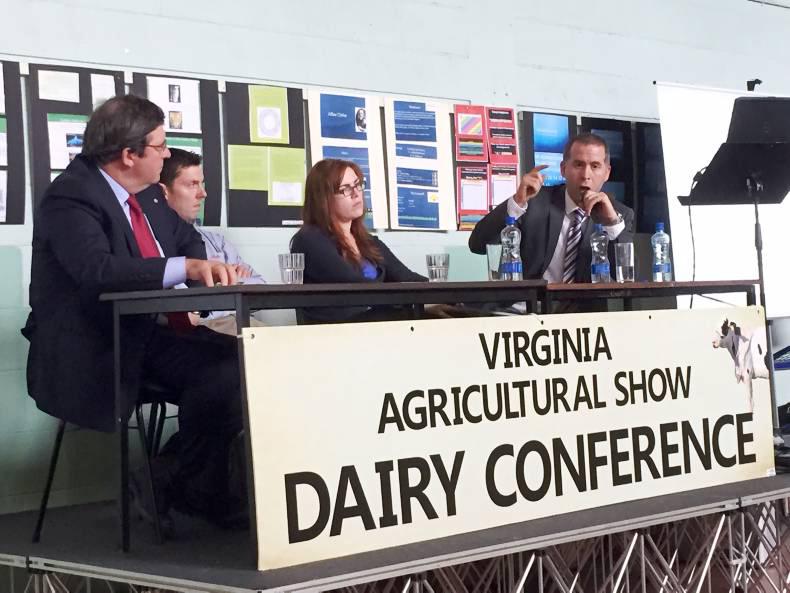
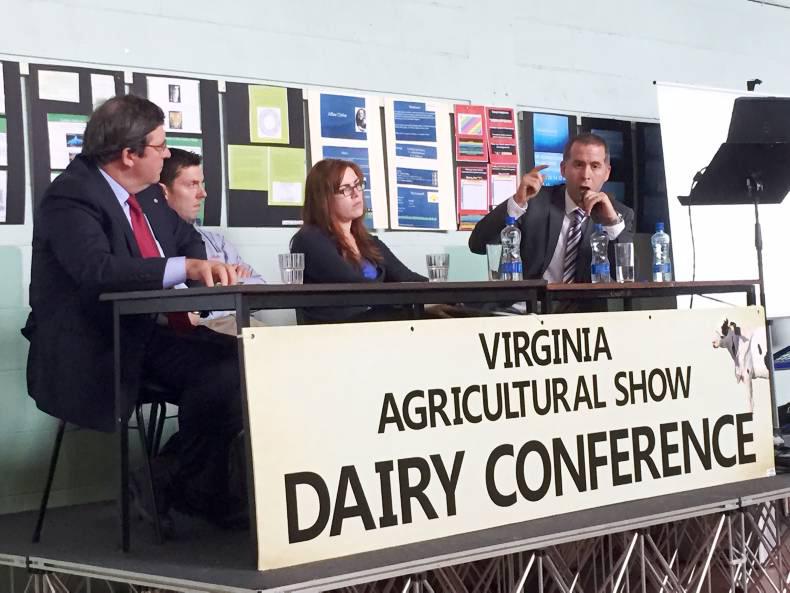
Teagasc Moorepark geneticist Donagh Berry told a dairy conference at the Virginia Show on Wednesday that selective breeding would soon solve fertility issues in dairy herds, with attention now turning to health.
“In 10 to 15 years’ time, nobody will talk about fertility anymore, except to say ‘Do you remember the days when we could not put the cows in calf?’,” Berry said. He acknowledged that the past 15 years of aggressive selective breeding had caused problems in this area.
According to Berry, geneticists have already isolated the traits associated with poor fertility and it is only a matter of time before their findings benefit herds on all farms.
However, he warned that “health is the new fertility”, adding that data collected from cows prone to a number of diseases are now helping researchers single out bulls whose daughters are more susceptible to mastitis, lameness and other health problems. For example, genetic analysis of cows with cystic ovaries showed that some bulls had no daughters suffering from the condition, while one bull had 12 daughters with the disease.
Asked by a member of the audience whether bulls whose daughters were prone to TB could be identified and targeted by the Department of Agriculture’s eradication programme, Berry said this was now technically possible.
Berry also defended the EBI index, arguing that its ability to measure traits associated with milk output as well as costs made it a good tool to achieve profitability in the post-quota era.
Martina Horan of Teagasc Ballyhaise also spoke at the conference, saying that there was little point in expanding a dairy herd without improving its efficiency. Using data from the Teagasc-Lakeland programme in Cavan, she showed that farmers who had spent 20 hours receiving training and advice on dairy efficiency had all increased their milk solids output and/or cut their meal use, resulting in €2,000 to €5,000 margin increases in the first half of 2015 compared with the same period last year.



SHARING OPTIONS