


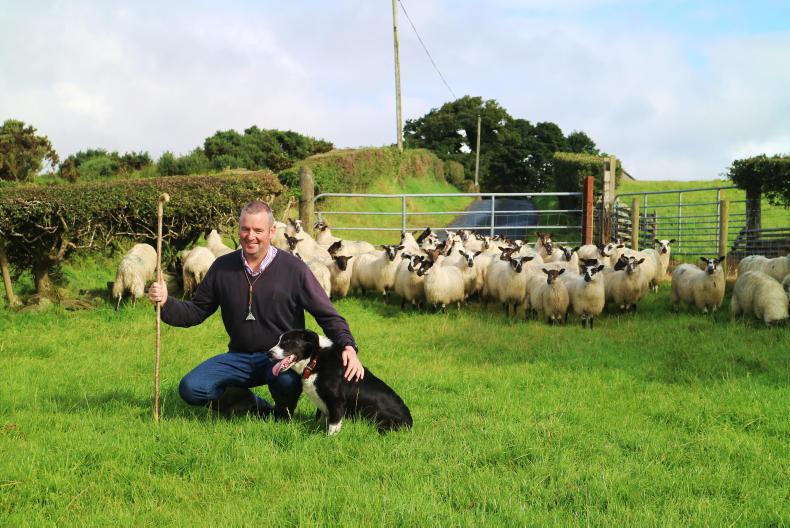
James McGee has always been interested in farming, taking an active role in the family farm in Creggan, Ballybofey, Co Donegal, from a young age. While the farm always had working dogs, James’s interest in training dogs and competing in trials developed from sources outside the farm.
“When I was 12 or 13, watching One Man and His Dog on a Sunday evening was always something I never wanted to miss. At 15, I trained a dog that competed in two local trials and, while it didn’t go wonderfully, the experience went OK. My interest in sheepdogs then waned away for a few years until I attended the final day’s trialling at the International Sheepdog Trials in Seaford, Co Down, in 2002. I was amazed to see the skill shown by the top dogs and their handlers. My interest was rekindled and I was hooked.”
From there, James set about gaining information and tips from local handlers along with quickly building up experience from competing in whatever trials fitted around running the family farm, which he took over in 1997. His big breakthrough came when he unlocked the potential of Becca, bought as a pup and with whom he went on to win numerous national events, among them the coveted One Man and His Dog competition in 2008 and the prestigious World Championship in 2011.
Want a dog that can flock sheep like this? Read more about training sheepdogs in this week's @farmersjournal pic.twitter.com/zklf4Ld3CB
— FJ Sheep (@FJSheep) September 7, 2016
In recent years, Glencregg Silver has taken up the mantle as the senior dog in the team. At just 17 months of age, Glencregg Silver was the youngest dog to win the international competition, which took place in Roscommon in 2014.
Big commitment
James says training and competing can get very addictive, explaining that it is now a big part of his family’s life. “From April through to September, there are trials most weekends. I suppose it’s like anyone playing sport; if you enjoy it you don’t see it as work and you meet and make some great friends. I’m lucky that my wife Karen and children Rachel (18), Laura (16) and James Jr (12) are all interested in sheepdogs and farming and are a massive help in both.”
Sheepdog trainers differ in their approach and training routine. James highlights a strong bond and regular work on the farm as critical factors. “For me you have to have a good bond to get the absolute best out of a dog. Farming and trialling work hand-in-hand, but with dogs it’s about quality rather than quantity. You need to spend time with dogs once they show interest and if you don’t have time I find dogs can quickly fall away. I’ve been quite lucky with the breeding line Glencregg Silver has come from as these dogs are quick starters.”
Own routine
James also underlines introducing dogs into a social setting at a young age as being highly beneficial to getting them accustomed to people and developing this bond. “As far as I’m concerned the first three to four months in a dog’s life are vital – it’s unbelievable what their brain can soak up during this time. Everyone won’t agree with this, but I like to bring young dogs into the house for periods at this age. You are not actually training but it’s amazing how they pick up sounds, get used to other people and observe what’s happening. The dogs don’t get spoilt while inside. It is more to get them accustomed to the family and learning socially and as such it’s important to maintain strong boundaries and discipline them where necessary.”
Pups differ in the age at which they are ready to start working. Young dogs are introduced to sheep at 12 weeks of age in an observatory capacity while older or mature dogs are being trained or worked. Once a dog starts to show an interest, this is the starting point for its training. “Generally once a pup starts to show interest I’ll try and nurture it. For many dogs, it’s like turning on a switch – one day they are showing little interest and the next they are mad to get going.”
Karen adds that it is important to be patient with young dogs that are often slower to develop. “All dogs are different and you could say it’s like children – some stay crawling for a long time while one day others can start walking and never look back. You can’t fit all dogs into one mould and sometimes it is the handler that needs to change.”
Young pups are trained separate to dogs at an advanced stage of training or fully developed to prevent bad habits being picked up and the progression of more advanced dogs being interrupted.
“The most important thing is to be consistent. If you are inconsistent, the dog won’t know what the right path to follow is and that’s where problems arise. Dogs take their direction from the handler’s movement or body language and this needs to be got right at the start. You have to remember all the time that you are working with a young animal and it is important not to expect too much at a young age. Glencregg Silver won an international competition at 17 months of age but I have seen other dogs slower to develop only come into their own at this stage. I prefer to bring a dog out often and work on a shorter session rather than expect him to pick it all up at once.”
Combining farm work
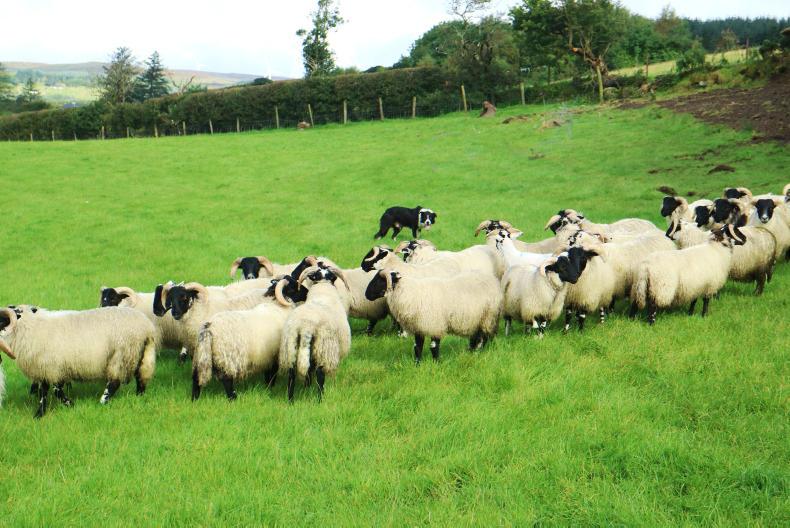
The target training progression on Glencregg farm is for dogs to be able to flock about 80 to 100 sheep in a field after two to three months of training. “The dog won’t maybe be doing it as fast as you would like but he is learning about life as a working dog, which will also benefit for trialling. There are always going to be some rogues in the bunch and if the dog can learn to handle these in a large batch of sheep it will stand to it for trialling. I find it also tells you a lot about a dog’s temperament, which is a very big asset and one of the main reasons why a dog may be excellent as a farm dog but maybe not have what it takes for trialling.”
Farm system
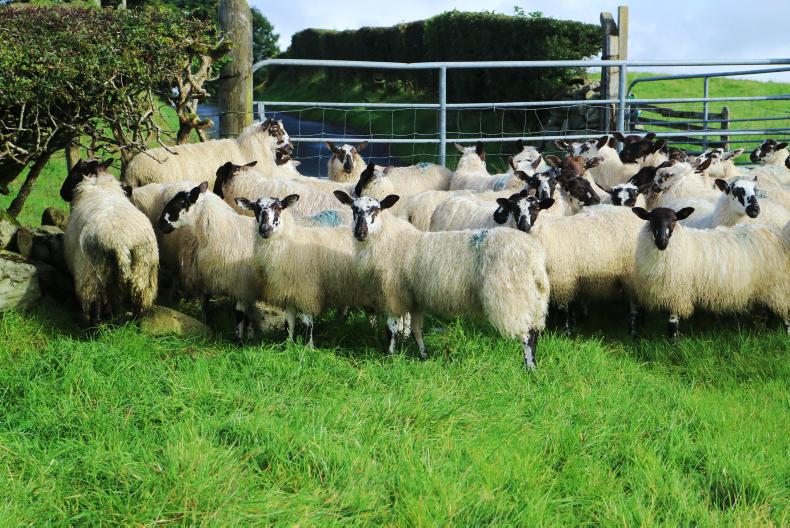
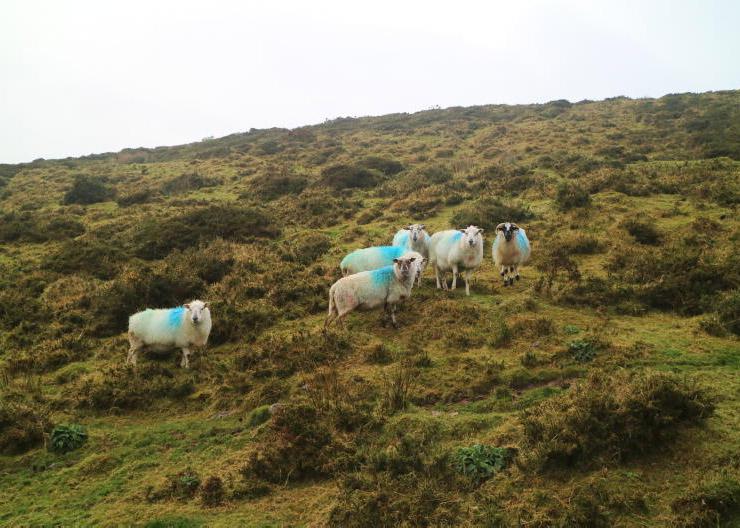
The farming system has changed drastically over the last five years, with a 30-cow suckler to weanling herd and a flock of 250 to 300 lowland ewes making way for a flock of hill sheep. James says the decision to cut down to a handful of suckler cows and in 2014 replace Suffolk, Texel and Charollais cross ewes with 500 Mayo Blackface ewe lambs was not easy but was seen as the best move for the farm given its marginal nature and higher levels of rainfall in recent years. Reducing the labour required to make more time for training dogs was also another consideration.
The long-term breeding policy for the flock is to introduce Lanark breeding with potential to run a larger-framed ewe on a mixture of hill and lowland grazing, breed a better-framed lamb with a higher value for selling while still maintaining the traits of hardiness, survivability and mothering ability from the Mayo ewe. “I had got to a situation with the lowland flock where I was finding myself putting in a huge level of labour during winter, and particularly around lambing, and needing to feed a lot of silage and concentrates. I have only two seasons over me with hill ewes, but I have already found a huge difference in a reduced workload.”
Breeding programme
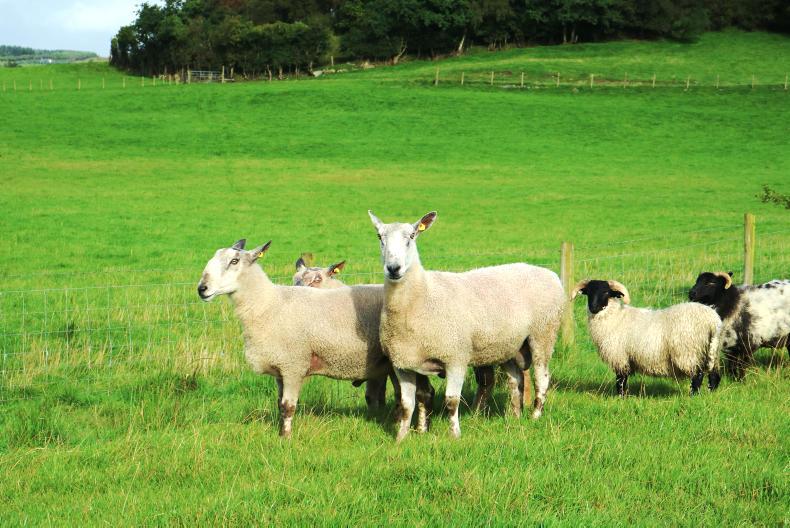
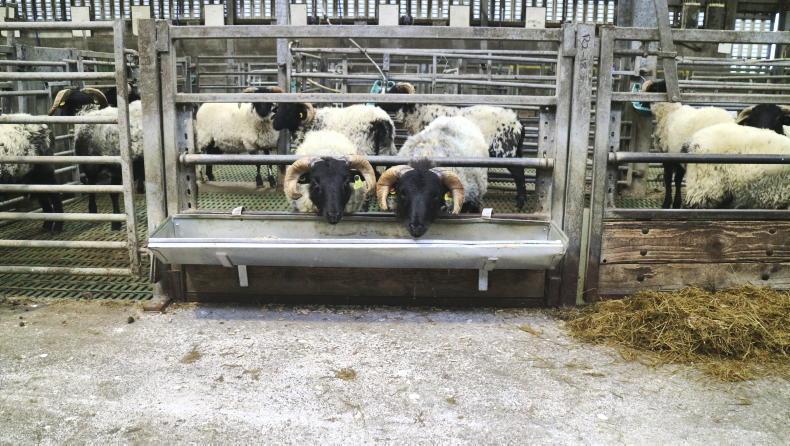
Last year, 220 Mayo Blackface ewes were mated to Lanark rams, 120 Mayo Blackface ewes were mated with two Bluefaced Leicester rams while the poorest quality 80 Mayo Blackface ewes were run with a Charollais ram to improve the value of progeny. The ewes mated as hoggets returned a litter size of 1.3 lambs per ewe put to the ram which James was happy with. A similar breeding mix will be used this year along with 30 purebred Lanark hogget ewes establishing a small pedigree component. Ewes are being mated to lamb at the end of March/start of April with a focus on balancing grass supply and having stronger lambs to sell leading to more manageable cashflow. James has also joined the newly established Donegal Mule Group, which is a group of farmers coming together to better market their progeny. The group, which has now grown to about 40 members, is holding their first sale on Saturday 24 September. “When you look at the benefit other groups have gained from selling higher numbers together in one location, the move makes a lot of sense. Hopefully it will also provide a good platform to learn from each other and improve breeding.”
Current farming tasks
Management practices currently surround finishing lambs, getting ewes ready for mating and keeping on top of maintenance of grassland and farm infrastructure. Lanark x Mayo Blackface ram lambs are currently being run on good-quality grazing and will this week be also introduced to concentrates. This will also serve if grass supplies diminish to have lambs ready to go indoors for intensive finishing.
Heavy rainfall in Donegal for much of the summer months has limited the opportunity to carry out land improvement.
“Our aim is to get as much from grass as we possibly can. Fields are soil-sampled every three to four years and I think there is a far greater return from liming and applying fertiliser than neglecting grassland and making up the shortfall by feeding more meals. Land is marginal in nature but once it is minded and looked after with regular spraying [control rushes] and some kindness it is capable of returning relatively good output.”
Liver fluke is the greatest health risk at present and, once dosing treatment starts in September/October, ewes are treated every five to six weeks with products alternated to different active ingredients. Lambs have also recently been dipped, a task that will be repeated with ewes pre-mating.



SHARING OPTIONS