



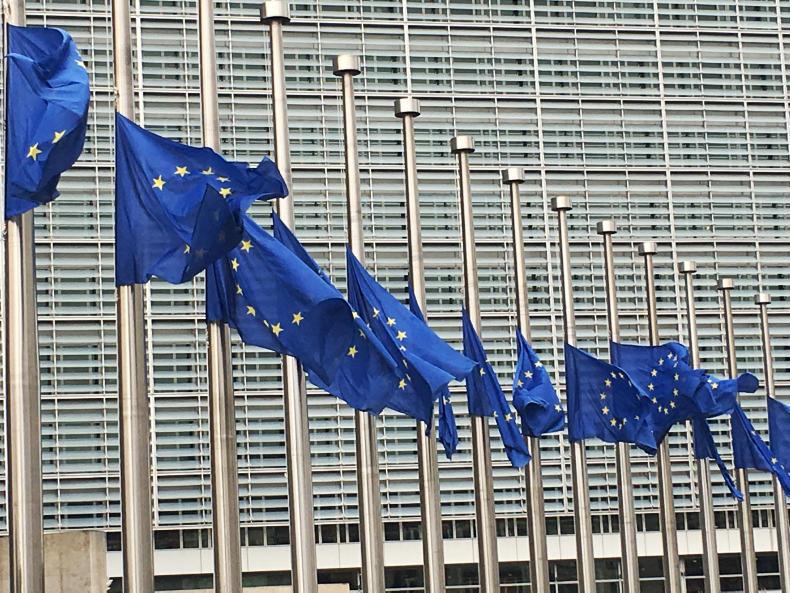
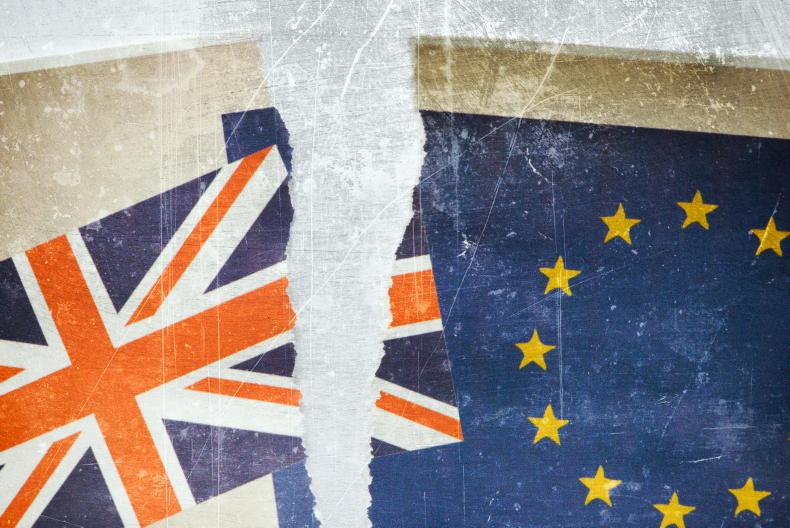
The UK’s decision to leave the EU is undoubtedly one of the biggest economic and political challenges ever to face the Irish economy and the agri food sector.
Examining Bord Bia’s assessment of where Irish food companies are one year after the vote, it can be argued that a lot of the necessary conditions for a comprehensive evaluation of Ireland’s Brexit challenge are in place.
However, this analyses is not sufficient to ensure that the economy and the agribusiness sector can endure the currency and competitiveness issues faced without serious job losses, hits to farm incomes and investment across regional and rural Ireland.
Sterling
Sterling weakness at or below €0.88 represents a huge challenge to our €4.5bn of food and drink exports to the UK.
At the same time it provides a major boost to UK exporters, who place €3.5bn worth of food and drink on the Irish market.
This huge competitiveness challenge combined with a hard Brexit just makes the barriers to maintaining access to our biggest export market even more prohibitive.
So, in addition to continuing the actions outlined by Bord Bia and the market access activity spearheaded by the Minister, Ireland needs the EU to recognise that in the absence of direct support from Europe, Irish farmers, workers and businesses in the largest sector in the Irish economy will be dramatically poorer because UK voters decided to leave the EU.
But to a non-farmer why does this matter? With the Irish economy now reaching full employment and foreign investment growing, surely the second wealthiest country in the EU can cope.
Delusional
This view of Ireland isn’t just rosy – it is delusional.
We know that in excess of €70bn of Ireland’s GDP disappears in annual profit repatriations by multinational companies.
While Ireland ranks second in GDP terms at 177% of EU average, according to the EU, when transfer pricing and profit repatriation is taken into account, we are tenth in actual income or just 95% of EU real incomes.
Direct expenditure
Figures from the Department of Jobs shows that while total direct expenditure by businesses in the Irish economy was €42bn in 2015, €22bn of that was from indigenous companies. Multinationals spent €20bn.
The food and drink sector accounted for €13bn of the indigenous company spend. This figure does not include expenditure by the farming sector.
When you get rid of all the statistical anomalies, the reality is that the agri food sector is the biggest driver of economic impact in the Irish economy.
Not only is agri food a huge economic factor, it is particularly badly impacted by Brexit .Therefore support by the EU and Irish Government is needed if real jobs, incomes and businesses are not to suffer.
Post-Brexit border checks for 100% of live imports and animal products - Barnier


SHARING OPTIONS