Where covers of grass have been built up since August, there should be a bank of grass available for grazing for the remainder of the season, along with whatever grass grows each day. The questions then are:
What is the best strategy for using this autumn grass?
Which stock should it be given to and which should be housed?
What group of cattle on the farm should be the last to be housed?
Most beef farmers will not be considering housing any of their cattle in September as they are not
operating high stocking rate systems and can afford to leave all their stock grazing until at least October. However, there are exceptions, especially when it comes to cattle that are within three to five months of finishing.
While there may still be quite a bit of grass available for grazing in September, the question that has to be answered is whether or not the grass has enough energy even with supplementation to finish cattle in a short period of time? Heifers and two-year-old bullocks that are very close to finish (no more than six weeks of feeding) may stay at grass with 3kg to 5kg of meal to finish them, as housing them will only set them back a month.
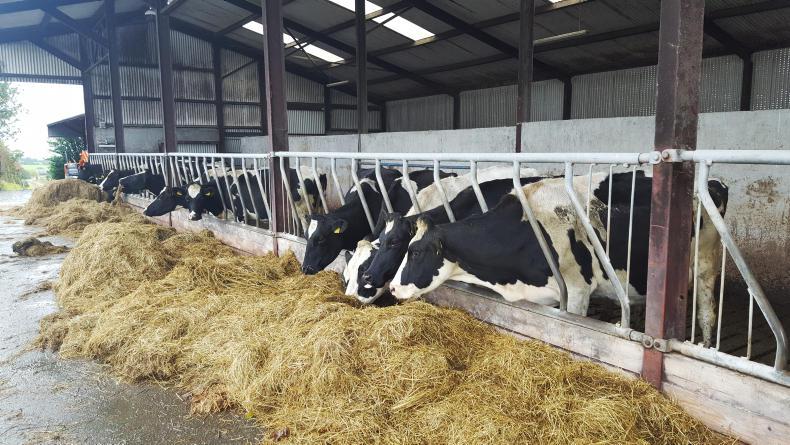
Certain groups of stock which are not going to finish off grass may be candidates for housing in September. For example, autumn born Friesian bulls that need to be slaughtered by their 16th month would, in most cases, benefit by being housed and built up on to their finishing ration sooner rather than later in the month. Similarly, heifers or bullocks that need to be finished for the Christmas trade would also need to be housed in September.
Older bulls from either the dairy or suckler herd (18 to 20 months) start to become very restless and
aggressive as they get older and if they are not filling their bellies with grass, this misbehaviour only
gets worse as the month progresses. Housing is the only option.
For all these groups, whether they are housed early in September or later, will depend very much on what grass is available and the weather conditions. Leaving large numbers out that should really have been housed can have a huge demand on grass and if it is left too late it can leave very little for the remaining stock at grass. This can then lead to the remainder being housed much earlier than planned.
Wet weather, of course, is a deal breaker in September and should mean pulling the plug on those
cattle that need to be housed if they are to be finished in time.
Creep Grazing
Many spring calving suckler herds are not weaning their calves until well into October. It is difficult to know whether or not the calf is benefiting from the milk it is getting from its mother at this stage, especially with January to March born calves. What we know, however, is that the cow still has a huge intake of grass while, at the same time, she is no longer producing a significant amount of milk. It makes sense, therefore, to limit the quantity but, more importantly, the quality of grass that she is getting compared with the amount her calf is getting.
The only way to do this without weaning them is to creep graze the calf ahead of the cow and this should begin as soon as possible.
The benefits of creep grazing are many:
Calves get priority access to the best quality grass which helps to maintain performance.
With calves having an adequate supply of quality grass, less meal is required, giving a cost saving on feed.
Calves get used to grazing away from cows which helps to reduce the maternal bond between cow and calf, leading to reduced weaning stress.
It is cheap to operate – it can be done by installing a creep gate or by raised electric fence.
It facilitates meal feeding. Meal can be fed in troughs in the creep grazing paddock and rationed to animal requirements.
All calves can be observed meal feeding, which aids the detection of diseases such as pneumonia.
Closing
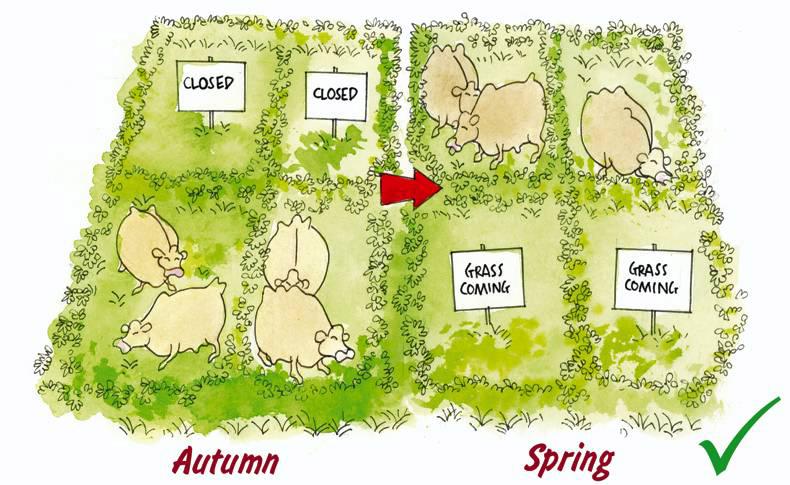
October is the month when farmers need to start closing some of the farm so that they have grass built up to graze early in the new year. This does not mean that all of the stock on the farm have to be housed at the same time. A proper rotational grazing system allows for small areas to be closed. However, it concentrates the number of cattle that are left out on the remaining ground to be closed, which is shrinking by the week.
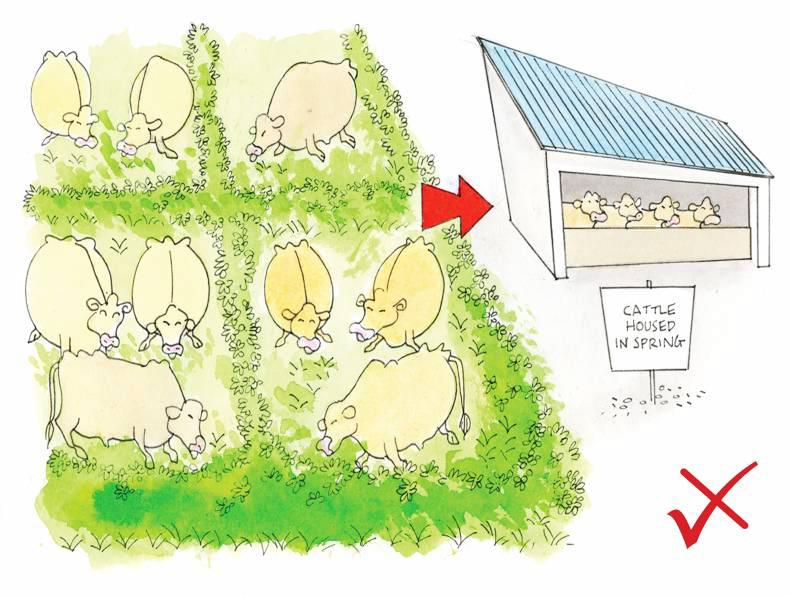
Decisions have to be made as to what stays out and what is housed. It is also important that all of the farm is grazed before the last of the stock are housed, especially if there are heavy grass covers in some fields. These can be a problem later in the autumn if the weather turns very wet and ground conditions are not suitable for grazing.
It is a balancing act to make sure you only leave out stock that can stay out for a long period to reduce the length of the winter but you also leave out enough of the right type of stock so that all grass is grazed before closing permanently.
Heavy cattle that are to be fin-ished over the winter are the prime candidates for housing first. This is because they have a big demand for grass and removing them consider- ably lessens the grass eaten daily on the farm.
In many cases they are not yet on meal as they are going to have a five to six-month winter indoors. Their performance on grass alone is often less than 0.5kg LW per day and housing them onto their finishing diet pushes their daily gain up over 1kg LW per day.
As they are heavy, they can also do a lot of damage or soiling of whatever grass is remaining if there is a wet period of any length. Aim to keep them at grass until at least the middle of October. Where land is dry, weather conditions are good and there is still plenty of grass to be eaten, their housing date can be delayed until the last week of October.
November
On most beef farms, November will be the last month for cattle grazing, unless the weather remains very dry and there are still very heavy covers of grass to graze. With 60% of the farm closed by the middle of the month at the latest, this leaves just 40% to be grazed out. At that stage it is usually either dry suckler cows or weanlings that are still at grass.
Being lighter, the weanlings will do a lot less damage to ground in wetter conditions and are probably the best candidates for housing last.
Also, dry suckler cows need a certain level of body condition at housing so that they can lose some weight over the winter on either a lower energy winter diet or by being fed less to save on winter feed. They cannot lose too much condition before they are housed. Aim to have all of the farm grazed before the last group of cattle are housed.
This article is an excerpt from 'Grazing Guide' which was published as a joint venture between the Irish Farmers Journal and Teagasc.
To find out more about autumn grass management:
Case Study: Sean Power, Co. Kilkenny
Where covers of grass have been built up since August, there should be a bank of grass available for grazing for the remainder of the season, along with whatever grass grows each day. The questions then are:
What is the best strategy for using this autumn grass?
Which stock should it be given to and which should be housed?
What group of cattle on the farm should be the last to be housed?
Most beef farmers will not be considering housing any of their cattle in September as they are not
operating high stocking rate systems and can afford to leave all their stock grazing until at least October. However, there are exceptions, especially when it comes to cattle that are within three to five months of finishing.
While there may still be quite a bit of grass available for grazing in September, the question that has to be answered is whether or not the grass has enough energy even with supplementation to finish cattle in a short period of time? Heifers and two-year-old bullocks that are very close to finish (no more than six weeks of feeding) may stay at grass with 3kg to 5kg of meal to finish them, as housing them will only set them back a month.
Certain groups of stock which are not going to finish off grass may be candidates for housing in September. For example, autumn born Friesian bulls that need to be slaughtered by their 16th month would, in most cases, benefit by being housed and built up on to their finishing ration sooner rather than later in the month. Similarly, heifers or bullocks that need to be finished for the Christmas trade would also need to be housed in September.
Older bulls from either the dairy or suckler herd (18 to 20 months) start to become very restless and
aggressive as they get older and if they are not filling their bellies with grass, this misbehaviour only
gets worse as the month progresses. Housing is the only option.
For all these groups, whether they are housed early in September or later, will depend very much on what grass is available and the weather conditions. Leaving large numbers out that should really have been housed can have a huge demand on grass and if it is left too late it can leave very little for the remaining stock at grass. This can then lead to the remainder being housed much earlier than planned.
Wet weather, of course, is a deal breaker in September and should mean pulling the plug on those
cattle that need to be housed if they are to be finished in time.
Creep Grazing
Many spring calving suckler herds are not weaning their calves until well into October. It is difficult to know whether or not the calf is benefiting from the milk it is getting from its mother at this stage, especially with January to March born calves. What we know, however, is that the cow still has a huge intake of grass while, at the same time, she is no longer producing a significant amount of milk. It makes sense, therefore, to limit the quantity but, more importantly, the quality of grass that she is getting compared with the amount her calf is getting.
The only way to do this without weaning them is to creep graze the calf ahead of the cow and this should begin as soon as possible.
The benefits of creep grazing are many:
Calves get priority access to the best quality grass which helps to maintain performance.
With calves having an adequate supply of quality grass, less meal is required, giving a cost saving on feed.
Calves get used to grazing away from cows which helps to reduce the maternal bond between cow and calf, leading to reduced weaning stress.
It is cheap to operate – it can be done by installing a creep gate or by raised electric fence.
It facilitates meal feeding. Meal can be fed in troughs in the creep grazing paddock and rationed to animal requirements.
All calves can be observed meal feeding, which aids the detection of diseases such as pneumonia.
Closing
October is the month when farmers need to start closing some of the farm so that they have grass built up to graze early in the new year. This does not mean that all of the stock on the farm have to be housed at the same time. A proper rotational grazing system allows for small areas to be closed. However, it concentrates the number of cattle that are left out on the remaining ground to be closed, which is shrinking by the week.
Decisions have to be made as to what stays out and what is housed. It is also important that all of the farm is grazed before the last of the stock are housed, especially if there are heavy grass covers in some fields. These can be a problem later in the autumn if the weather turns very wet and ground conditions are not suitable for grazing.
It is a balancing act to make sure you only leave out stock that can stay out for a long period to reduce the length of the winter but you also leave out enough of the right type of stock so that all grass is grazed before closing permanently.
Heavy cattle that are to be fin-ished over the winter are the prime candidates for housing first. This is because they have a big demand for grass and removing them consider- ably lessens the grass eaten daily on the farm.
In many cases they are not yet on meal as they are going to have a five to six-month winter indoors. Their performance on grass alone is often less than 0.5kg LW per day and housing them onto their finishing diet pushes their daily gain up over 1kg LW per day.
As they are heavy, they can also do a lot of damage or soiling of whatever grass is remaining if there is a wet period of any length. Aim to keep them at grass until at least the middle of October. Where land is dry, weather conditions are good and there is still plenty of grass to be eaten, their housing date can be delayed until the last week of October.
November
On most beef farms, November will be the last month for cattle grazing, unless the weather remains very dry and there are still very heavy covers of grass to graze. With 60% of the farm closed by the middle of the month at the latest, this leaves just 40% to be grazed out. At that stage it is usually either dry suckler cows or weanlings that are still at grass.
Being lighter, the weanlings will do a lot less damage to ground in wetter conditions and are probably the best candidates for housing last.
Also, dry suckler cows need a certain level of body condition at housing so that they can lose some weight over the winter on either a lower energy winter diet or by being fed less to save on winter feed. They cannot lose too much condition before they are housed. Aim to have all of the farm grazed before the last group of cattle are housed.
This article is an excerpt from 'Grazing Guide' which was published as a joint venture between the Irish Farmers Journal and Teagasc.
To find out more about autumn grass management:
Case Study: Sean Power, Co. Kilkenny






SHARING OPTIONS