


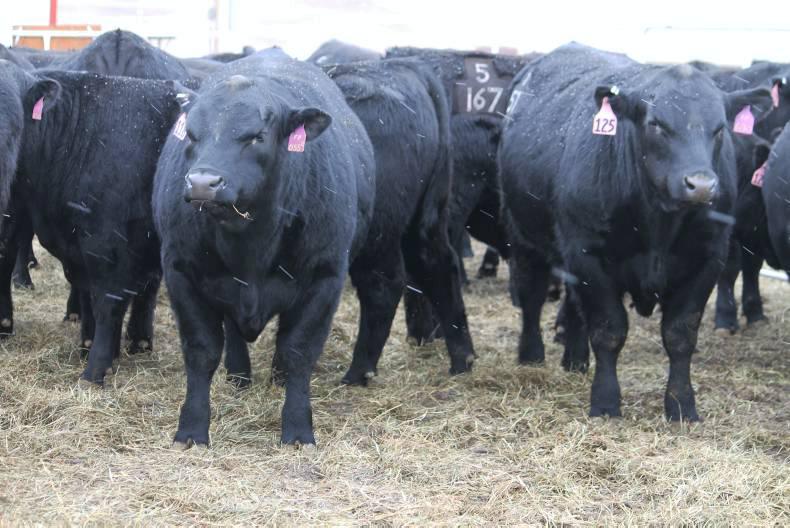
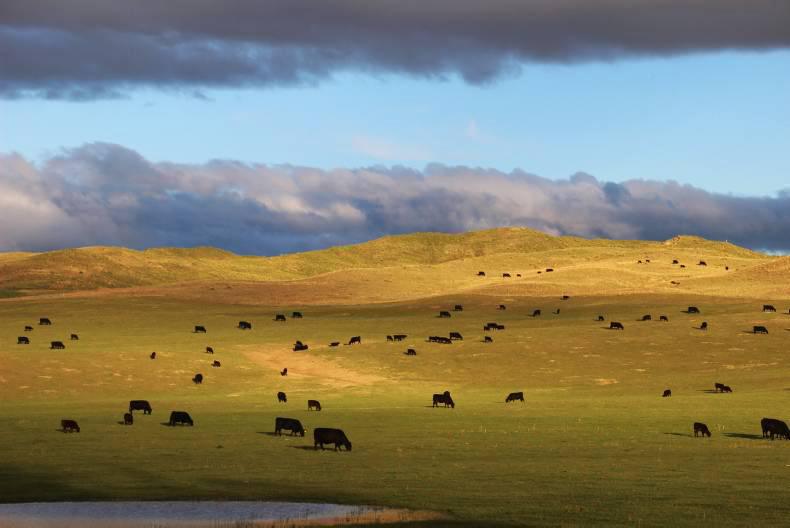
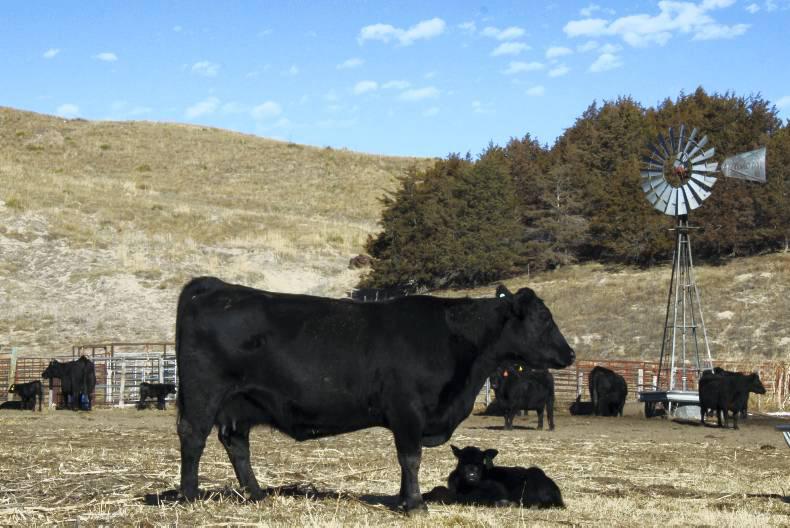
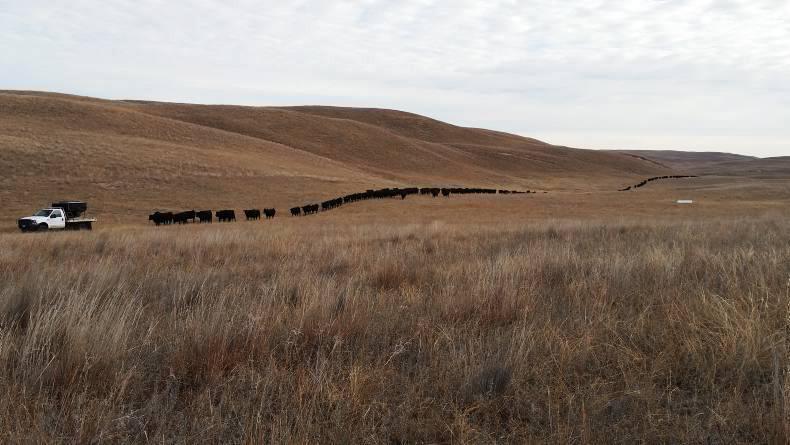
On a study trip to the United States with the Irish Angus Producer Group, it was a privilege to meet the owners of the world-renowned family-run Connealy Angus herd in the sand hills of Nebraska.
Countless stories have been told through the years of how breeders’ mindsets were changed after visiting Jerry Connealy and his family on their farm. After visiting, it’s safe to say I understand why – the Connealys’ attention to detail and commercially styled management were first-class.
Female breeding policy
The Connealys now run 2,000 purebred Angus cows over 40,000 acres and their policy over the last 50 years hasn’t changed – “get the cow to work for you, not you to work for the cow”.
Jerry explains their main focus to make this work is good maternal traits, especially fertility – “fertility is the number one economic driver”.
Running a 100% AI setup, Jerry only allows two chances for the cow to keep. If unsuccessful at that stage, she’s culled. “If a cow doesn’t get pregnant and get pregnant early, it doesn’t matter how good she is,” explained Jerry.
To aid with conception rates and ensure breeding is more streamlined, Jerry uses melengestol acetate (MGA), which suppresses oestrus and brings on a false heat. Twenty-one days after this, the breeding will begin and last for 35 days.
Watch a video made by the Irish Farmers Journal on the farm in 2014:
With this policy put in place since they started, it has led to a very fertile herd, with conception rates in at 86% to 91% after two shots.
Jerry would still usually keep 25% to 30% of the heifers to make sure the next generation are coming into production faster, as he believes if these aren’t better than the previous, he is doing something wrong.
Performance
As many as possible performance traits are recorded on farm to aid decision-making when it comes to culling and sales.
Birth weights last year averaged 77lbs (34.9kg), while weaning weights for 750 bulls averaged at 725lb (328kg) and had a target yearling weight of 1,200 to 1,300lb (544kg to 589kg).
What certainly has to be taken into account when looking at these figures is the commercial way which the herd is run. It was the only herd we visited on the tour which wasn’t using implanted hormones. Ninety-seven percent of all beef in the US comes from animals implanted with hormones.
Animals are weighed at birth, weaning and yearling, scanned for rib eye area and marbling, measured for scrotal size and assessed for docility, as well as being DNA and genomic profiled.
All this information is then fed back to produce figures known as expected performance difference (EPD) – the equivalent to our €uro-Star system.
Jerry is a firm believer in using as much science as possible when selecting his stock and doesn’t believe that they have truly yet got the most out of genomics.
“Genomics is the best science we have at the moment. It will become more and more valuable the more information that goes in,” he said.
Ireland’s suckler herd
The new Beef Data and Genomics Programme (BDGP) in Ireland has taken up tracks of column inches over the past year.
After years of selecting for terminal traits, our national suckler herd has seen a steady decline in maternal performance, leading us down a path of milk and fertility problems. In essence, the new scheme was introduced to counteract these problems.
After seeing how the Connealy breeding policy, which focuses largely on these traits, has worked over the last 50 years, it gives some reassurance that the route the Irish suckling industry is taking might possibly be the correct one.
Sales
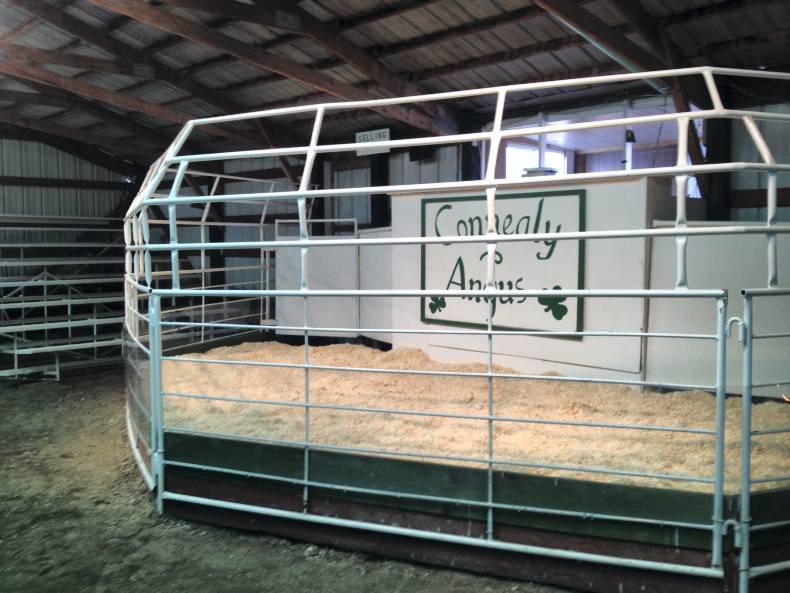
Each year, the Connealys hold an on-farm sale in the last week of April, where approximately 600 bulls are sold.
These bulls would be between 14 and 20 months old and last year were sold for an average price of $11,600 (€10,600), with a top of $80,000 (€73,600).
Last year was not a spectacular year for the Connealys, with the average usually around the $11,000 to $12,000 mark. Their top price ever of $235,000 (€216,000) for Connealy Ernan who sold to stud was achieved in 2012.
Generally, four to eight bulls from the sale would go to stud each year and 90% of the remaining bulls would be sold to repeat customers.
Something a bit different
I noted two very unique aspects to the Connealy sale which I hadn’t seen anywhere else.
Firstly, all bulls are guaranteed for 12 months. This is the reason Jerry doesn’t sell all bulls on the day of the sale. A number are sold privately, but then a certain number of bulls are retained on-farm to go out as replacements if anything was to happen a sold bull. A normal year would see 8% to 10% of bulls having to be replaced.
Secondly, only one registered female is sold off-farm each year, which happens at the very end of the annual sale. All heifers which aren’t kept as replacements are sold to commercial herds without papers. “If they’re not good enough for me to breed off, I don’t want others doing it,” Jerry says.
The female sold at the end of the sale is rarely seen by the buyer, as it’s called “pick of the dams”, where a buyer simply bids and if he is the successful bidder, gets to choose any one of the bulls’ mothers. This year, the pick made $120,000 (€107,500). Would you ever think of buying an animal on paper alone and at that price?




SHARING OPTIONS