




The diesel challenge is growing from the hybrid side of the market and that technology is drifting into the SUV sector, the now fastest-growing sector in the car market across Europe. That challenge is environmentally driven as the pressure on diesel particulates has not been helped by the Volkswagen Group diesel scandal issues.
The arrival of improved petrol engines, coupled with hybrid systems that extend the range in a cost-effective way, may be one answer on the pathway towards hydrogen power. How quick we get to the hydrogen stage will determine how much more investment goes into further hybrid development.
Japanese car companies have been at the forefront of the hybrid system development. Toyota led the way with the Prius, easily the world’s best-selling hybrid car. Mitsubishi has been one of the pioneers of electric car technology with the small city car, the iMiev.
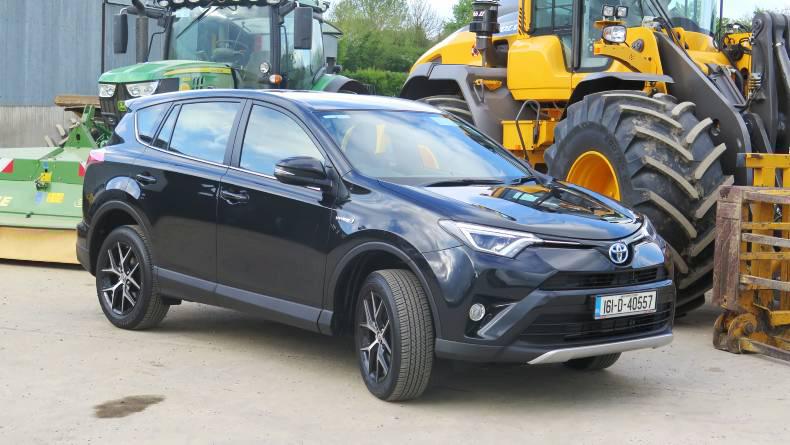
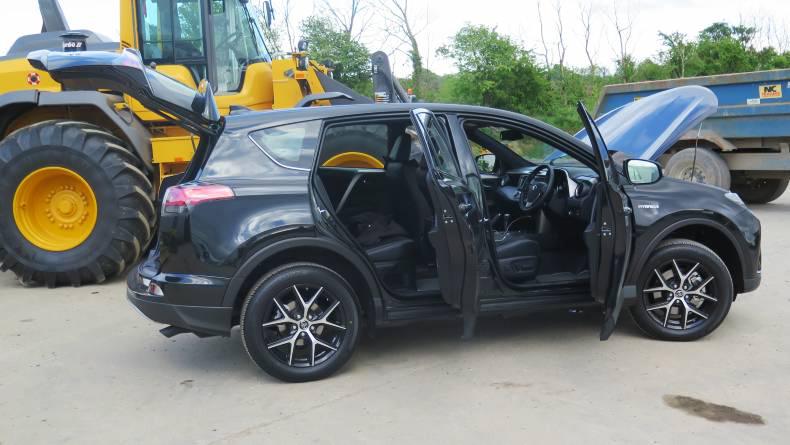
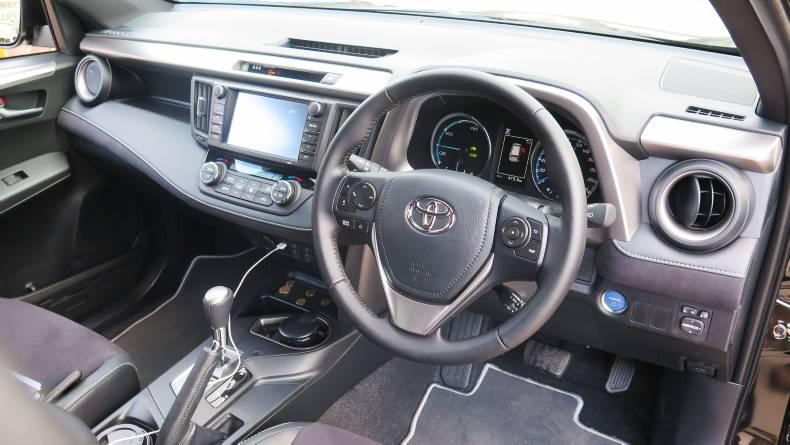
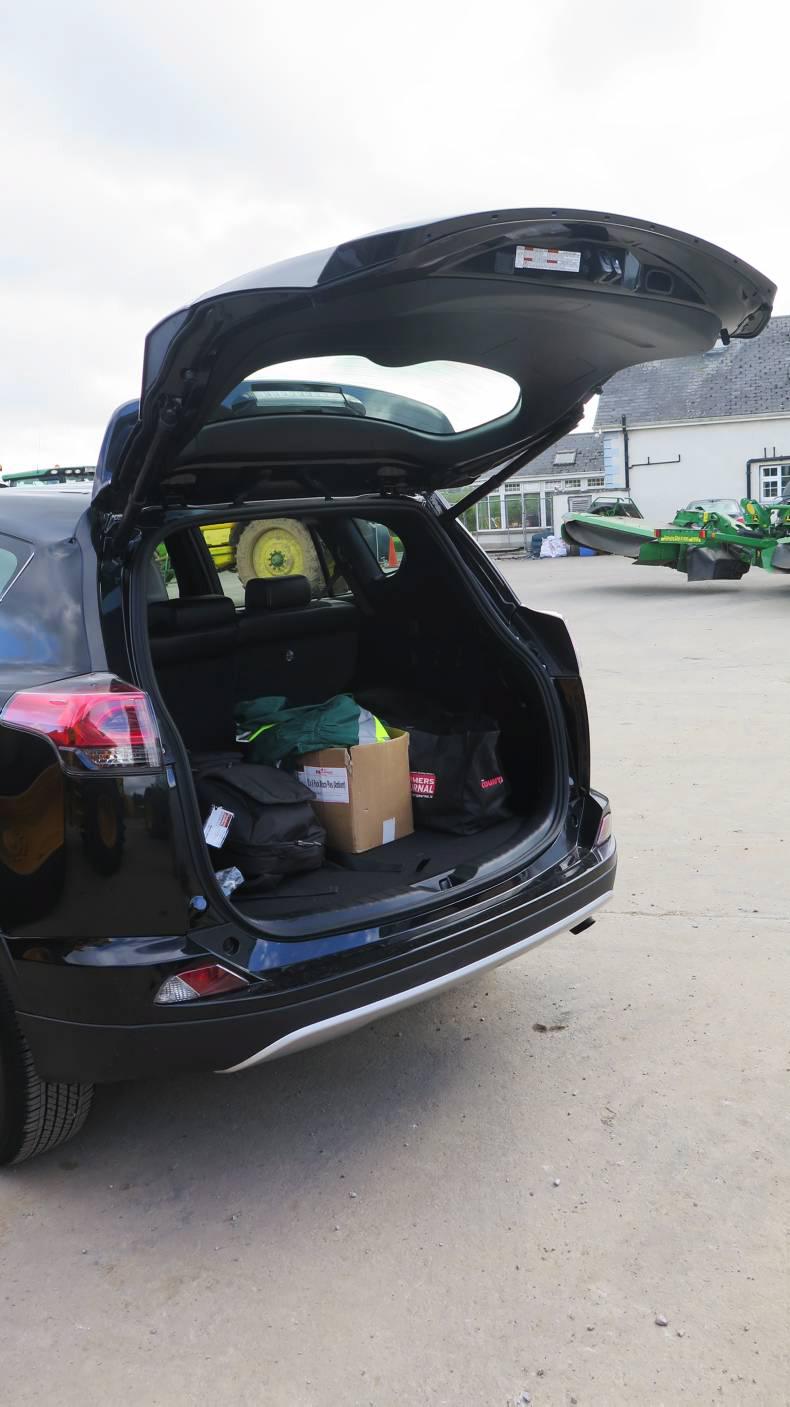
They are both in the hybrid SUV market now with Toyota offering the option of four-wheel-drive only in the hybrid format of the new RAV4.
Mitsubishi, on the other hand, offers four-wheel-drive in the diesel and hybrid format, giving a slightly wider choice.
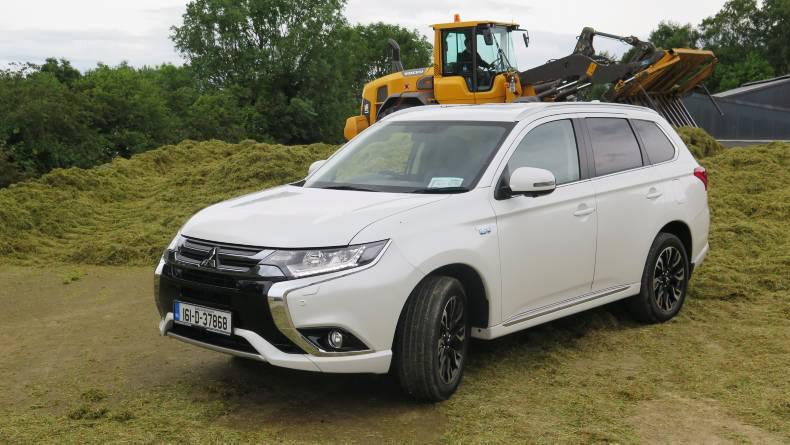
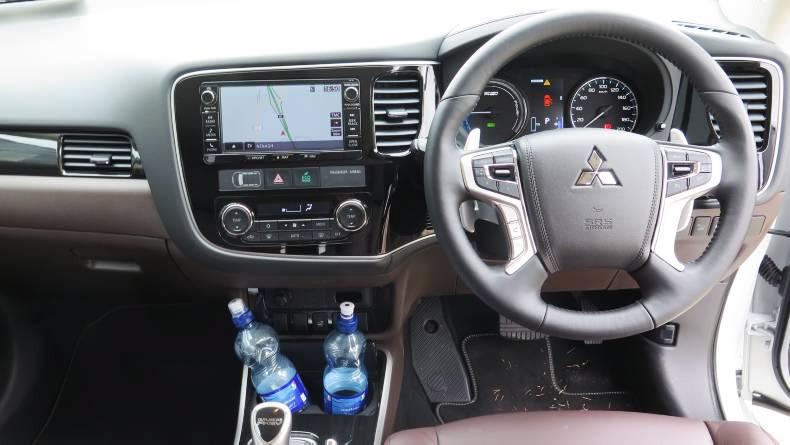
So, why make the choice of hybrid over diesel? I’ve driven both SUVs in recent weeks, first the Toyota RAV4 hybrid, followed more recently by the Mitsubishi Outlander PHEV.
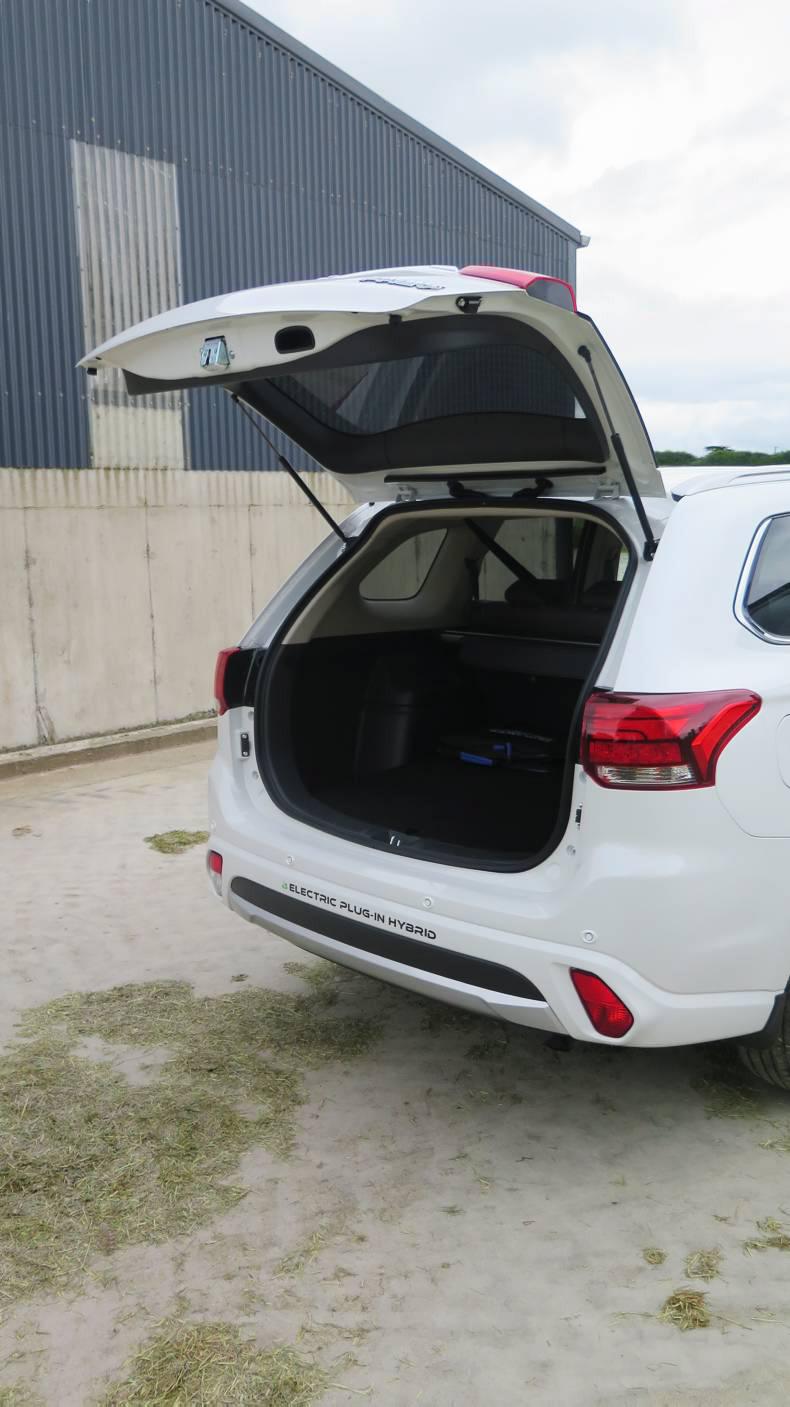
This latter SUV is a plug-in hybrid, which allows you to charge the batteries from your home overnight and then drive a relatively short distance on electric power alone. I drove the Outlander over a lengthy two-day run and used whatever electric power was already in the charged batteries. For the drives that I was on, there was little point in seeking to use the electric-only system, so I went straight into power mode using the car’s parallel power mode almost from start.
This means using the power from the two-litre petrol engine to drive the generator, which in turn powers the battery pack that sends electric power to the front and rear wheels. When out on the road, the engine does some direct driving to the front axle. The power route seems a long one, but with electric power the losses can be less than with mechanical systems.
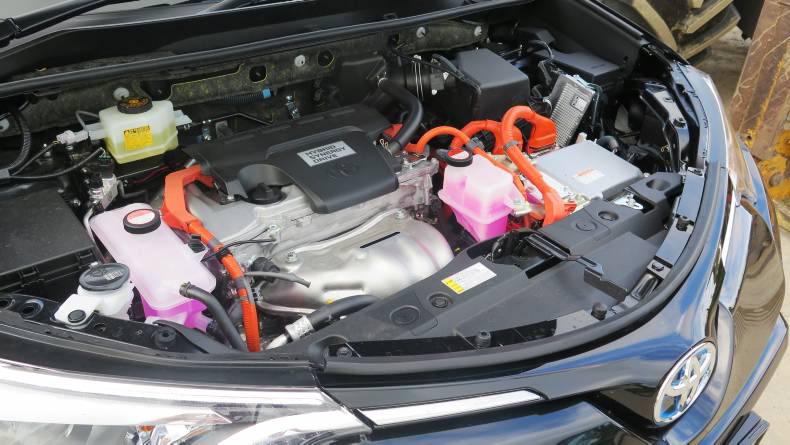
The Toyota RAV4 takes a different route and it is not a plug-in hybrid. The 2.5-litre petrol engine delivers power to both the wheels and the battery pack and seamlessly uses both, sometimes in combination, to drive it forward. When you hit the floor you quickly feel the engine power, while the changeover is very smooth each time.
The aim of taking the hybrid route is to lower emissions from diesel engines. These are high-calibre motives for most drivers, but when many will sit down they will look at the economics for their individual pockets. Some might say that we need to look at the bigger environmental picture; we need to take responsibility for our individual actions and that means our car choices.
For most of us, however, it’s our economy that matters. How much will it cost to run one of the impressive new hybrid SUVs and can we afford the extra costs? For rural drivers who are trailer pullers, the immediate downside of hybrid drives is the lower towing performance.
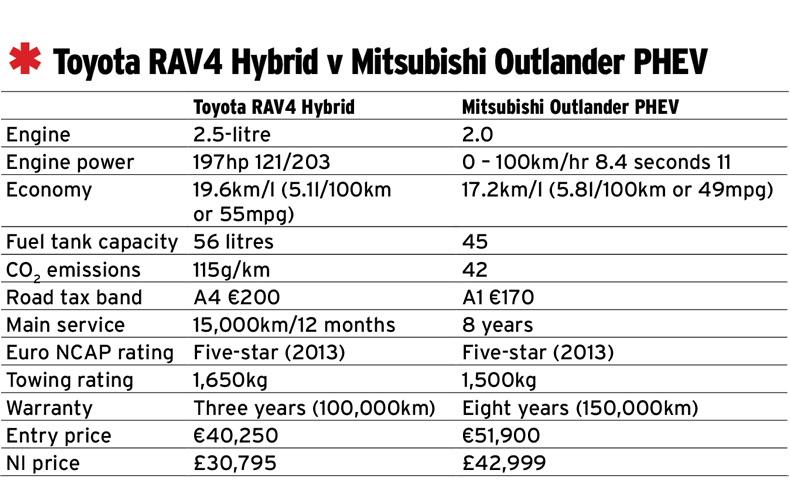
Both the hybrid Outlander and the RAV4 are significantly lower in towing ability than their diesel counterparts, upwards of 450kg or one strong weanling bullock. The RAV4 has a marginally better towing rating but at 1,650kg, it’s well behind the 2,000kg target.
When you look at the running cost numbers, based on fuel economy and the difference between petrol and diesel costs at the pumps, then you are forced into another diesel decision. The first impressions are that the fuel economy figures simply don’t stack up for the hybrid choice.
With each respective model, the rated fuel economy figure is lower with the diesel engine choice than with the petrol hybrid versions. Part of the reason for this has to be the extra weight.
The RAV4 Hybrid kerb weight is 310kg heavier than its diesel counterpart. The Outlander is 335kg heavier. And we know that pushing that extra weight around takes more power and, ultimately, more fuel, whether it is diesel or petrol fuel.
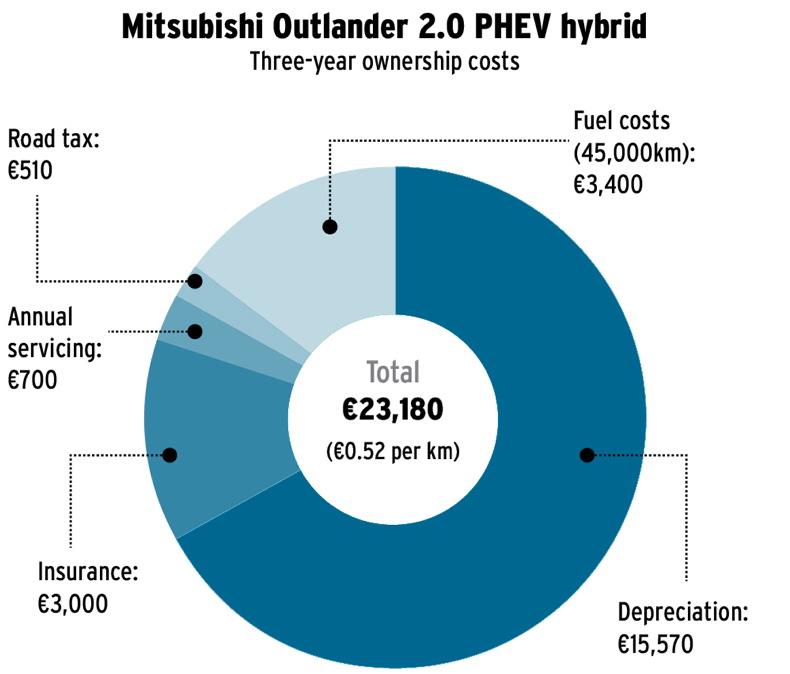
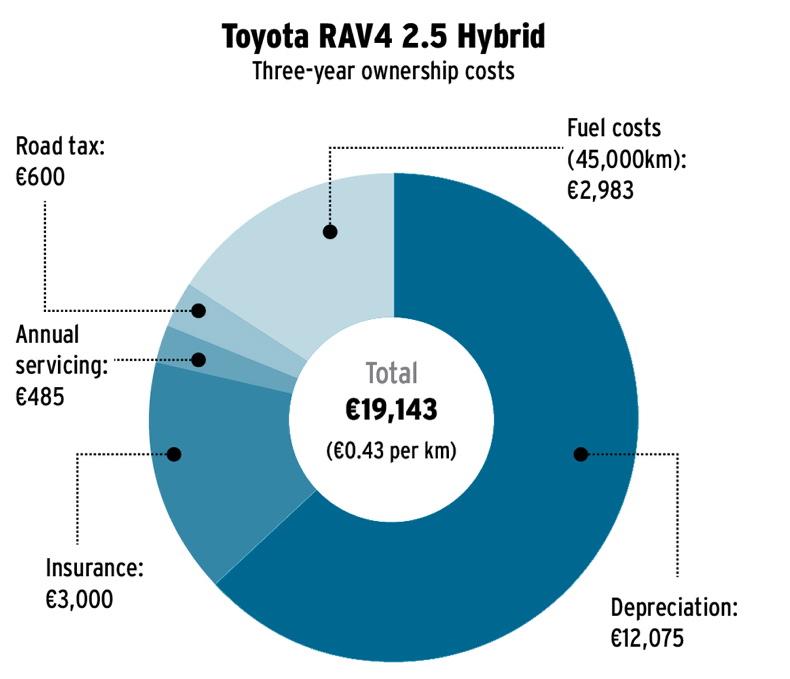
Calculate the numbers though and you’ll find that the actual fuel running cost differences are not that significant and you are doing your bit for the environment. Based on a 45,000km use level, the hybrid Outlander will cost you about approximately €870 more in fuel over three years, while the RAV4 extra hybrid costs will be about €512 over the diesel equivalent. Averaged out, that works out at about €230 per year extra cost and I believe that part is bearable for most drivers.
The annual road tax cost differences are minimal, nothing compared with the fuel cost differences, so you need to prioritise these real costs. They could shave €100 per year off that fuel cost, narrowing the margin once again.
And, finally, there’s the issue of depreciation, the biggest part of the ownership cost, that you only find out about three years after you own it and try to sell it on or trade it for another.
Hybrids will still attract a narrower band of followers in the secondhand market than a reliable three-year-old diesel SUV with a proven track record. You just have to expect the costs to be higher and you need to factor that into your ownership costs from day one.
Hybrid prices are also higher. The entry price for the Outlander PHEV is €51,900 or £42,999 in Northern Ireland, while the Toyota RAV4 prices start at €40,250 or £30,795 in Northern Ireland. That’s more than a €10,000 premium over the entry-level models.
If you can cope with the maths bit, the ownership costs that is, then you will easily cope with the driving performance of these two hybrids. You’ll quickly see that they really do hit the honey spot when it comes to performance.
There is something very solid about driving the Outlander, especially as I took it across some fields. I enjoyed the experience that comes with the low centre of gravity from the battery pack that sits under the floor. Be mindful of the bad gaps on the way.
Out on the road, the RAV4 has an easy driving feel; it feels lighter and the bigger petrol engine can move it on with an impressive pace. And you’ll notice that it is livelier than the Outlander for that reason. It also has a slight edge when it comes to towing.
I would not consider either option if towing is a priority; I can only imagine how fast the fuel economy gauge would respond. But doing your bit for the environment does not have to cost the earth when you make the hybrid SUV choice and it might even save some of it.


SHARING OPTIONS