Stocking at sub-optimum stocking rates may cause a loss of profit potential, according to Michael McKeon from Teagasc Moorepark.
Speaking to the Irish Farmers Journal at the Teagasc pig conference, McKeon said that over the last 10 years the pig sector has been “extremely successful” in increasing the sale rate of the weighted pigs on units and the output of pigs on units.
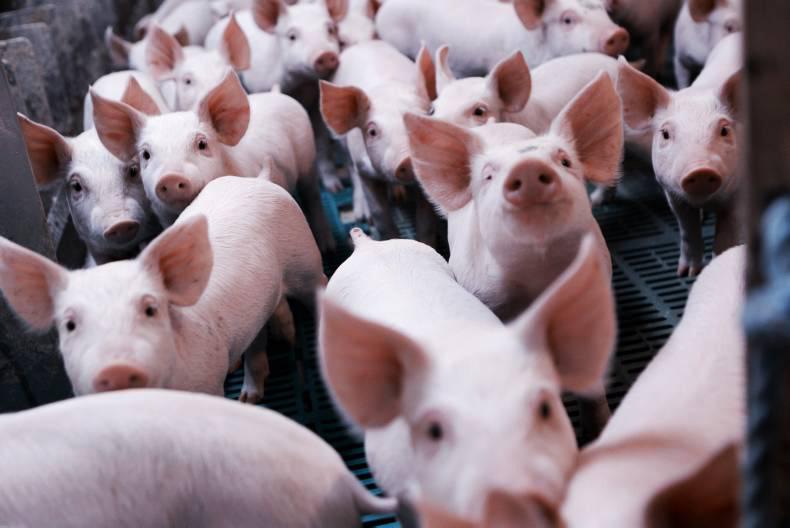
“The downside is that a lot more pigs are coming through the system,” he continued, “and due to poor economic returns there hasn’t been the amount of housing that is needed per rata. So the finisher pens in pig units are being stocked heavier than they were before and, while still within the legal limits, they’re sub-optimal for maximum performance on units.”
According to McKeon, pig farmers are currently losing money through three areas:
1. Overstocking at the end of the finisher period – losing on performance.
2. Grading in slaughter plants.
3. Output per square metre of housing.
His research into optimising the pig finisher sales strategy shows a potential benefit of up to €50,000 for a 600-sow pig unit by implementing a number of action points:
Calculate the required finisher stocking levels for your unit.If your stocking rate is too high then, in the medium term, plan to add extra finisher accommodation or reduce sow herd size.In the short term, stop grading finishers into the finisher house.Begin taking the ‘tops’ of all finisher pens three weeks prior to the expected sale date.“By taking about 25% of the heaviest pigs out of the pen three weeks before sale, you’re allowing more space for the remaining pigs and you get a huge boost in performance and your grading is better,” he said.
Listen to “Advice from Teagasc's pig conference” on Spreaker.
“Farmers are getting less of the underweights and overweights, and because you get an increase in the output for those pigs left behind, you’re output is the same if not better than it would have been if you left those pigs in,” he added.
“If you look at the financial benefits, it will give you about €48,000 of an advantage – that’s very valuable in the industry”.
“The big advantage for farmers is that they can do it without spending a big amount on structural rearrangement. They’re winning from a performance and a grading point of view.”
Read more
Listen: pig market to remain firm until Chinese New Year
Stocking at sub-optimum stocking rates may cause a loss of profit potential, according to Michael McKeon from Teagasc Moorepark.
Speaking to the Irish Farmers Journal at the Teagasc pig conference, McKeon said that over the last 10 years the pig sector has been “extremely successful” in increasing the sale rate of the weighted pigs on units and the output of pigs on units.
“The downside is that a lot more pigs are coming through the system,” he continued, “and due to poor economic returns there hasn’t been the amount of housing that is needed per rata. So the finisher pens in pig units are being stocked heavier than they were before and, while still within the legal limits, they’re sub-optimal for maximum performance on units.”
According to McKeon, pig farmers are currently losing money through three areas:
1. Overstocking at the end of the finisher period – losing on performance.
2. Grading in slaughter plants.
3. Output per square metre of housing.
His research into optimising the pig finisher sales strategy shows a potential benefit of up to €50,000 for a 600-sow pig unit by implementing a number of action points:
Calculate the required finisher stocking levels for your unit.If your stocking rate is too high then, in the medium term, plan to add extra finisher accommodation or reduce sow herd size.In the short term, stop grading finishers into the finisher house.Begin taking the ‘tops’ of all finisher pens three weeks prior to the expected sale date.“By taking about 25% of the heaviest pigs out of the pen three weeks before sale, you’re allowing more space for the remaining pigs and you get a huge boost in performance and your grading is better,” he said.
Listen to “Advice from Teagasc's pig conference” on Spreaker.
“Farmers are getting less of the underweights and overweights, and because you get an increase in the output for those pigs left behind, you’re output is the same if not better than it would have been if you left those pigs in,” he added.
“If you look at the financial benefits, it will give you about €48,000 of an advantage – that’s very valuable in the industry”.
“The big advantage for farmers is that they can do it without spending a big amount on structural rearrangement. They’re winning from a performance and a grading point of view.”
Read more
Listen: pig market to remain firm until Chinese New Year





SHARING OPTIONS