



The realities of low milk prices are beginning to bite. The March milk cheques have startled many. Not only is the price back, but many farms won’t even achieve the base price, due to lower than normal fat and protein percentages this spring.
The effect that this will have on cash flow depends entirely on how much money was in the current account at the start of the year. Cash reserves of about €300/cow is required to get over the first six months in a normal year, either in the form of actual cash or an overdraft. But as reported in pages 40 and 41, the period of cash deficit this year is likely to last until the basic payments arrive in October.
I did an exercise recently with a discussion group, looking at all the costs that could potentially be cut in an attempt to retain as much cash as possible. It’s amazing how many costs we have now, that we didn’t have 20 or 30 years ago. Maybe now is a good time to take a step back and ask ourselves how many of these costs are entirely essential. Remember, our goal as dairy farmers is to convert grass to good-quality milk.
When all the small cost savings are added up, €150/cow can be saved, or €15,000 for a 100 cow farm. More importantly, all the cost savings are achievable and don’t require big system changes. Some costs should not be cut. I don’t propose reducing the use of labour, vaccines or capital fertiliser. The following costs should be looked at closely on your farm.
1 Nitrogen: Do a budget now for how much grass you need to grow over the next three months. You should aim to have 1.2tDM/cow of grass silage in the yard heading into winter. Many farms have silage left over. If getting silage from an out-farm, you only need to grow enough grass on the home farm to feed the herd. Surplus bales are expensive. Don’t stress about grass quality if spreading low levels of nitrogen. If lowly stocked, you can afford to let the cows graze selectively and leave some stem behind. Savings come from less nitrogen and less surplus silage being made. Potential saving = €10/cow.
2 Reseeding: Not justified on most farms where P and K levels are substandard. Fix them first. Potential saving if normally reseeding 10% per year = €30/cow.
3 Breeding: Some AI companies have good offers (50% cheaper than competition) on bulk purchases of good Irish-bred bulls. You could use three weeks of dairy AI and then use beef AI which is cheaper.
If bulls are on the farm you could use these earlier to reduce AI usage. If no bulls are on the farm you could use all AI. Potential saving = €6/cow.
4 Bedding: Buy straw or woodchip for next season now. There is still lots of 2015 straw for sale at low prices. With less tillage crops being sown, 2016 straw could be more expensive. Potential saving = €4/cow.
5 Feed: Feeding a three-way mix instead of a compound nut will save about €60/t. Presuming 300kg will be fed between now and year end the saving per cow will be €18 but on most farms there is scope to reduce the usage of meal also. Potential saving = €18/cow.
6 Milk recording: Are you getting sufficient value from recording each cow’s production or is it a cost that can be done without for one year? Potential saving = €11/cow.
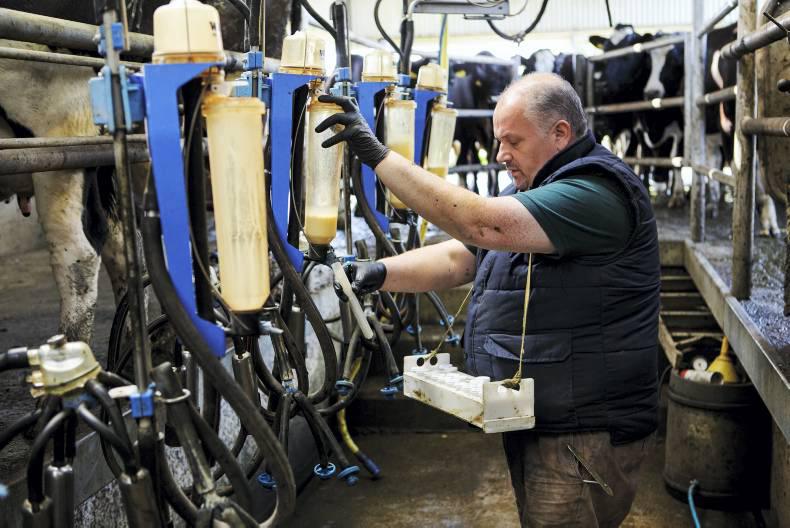
7 Dairy supplies: There is a huge range (between €10 and €30/cow) in what farmers are spending on dairy supplies. These include teat sprays and detergents. Yes, SCCs and TBCs are important but throwing money at the problem doesn’t guarantee success. In many cases, farmers would be better off culling the chronic SCC cows and cutting back on preventative costs.
Pre-spraying teats doubles the cost. Paper towels are very expensive too. On teat sprays, there is a huge variation in prices between products. Iodine costs about €1.55/litre while some chlorhexidine-based products cost €2.25/litre. Some farmers will add glycerine to iodine which acts as an emollient. You should use a measuring jug to dispense detergents – don’t just guess how much to use. Potential saving = €6/cow.
8 Calf rearing: The only target that matters is weight at mating and that’s 330kg for Holstein Friesians. Feeding heifers to be above that is wasted money. Every day of extra milk feeding is costing a minimum of €1/calf/day. Yes, feed conversion efficiency is highest pre-weaning but that doesn’t leave you with any more cash. All February calves should be weaned now. Feed soya hulls or rolled barley instead of calf nuts over the summer and put lighter calves on a leader/follower grazing system. Potential saving = €15/cow.
9 Vet costs: Rather than treating all cows with dry cow tubes next winter, CMT and treat infected cows only. Presuming usage drops to 25%, you will save €3/cow. Teat sealing costs €4/cow and many herds manage fine without it. On doses, very little research exists to say that cows need a worm dose as standard during the summer. This costs about €7/cow.
Using a white drench instead of an ivermectin-based dose for young stock actually costs twice as much over the season because you need to dose more regularly. Potential saving = €20/cow.
10 Electricity: Huge variation in electricity costs between farms, as much as €10/cow. Have you shopped around for different suppliers? Milk cooling is a big cost. Is the plate cooler working correctly or at all? Anything with a motor is a heavy user of power. Run scrapers less frequently. Turn off lights when not needed. Use energy efficient bulbs where lights must be kept on.
Limit the time spent washing yards – some people spend all day at the hose and this eats power and fills the dirty water tanks too quickly. The same applies to power washers. It’s even more important where water is being metered and charged. Only turn on the milking machine when ready to milk and turn it off promptly when finished.
Try to finish the morning milking before 8am to avail of night rate electricity. Automatic machine washing uses up more electricity because they run for longer. Potential saving = €5/cow.
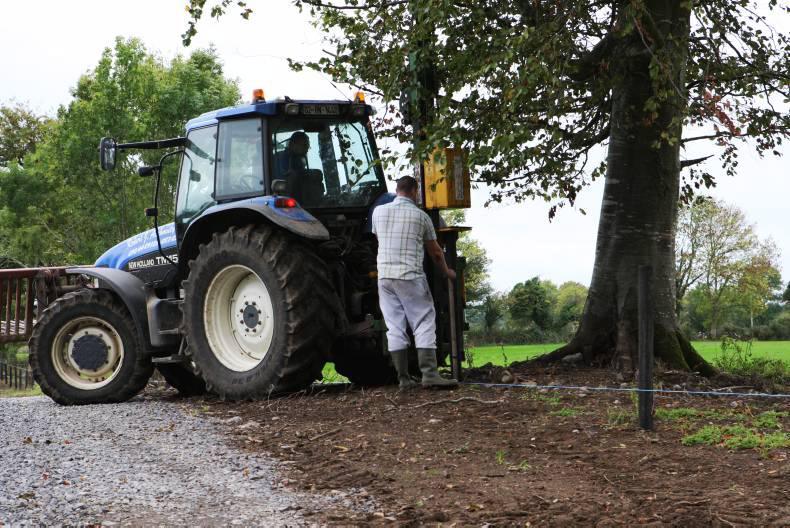
11 Fuel: Topping and pre-mowing is a waste of time as 90% of it is cosmetic, with no subsequent improvement in grass quality, so give it up. Quads are high users of petrol. Limit the use of tractors and quads around the yard. Every journey has a cost and it all adds up. Same applies to using a jeep instead of a car for long journeys. Potential saving = €10/cow.
12 Machinery: According to Profit Monitor results, the average farmer spends €72/cow on machinery while the top 25% spend €61/cow. Spending money on owned machinery is like throwing money into a black hole – you will never get it back. A decision will have to be made this year that you are not going to fix certain machines when they inevitably break down. Potential savings = €5/cow.
13 Fencing and water repairs: These are the type of items you go into a farm shop to purchase and you come home with four or five other items that you didn’t intend to buy. Water fittings can be bought online about 50% cheaper than they cost in farm shops. Build up a stock of regularly used fittings and have them on hand. Between €10 and €20/cow is spent each year on fencing.
Surely some of this work can be postponed. Potential saving = €10/cow.
Comment
When all the cost savings are added up, the potential exists to save €150/cow. While not everybody will agree with all of the potential savings outlined, it is heartening to see that by cutting small costs here and there, a big amount of money can be saved. This list is not definitive – there are lots of other costs that can be cut too. A good starting point is to go through the stubs on the chequebook to see where the money went last year, and ask yourself do you need to spend that this year.



SHARING OPTIONS