Last week, ICOS launched a new proposal aimed at combatting extreme income volatility in the dairy sector.
The new scheme, called 5-5-5, will allow a dairy farmer who already is doing five-year income averaging to defer (voluntarily) up to 5% of his income (milk receipts) in high-income periods and place it into a recognised fund to be drawn down within five years.
The proposal forms part of the body’s statement of priorities for political parties ahead of the 2016 general election, which was launched on Tuesday this week.
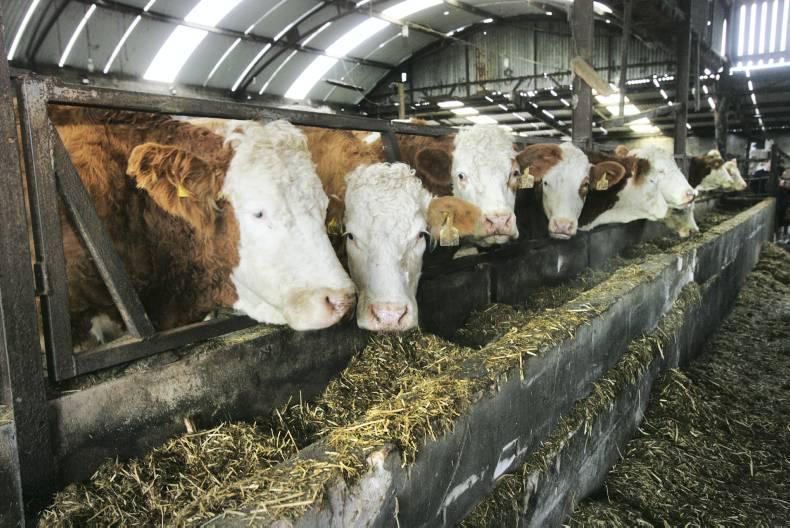
Alongside the proposal on income volatility, the body has stated that the future government must address the issues impacting on the success of the livestock sector.
This includes the “anti-competitive measures” that ICOS says Irish meat factories "insist on" through their quality payment system (QPS), where cattle that have moved farms in the last 70 days before slaughter are penalised and do not qualify for the QPS bonus.
“The QPS is also withheld if cattle have had more than four movements from farm to farm prior to slaughter, even if all farms are quality assured,” says ICOS.
The body says this practice "discriminates specifically against livestock marts" and means Irish meat factories have "effectively removed trade in factory fit animals".
ICOS also says the next government needs to “promote Irish live exports of cattle and sheep” and address “the power of the multiples and meat processors on their abuse of EU labelling regulations which has shut down traditional live exports to the UK”.
The problem with mixed-origin meat is that under labelling regulations it has to be kept separate and identified from either Irish or UK origin beef. With the mainstream retailers being squeezed by the discounters who carry exclusively UK and a small range, it is impossible to persuade retailers to carry a third “mixed origin” range on top of their existing UK and sometimes Irish range. They are looking to reduce the range they carry, not increase it to compete with the discounters.
Brexit, CAP, TTIP and EIB
On the possibility of Britain leaving the EU (Brexit), ICOS warns that the future government needs to adopt a strategy to ensure that free trade between Britain and Ireland is unaltered by any political change.
On the Common Agricultural Policy (CAP), it says the next government “needs to continue to support and advocate for a strong EU budget capable of sustaining farm families, rural communities and the food sector”.
Also, in what seems to be a veiled reference to the currently negotiated Transtlantic Trade and Investment Partnership (TTIP) between the United States and the EU, the body advises that it is “essential” the next government “closely monitors international trade negotiations, adopting a pragmatic approach to ensure that new opportunities for trade are fully developed in a way that does not threaten sensitive sectors”.
Finally, ICOS is calling on the next government to “amend without delay the Irish Rural Development Programme to provide for low-cost and accessible long-term finance for the agri-food sector as has been offered by the European Investment Bank”.
Young farmer organisation Macra na Feirme has long lobbied for this move by the Government. It was one of the returns filed by the organisation to the new lobbying register last year.
Additional reporting by Phelim O’Neill
Read more
Full general election coverage
Last week, ICOS launched a new proposal aimed at combatting extreme income volatility in the dairy sector.
The new scheme, called 5-5-5, will allow a dairy farmer who already is doing five-year income averaging to defer (voluntarily) up to 5% of his income (milk receipts) in high-income periods and place it into a recognised fund to be drawn down within five years.
The proposal forms part of the body’s statement of priorities for political parties ahead of the 2016 general election, which was launched on Tuesday this week.
Alongside the proposal on income volatility, the body has stated that the future government must address the issues impacting on the success of the livestock sector.
This includes the “anti-competitive measures” that ICOS says Irish meat factories "insist on" through their quality payment system (QPS), where cattle that have moved farms in the last 70 days before slaughter are penalised and do not qualify for the QPS bonus.
“The QPS is also withheld if cattle have had more than four movements from farm to farm prior to slaughter, even if all farms are quality assured,” says ICOS.
The body says this practice "discriminates specifically against livestock marts" and means Irish meat factories have "effectively removed trade in factory fit animals".
ICOS also says the next government needs to “promote Irish live exports of cattle and sheep” and address “the power of the multiples and meat processors on their abuse of EU labelling regulations which has shut down traditional live exports to the UK”.
The problem with mixed-origin meat is that under labelling regulations it has to be kept separate and identified from either Irish or UK origin beef. With the mainstream retailers being squeezed by the discounters who carry exclusively UK and a small range, it is impossible to persuade retailers to carry a third “mixed origin” range on top of their existing UK and sometimes Irish range. They are looking to reduce the range they carry, not increase it to compete with the discounters.
Brexit, CAP, TTIP and EIB
On the possibility of Britain leaving the EU (Brexit), ICOS warns that the future government needs to adopt a strategy to ensure that free trade between Britain and Ireland is unaltered by any political change.
On the Common Agricultural Policy (CAP), it says the next government “needs to continue to support and advocate for a strong EU budget capable of sustaining farm families, rural communities and the food sector”.
Also, in what seems to be a veiled reference to the currently negotiated Transtlantic Trade and Investment Partnership (TTIP) between the United States and the EU, the body advises that it is “essential” the next government “closely monitors international trade negotiations, adopting a pragmatic approach to ensure that new opportunities for trade are fully developed in a way that does not threaten sensitive sectors”.
Finally, ICOS is calling on the next government to “amend without delay the Irish Rural Development Programme to provide for low-cost and accessible long-term finance for the agri-food sector as has been offered by the European Investment Bank”.
Young farmer organisation Macra na Feirme has long lobbied for this move by the Government. It was one of the returns filed by the organisation to the new lobbying register last year.
Additional reporting by Phelim O’Neill
Read more
Full general election coverage






SHARING OPTIONS