


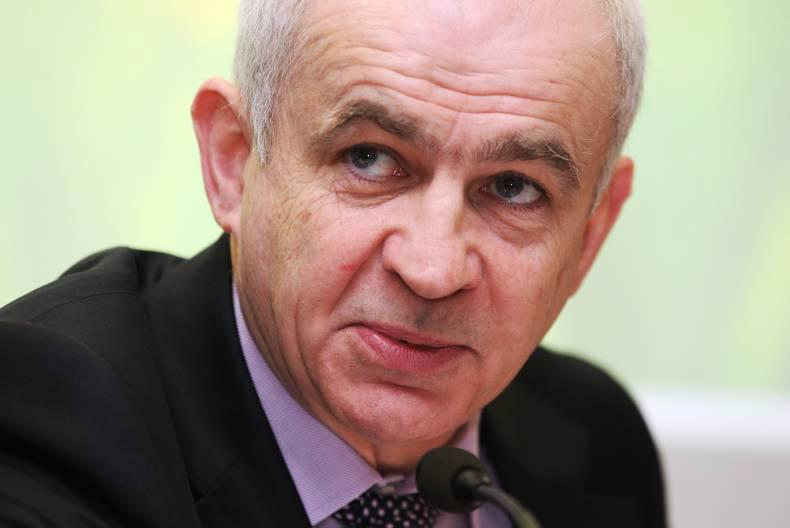
Speaking at the launch of the IFA’s pre-budget submission in Dublin on Wednesday, IFA President Eddie Downey said the government must prioritise economic growth across rural Ireland.
“Choices must be made on funding priorities, and a focus placed on the sectors that can deliver a significant economic return, especially across rural Ireland," he said.
"Budgetary decisions must recognise the importance of funding for farm schemes as a vital stimulus to the rural economy, underpinning the viability of family farms and providing direct and indirect employment across the entire country”.
With the agricultural sector contributing to the economic recovery of the country, Downey said farm incomes need to be protected by the government.
“Throughout the downturn, the primary agriculture and agri-food sector delivered increased employment and export earnings, contributing significantly to our economic recovery. However, the cuts to farm schemes in successive budgets have had a damaging effect on farm incomes particularly in the vulnerable, low-income drystock sectors," he said.
The IFA also wants the government to deliver on its commitment to the Rural Development Programme (RDP) by using the funding for farming schemes in the Budget.
Here is an outline of the IFA's pre-budget submission
• Funding of €250m must be allocated for agri-environment schemes in Budget 2016, with full payments for all GLAS and AEOS participants;
• Funding of €65m for the suckler cow herd must be provided through the Beef Data and Genomics Scheme in Budget 2016;
• A funding allocation of €15m is required for the rollout of Knowledge Transfer programmes for farmers across all sectors in 2016;
• Funding of €40m is required for the TAMS II programme in 2016, to cater for all sectors;
• A targeted payment for the ewe flock, requiring a funding allocation of €25m in Budget 2016; and
• An increased funding allocation for the TB Eradication Programme, to include increased consequential loss payments for farmers.
The taxation priorities for farming in Budget 2016 are:
• Introduction of a farm transfer incentive to maximise the productive capacity of the farm enterprise and to support two generations through the transfer;
• Introduction of an Earned Income Tax Credit for self-employed workers to restore equity in the income tax system. The difference in income tax treatment between the self-employed and employees is particularly severe at lower income levels, and must be removed;
• Retention of 90% Agricultural Relief for farm transfers and adjustment of CAT thresholds to reflect asset price changes; and
• Extension of the Stamp Duty Young Trained Farmers exemption and Stock Relief measures past their current expiry dates of 31st December 2015;
• Extension of income averaging to forestry clear-felling income.
Listen to our interview with the IFA's chief economist Rowena Dwyer:

