


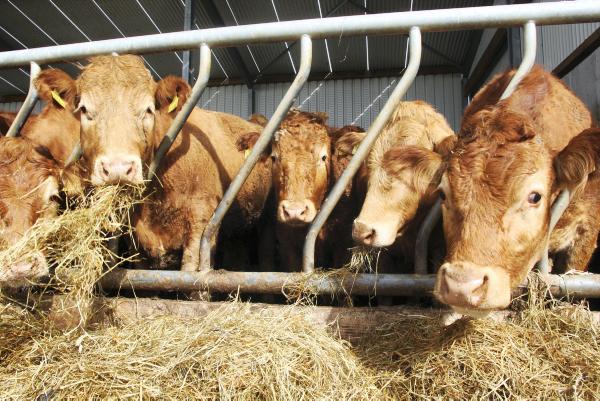
According to the livestock survey of December 2015, the suckler cow herd in the EU increased by 250,000 heads. This is the second year in a row of increase, after years of decline.
In the 13 newest EU member states of easter Europe (EU-N13), the herd continues its steady growth, mainly in Poland, Hungary, the Baltic States and the Czech Republic. Meanwhile the increase of the suckler herd in the 15 older western member states (EU-15) can be mainly attributed to two countries, Spain and France.
In 2015, the increase in EU beef production was estimated at 2.2% year-on-year, especially in the EU-N13. The number of animals slaughtered increased by more than 10% in EU-N13, and so did the average slaughter weight of the different animal categories, up between 1-2%.
Slaughtering of bulls and bullocks increased on average by 2.9% in the EU. The low level of the milk price in the EU may lead to further restructuring and culling of surplus cows and heifers, resulting in additional beef on the market.
Overall, an increase of 2% in beef production is foreseen in 2016, followed by a stabilisation in 2017.
Live exports
In 2015, EU exports of live bovine animals showed an increase of close to 60% year-on-year, mainly thanks to the re-opening of the Turkish market.
Beef meat exports increased slightly by 0.5% in 2015 compared to 2014. EU beef exports to Russia represented around 35,500 tonnes in 2014. The loss of this outlet due to the Russian import ban was fully
compensated by increased exports to a multitude of other destinations like Norway, the Balkan countries, Egypt, Algeria, Gabon and Vietnam.
The expectation is that it will grow by another 1.6% in 2016, in line with the higher availability of beef on the EU market.
Pigs
The December livestock survey confirms the decline in the EU reproductive pig herd.
The total number of breeding sows decreased by close to 2%, or around 200,000 sows, compared to 2014. Poland, Germany, the Netherlands and France show the largest decreases in absolute numbers, totalling 300,000 sows.
Despite the low pigmeat prices throughout 2015, the production slowdown took place only in the second half of the year, resulting in a 3.6% increase on a yearly basis. The largest production increase was recorded in Spain, up 276,000 tonnes.
Lower EU meat prices, a favourable euro and a strong demand from Asia explain the surge in pigmeat exports in 2015, up 9%.
In 2016, EU exports are expected to expand further but at a slower pace due to increased competition and availabilities in USA and Brazil.
Following the prospects of EU production and export, the level of EU consumption is expected to decrease slightly in 2016 and stabilise in 2017.
Sheep
The December 2015 livestock survey shows that the sheep flock in the EU-15 increased by more than 2% compared with 2014, representing almost 1,700,000 extra heads. The largest increases were recorded in Spain and the UK, up 1,100,000 and 960,000 heads respectively.
Consumption of sheep meat in the EU accounts for only 2.5% of total meat consumption, and is expected to stay stable in 2016 and 2017.



SHARING OPTIONS