This winter has seen severe flooding and in some parts of the country. January 2016 was the wettest on record.
At the height of the floods, there were grave concerns for livestock, but the aftermath is now being felt under the slats.
Behind schedule
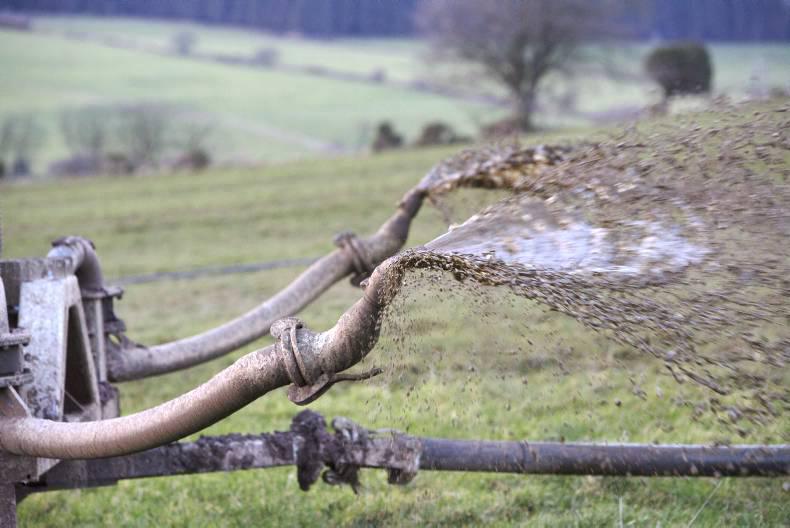
Despite it now being the second week of February, land is saturated and spreading is proving increasingly difficult while slurry tanks are filling up.
Andrew Walsh is a slurry contractor in Co Mayo and he says slurry levels are “huge problem” as “land just isn’t passable; even right now it’s completely saturated”.
Many contractors across the country are finding the same problem. Many report having to spread just three or four loads at one time to keep tank levels under control.
“Normally there is a rush of slurry in the first few weeks, but that hasn’t happened this year,” said Andrew.
Little spreading so far this year
Farmers and contractors across the country are now pinning their hopes on an improvement in the weather in the coming weeks.
Co Galway contractor Martin Duggan said “the weather is everything and if it doesn’t improve, there will be huge problems.” He described the current situation as being far from ideal, saying they have only had a few opportunities to spread slurry so far this year.
John Fitzgerald, a Co Limerick contractor, described the situation as a “pure disaster. Once it starts raining again there will be no chance to spread it. I got a bit done but nothing major.”
It’s affecting my business and it’s costing me. I’m trying to pay a wage and really I’m just burning diesel.
He also spoke of the challenge of running a business under such conditions, saying costs “need to be justified.” This frustration was echoed around the country.
“It’s affecting my business and it’s costing me. I’m trying to pay a wage and really I’m just burning diesel,” said Ultan Duffy, a contractor in Co Westmeath.
He added that in some cases farmers can’t even use an umbilical cord to alleviate the pressure on slurry tanks as the land is so saturated: “This is the worst I’ve seen it and everyone is in the same boat.”
Ban on spreading
Strict regulations are in place for slurry spreading and it is banned until 16 January. However, this rule has been criticised, with Ultan Duffy calling for it to be lifted and John Fitzgerald saying a “more commonsense approach is needed. When we could spread it, we weren’t allowed because of the ban and now we are allowed, we can’t because of the weather.”
Co Laois contractor Joe Shirley said: “We could have spread around Christmas time but we couldn’t because of the regulations. I’m going into farms spreading loads on the highest part of the ground and going over it for a second time, which is not good for the land. People are at the end of their tether.”
The potential cost to farmers could be significant depending on the weather. “Fertiliser is usually spread around the 17 March and then the first cut of silage is done on 20 May. If the weather doesn’t dry up by then, farmers will have to use more expensive fertiliser, so that is a huge cost,” Joe said.
Read more
Fertiliser Association of Ireland puts soil fertility to the fore
Grazing guide part one: the dos and don’ts
This winter has seen severe flooding and in some parts of the country. January 2016 was the wettest on record.
At the height of the floods, there were grave concerns for livestock, but the aftermath is now being felt under the slats.
Behind schedule
Despite it now being the second week of February, land is saturated and spreading is proving increasingly difficult while slurry tanks are filling up.
Andrew Walsh is a slurry contractor in Co Mayo and he says slurry levels are “huge problem” as “land just isn’t passable; even right now it’s completely saturated”.
Many contractors across the country are finding the same problem. Many report having to spread just three or four loads at one time to keep tank levels under control.
“Normally there is a rush of slurry in the first few weeks, but that hasn’t happened this year,” said Andrew.
Little spreading so far this year
Farmers and contractors across the country are now pinning their hopes on an improvement in the weather in the coming weeks.
Co Galway contractor Martin Duggan said “the weather is everything and if it doesn’t improve, there will be huge problems.” He described the current situation as being far from ideal, saying they have only had a few opportunities to spread slurry so far this year.
John Fitzgerald, a Co Limerick contractor, described the situation as a “pure disaster. Once it starts raining again there will be no chance to spread it. I got a bit done but nothing major.”
It’s affecting my business and it’s costing me. I’m trying to pay a wage and really I’m just burning diesel.
He also spoke of the challenge of running a business under such conditions, saying costs “need to be justified.” This frustration was echoed around the country.
“It’s affecting my business and it’s costing me. I’m trying to pay a wage and really I’m just burning diesel,” said Ultan Duffy, a contractor in Co Westmeath.
He added that in some cases farmers can’t even use an umbilical cord to alleviate the pressure on slurry tanks as the land is so saturated: “This is the worst I’ve seen it and everyone is in the same boat.”
Ban on spreading
Strict regulations are in place for slurry spreading and it is banned until 16 January. However, this rule has been criticised, with Ultan Duffy calling for it to be lifted and John Fitzgerald saying a “more commonsense approach is needed. When we could spread it, we weren’t allowed because of the ban and now we are allowed, we can’t because of the weather.”
Co Laois contractor Joe Shirley said: “We could have spread around Christmas time but we couldn’t because of the regulations. I’m going into farms spreading loads on the highest part of the ground and going over it for a second time, which is not good for the land. People are at the end of their tether.”
The potential cost to farmers could be significant depending on the weather. “Fertiliser is usually spread around the 17 March and then the first cut of silage is done on 20 May. If the weather doesn’t dry up by then, farmers will have to use more expensive fertiliser, so that is a huge cost,” Joe said.
Read more
Fertiliser Association of Ireland puts soil fertility to the fore
Grazing guide part one: the dos and don’ts





SHARING OPTIONS