


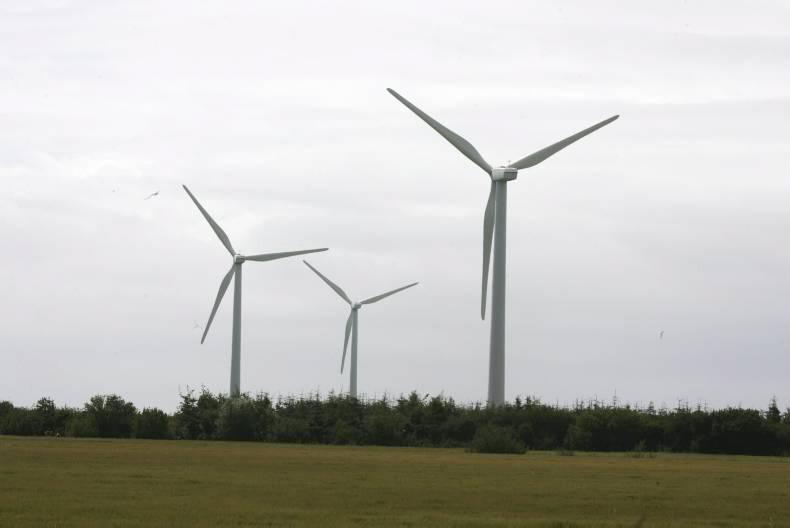
The renewable energy sector in NI has reacted with disappointment to last week’s announcement by the Department of Enterprise, Trade and Investment (DETI) concerning the early closure of the Northern Ireland Renewable Obligation (NIRO) for onshore wind projects from 1 April 2016.
In particular, there has been anger surrounding the date that projects must have certain criteria (eg grid connection, planning permission and proof that the operator owns or leases the land) in place to be eligible for a one-year grace period. The date chosen was the date of the announcement (30 September 2015).
DETI Minister Jonathan Bell’s decision to follow the Department of Energy and Climate Change (DECC) in Britain and close renewable obligations a year earlier than previously expected has also angered operators who have invested money in the hope of becoming accredited under NIRO before it closed.
Yesterday (Wednesday), the Ulster Farmers’ Union (UFU) met the permanent secretary of DETI to discuss the issue. It is understood that the UFU is to also meet Jonathan Bell today (Thursday), but only in his role as an MLA and not as DETI minister.
This is due to the rolling resignations of DUP ministers from the Executive over the ongoing political crisis at Stormont. On Monday, Bell was absent from the Assembly’s chamber for ministerial questions from MLAs.
Frustration
A spokesperson from the UFU said: “We are deeply frustrated with the revolving door tactics of resignations going on in Stormont and feel that, as a result, our small-scale renewable industry is suffering.”
The UFU is lobbying for small-scale projects under 250kW to be treated as separate from larger projects, and given a two-year grace period and a six-month extension to the date that developers must meet the eligibility criteria. That would take this date to 31 March 2016. They argue that this would allow small-scale projects to become accredited under NIRO with minimal cost to the consumer.
A two-week consultation on the closure of NIRO and grace period criteria closes next Wednesday (14 October).
DETI has maintained that the current pipeline of projects will deliver 30% of electricity in NI from renewable resources by 2020, 10% lower than the target set in the Strategic Framework for Northern Ireland in 2010.
Small-scale installations
After NIRO closes, it was anticipated that NI would follow Britain in having a feed-in tariff (FIT) incentive for small-scale renewable installations.
In August, DECC announced that the geographical scope of FIT would not be extended to NI in order to keep the costs of the scheme down, meaning any incentive would have to be funded by NI alone.
When asked about the possibility of a FIT, a spokesperson from DETI was noncommittal, stating: “The Department will have to look at costs and benefits for a range of options.”



SHARING OPTIONS