


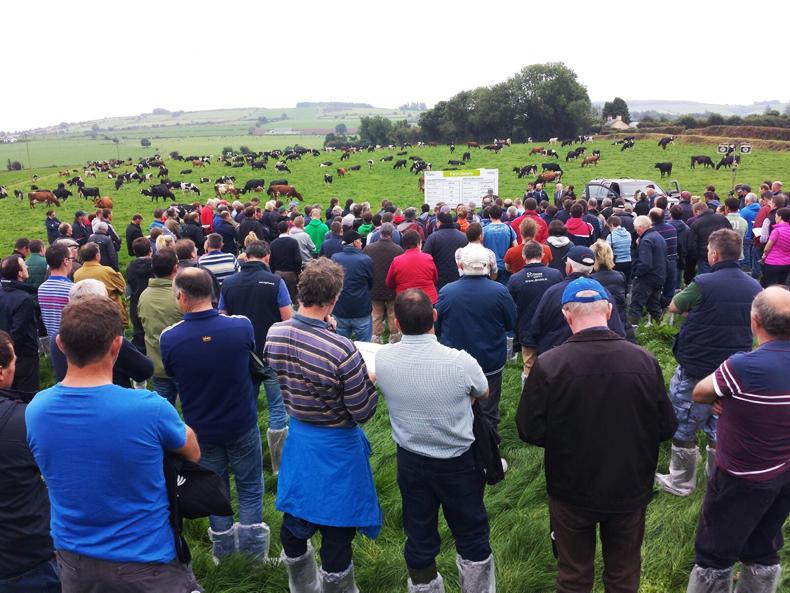
Kale is a "form of torture" in a bad winter, according to 2015 Volac heifer rearer of the year champion Shane Fitzgerald. Speaking at a farm walk on Wednesday that he hosted Fitzgerald gave a rundown on how he dealt with a challenging winter and improving lighter heifers.
"I ended up taking them off it [kale] and onto the pad," he said. "We weighed them in mid January and the lighter ones went to grass around the first of February. We have a dry enough farm over the hill and there is eight fields there and we put them in groups of five in each field. There was loads of grass and with the conditions the smaller groups didn't do as much as if we put them all together. They definitely caught up with the bigger heifers".
He weighed the 115 calves last week and their average weight was 175kg, while the average weight of the 67 in-calf heifers is 452kg – both groups are well on target.
Spring
Shane Fitzgerald calved down 267 cows on his farm at Ballynoe this spring. Of this 145 cows calved in February, 115 calves were retained as replacement heifers and the bull calves were sold at two weeks old.
For peak calving there is a rota in place to ensure that there is always someone in the yard at night and at least two available during the day. With so many calving the yard is extremely busy and health problems are unwanted as they create unnecessary pressure.
Reducing the chances of these occurring was at the heart of what happens on the Fitzgerald farm. With such large numbers of stock, individual treatments cost labour time.
"Farmers need to sit down with their vets, have them visit their farm an assess everything and pay them accordingly for their time," the 2015 Volac heifer rearer of the year champion said. "I put a plan in place with my vet and then have an annual review".
The goal is to get the heifers to calve down on target weight at 24 months or less. To achieve this, Fitzgerald has a good system in place.
Cost table
€/LU
Variable costs 435
Feed 44
Fertiliser 163
Fixed costs 304
Reward to own land,labour & opportunity cost of heifer 580
Total cost 1319
New born calves
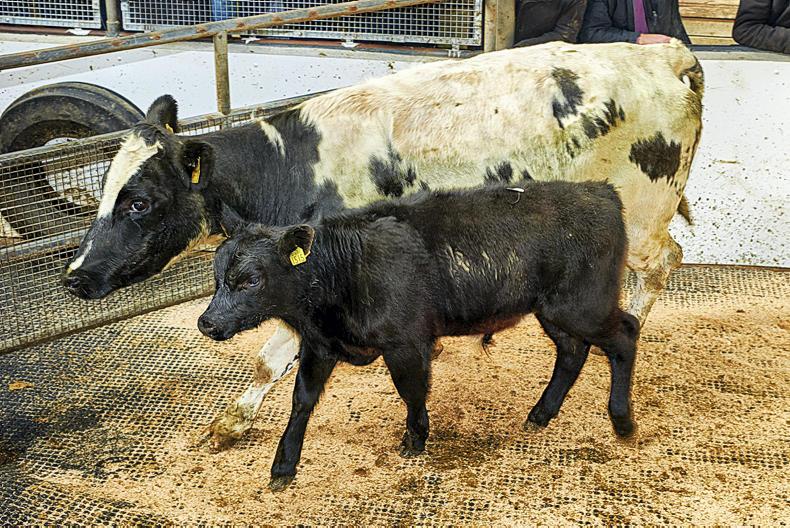
Newborn calves are taken straight off the cow, moved to straw-bedded calf pens and have their navel disinfected. There, they are fed pooled colostrum as soon as possible. This colostrum is taken from cows that are tested negative for Johne’s disease. Each calf is gets five litres of colostrum. This is fed with a stomach tube.
Once sucking from a teat, they are moved to a pen of up to 30 calves and fed using a computerised feeder. They are offered Calfage, hay and meal. Last year, the heifers consumed about two bags of 26% protein milk replacer each. The mostly Jersey crossbred calves were weaned at 65 days or when they reached 85kg to 90kg. After weaning, calves are put to grass and split into lighter and heavier groups. The heavier calves are fed at 1kg to 2kg per head per day until late May and then receive no more meal. Lighter calves continue to get meal until they catch up with the heavier calves. Weighing takes place every four to six weeks and once they are on target they are put with the heavier calves. Calves at grass are asked to graze as tight as the cows. High quality grass with covers no higher than 1200kg DM/ha.
First winter
In their first winter, the heifers graze kale or rape and bale silage. If kale is not available heifers are wintered on a pad and are fed pit silage with a top up of a half a kg of soya for protein, if they get bale silage soya isn't used as Fitzgerald feels protein is higher in these.




SHARING OPTIONS