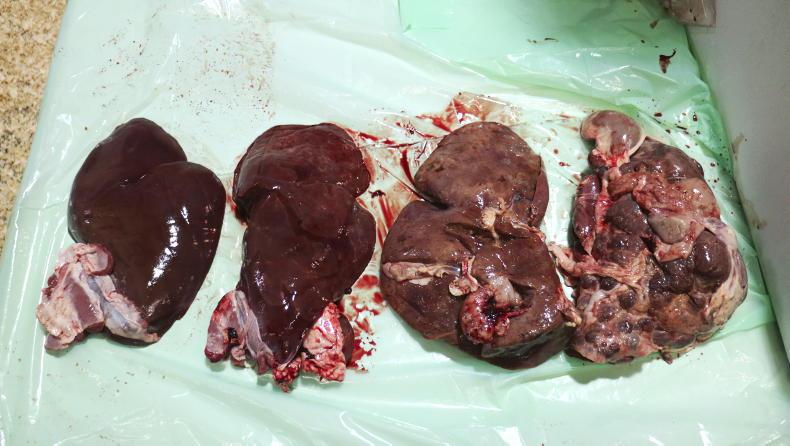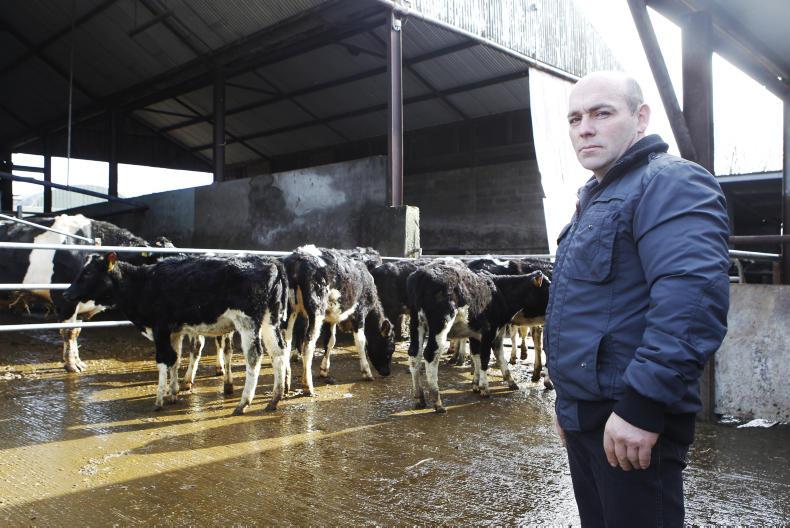
A Kildare dairy farmer who lost 22 of his 31 replacement heifers last September has questioned the Department of Agriculture verdict that rumen fluke larvae were the cause of death.
The farmer, Larry Martin from Drehid, Carbury, Co Kildare, instead fears they consumed a toxin.
The levels of rumen fluke found in the Department postmortems were not uniformly heavy, he told the Irish Farmers Journal.
In some of the heifers the levels were light, in some moderate, and in some heavy. No eggs were found in the dead heifers or in dung samples from the nine surviving ones.
“These were big Friesian heifers of 280kg to 300kg. They were well minded and they were flying,” he added. When the cattle sickened they had pinkish noses and tongues.
“They lost 60kg to 70kg in three days. They turned inside out.”
The survivors are still not thriving, according to the farmer.
Tests were carried out on the soil, the grass and the cattle’s drinking water but did not identify any toxic element.
“I was hoping something would stand out, that we could follow up. But it didn’t.”
Martin and his vet even emptied the 300 gallon drinking water trough to search for a cause. “We were expecting to find bones or something. There was nothing.”
The cattle do not have access to any ditch water.
Martin has question marks about a mineral lick to which the young heifers had access.
“The mineral licks went out on a Monday. The 31 cattle were sick by Friday, 11 of them dead. The other 11 died over the following week,” he recalled.
Samples from the three mineral lick buckets were taken by the Department of Agriculture and tested in the State Laboratory at Backweston.
The results found no high levels of toxic elements including lead, arsenic, cadmium or mercury. However, they did find a big variation between the three buckets in the levels of desirable elements. For example:
The stated level of phosphorus on the label was 1% but the actual levels in the samples from the three buckets were 0.3%, 0.3% and 1.5%. The stated level of magnesium was 3% but the actual levels were 1.4%, 1.2% and 4.5%. Levels of calcium, cobalt, copper, manganese, zinc and selenium also varied widely above and below those stated on the label. “The mineral levels were wrong, they were not mixed properly,” Martin claimed. “I’m not blaming the licks for killing the heifers because I don’t know what killed them. But farmers spend millions each year on minerals in feeds and licks. Are they being sold a short straw?”
Scientists from UCD also studied the case. They advised Martin he should have tissue samples from the dead heifers tested for mercury levels.
He obtained 14 samples from some of the heifers, from the Department, and has them stored in a freezer. He estimates the cost will be about €120 per sample and he will have to pay it himself. “I’ve paid for a lot of tests already. I will probably do it in the summer.”

A Kildare dairy farmer who lost 22 of his 31 replacement heifers last September has questioned the Department of Agriculture verdict that rumen fluke larvae were the cause of death.
The farmer, Larry Martin from Drehid, Carbury, Co Kildare, instead fears they consumed a toxin.
The levels of rumen fluke found in the Department postmortems were not uniformly heavy, he told the Irish Farmers Journal.
In some of the heifers the levels were light, in some moderate, and in some heavy. No eggs were found in the dead heifers or in dung samples from the nine surviving ones.
“These were big Friesian heifers of 280kg to 300kg. They were well minded and they were flying,” he added. When the cattle sickened they had pinkish noses and tongues.
“They lost 60kg to 70kg in three days. They turned inside out.”
The survivors are still not thriving, according to the farmer.
Tests were carried out on the soil, the grass and the cattle’s drinking water but did not identify any toxic element.
“I was hoping something would stand out, that we could follow up. But it didn’t.”
Martin and his vet even emptied the 300 gallon drinking water trough to search for a cause. “We were expecting to find bones or something. There was nothing.”
The cattle do not have access to any ditch water.
Martin has question marks about a mineral lick to which the young heifers had access.
“The mineral licks went out on a Monday. The 31 cattle were sick by Friday, 11 of them dead. The other 11 died over the following week,” he recalled.
Samples from the three mineral lick buckets were taken by the Department of Agriculture and tested in the State Laboratory at Backweston.
The results found no high levels of toxic elements including lead, arsenic, cadmium or mercury. However, they did find a big variation between the three buckets in the levels of desirable elements. For example:
The stated level of phosphorus on the label was 1% but the actual levels in the samples from the three buckets were 0.3%, 0.3% and 1.5%. The stated level of magnesium was 3% but the actual levels were 1.4%, 1.2% and 4.5%. Levels of calcium, cobalt, copper, manganese, zinc and selenium also varied widely above and below those stated on the label. “The mineral levels were wrong, they were not mixed properly,” Martin claimed. “I’m not blaming the licks for killing the heifers because I don’t know what killed them. But farmers spend millions each year on minerals in feeds and licks. Are they being sold a short straw?”
Scientists from UCD also studied the case. They advised Martin he should have tissue samples from the dead heifers tested for mercury levels.
He obtained 14 samples from some of the heifers, from the Department, and has them stored in a freezer. He estimates the cost will be about €120 per sample and he will have to pay it himself. “I’ve paid for a lot of tests already. I will probably do it in the summer.”

SHARING OPTIONS