


Irish dairy farmers are not alone – many New Zealand dairy farmers are battling for survival. Milk prices have fallen by over half from their peak of two years ago and yet another price payout below what it is costing them to produce milk is forecast.
Prices have fallen from highs of NZ$8.75/kg milk solids (41.1 c/litre)) in February 2014 to last season’s lowest ever payout of NZ$3.90/kg (18.3 c/litre).
While the country’s largest processor, Fonterra, has issued a forecast price for the impending new dairy season of NZ$4.20/kg (19.7 c/litre), which was the standard price between 2002 and 2006, it is still well below the accepted breakeven price of over NZ$5/kg (23.5 c/litre).
Announcing the results of New Zealand’s export figures for the year just gone, Minister for Agriculture Nathan Guy told farmers last week at the Fieldays event that he expects farmers will endure more “hardship” next season. He did, however, predict a price recovery from 2017.
Dairy export revenue for the past 12 months stood at NZ$13.2bn, down from last year’s NZ$14bn
This is well back from nearly $17.8bn in the high payout year of 2014, but Guy forecasts that exports will rise slightly to NZ$13.8bn next year before moving to $17.7bn by 2020.
In the next four to six weeks, calves in the north and south islands will start dropping. While no one can be sure, anecdotal evidence is pointing towards significant cull rates hitting the national herd.
Fonterra’s milk collections for the last season were 3% lower than the year previous, with further falls forecast for this coming season.
Reports in New Zealand suggest somewhere between 5% and 25% of cows in herds have been culled. If this was uniform across the national herd of six million cows, this means that over a million fewer cows could be calving down in the coming weeks.
While the exact volume of cow culling remains uncertain, what is certain is that most farmers are still undergoing ruthless levels of cost cutting. Overall, the financial health of New Zealand’s dairy farmers is good, despite a small number carrying most of the debt.
Twenty per cent, or 2,400, Kiwi dairy farmers are carrying 50% of the entire NZ$31bn (€19.3bn) debt owed by farmers. Naturally there are nerves and fear with a continued poor payout.
Speaking at Fieldays, Fonterra chair John Wilson urged dairy farmers to “hang in there”.
But are the words of New Zealand’s most powerful and influential farmer enough to inspire farmers? And what are they doing to keep afloat as we head into a new calving season?
Thomas Chatfield Whakatane, Bay of Plenty
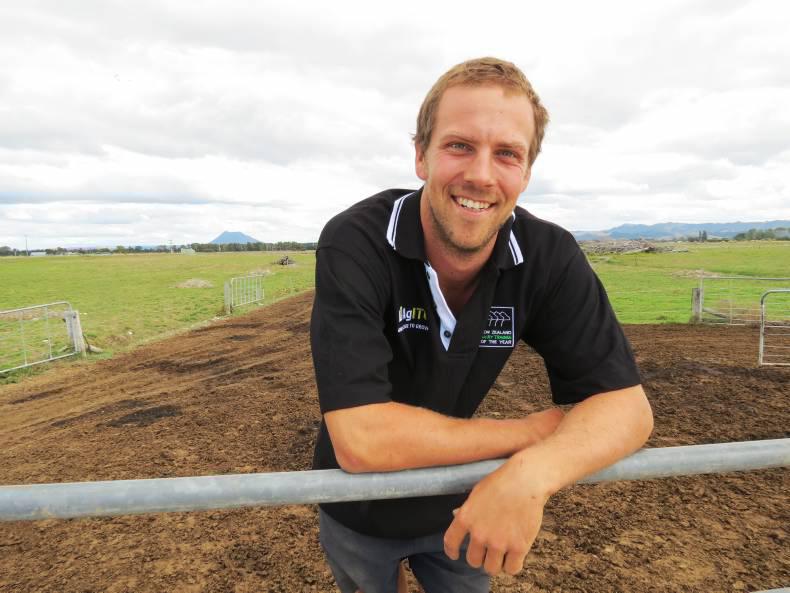
A former physio and self-confessed “city slicker”, Chatfield is the 2016 dairy manager of the year on a 500-cow herd in Whakatane in the North Island’s Bay of Plenty region on the east coast. As well as trying to grow more grass to cut feed costs, Chatfield’s farm is doing a small portion of winter milk to keep liquidity in the business.
“We’re still milking on a few girls ... just a small amount of winter milk to keep the cashflow going. These cows are mainly later calvers, but it is not costing me any extra. Yeah, we have the cost of keeping on staff, but that’s it,” Chatfield said.
He estimates the additional cost of running on winter milk at 75c/kg (3.5 c/litre), but the farm is in a “strong position” for having done it.
“At NZ$8/kg (37.5 c/litre), you can afford to be sloppy, but at $3.90/kg (18.3 c/litre) it makes you think and it makes you cut costs where you can. The low payout is not going to be the only challenge ... volatility will make us stronger,” said Chatfield
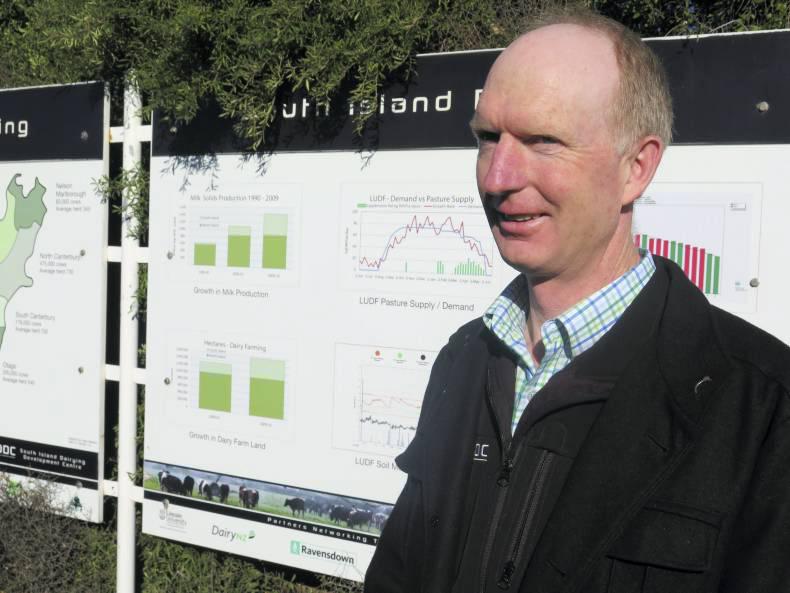
Ron Pellow Lincoln University farm, Canterbury
The Lincoln University farm outside Christchurch is, in many ways, the equivalent of the Lyons Estate or Curtins Research Farm near Moorepark, but at five times the scale . Lincoln is a muliti-body project aimed at delivering improvements for the dairy sector.
As well as a plummeting milk price, the directors of the farm have had to contend with significant reduction in stock numbers as a way of dealing with impending environmental constraints for the country’s farmers.
Stock at the farm has reduced to 560 cows from 680, but at the same time cow performance has improved from over 350kg per cow to 522kg per cow.
Despite that impressive output increase, the transition has eaten heavily into the farm profits. Nitrogen input has reduced dramatically.
“We’re not willing to lose NZ$86,000 (€53,809) every year so it is about improving. I’m still unsure and I’m excited about where cow’s performance can go. I didn’t think we could get 533kg before this.
“Milk price was always what everyone was thinking about ... I still think there’s a little bit out of the price at where it is, not a lot and you want more, but if you manage things well you have something out of it.
“The biggest costs for us are wages. Fertiliser has been big but, as we decrease stock, we will start to see this cost going down too,” Pellow said.



SHARING OPTIONS