



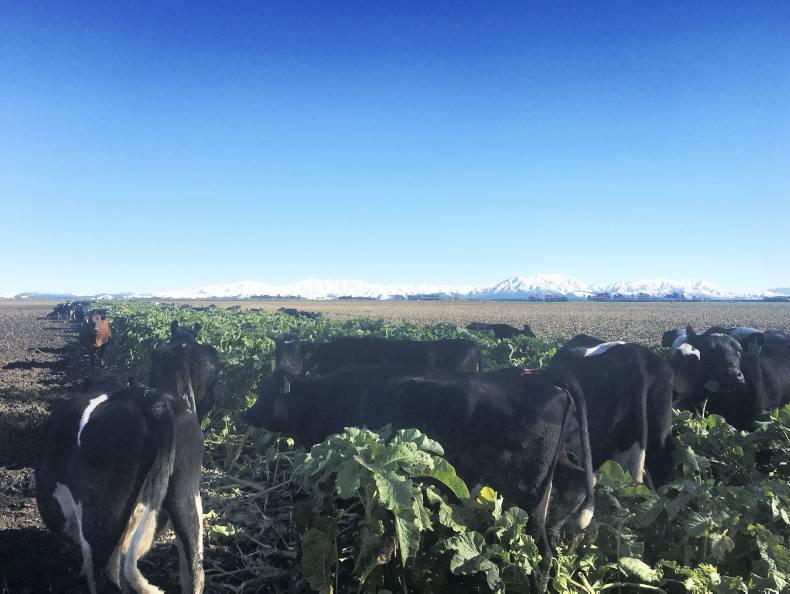
Our farm is fully irrigated with a combination of pivots and border dyke irrigation. Heifers are contract-reared and the milking platform is stocked at 3.5 cows/ha with 1,750kg MS/ha sold off the farm in the 2015/’16 season.
Having arrived from Ireland on 4 August, I was welcomed to New Zealand by sub-zero temperatures, snow, cloudy skies and rain. By the time I landed, 105 had calved for my first milking in the 60-point rotary. All cows are calved in paddocks, with cows checked and calves gathered up at four- to five-hour intervals.
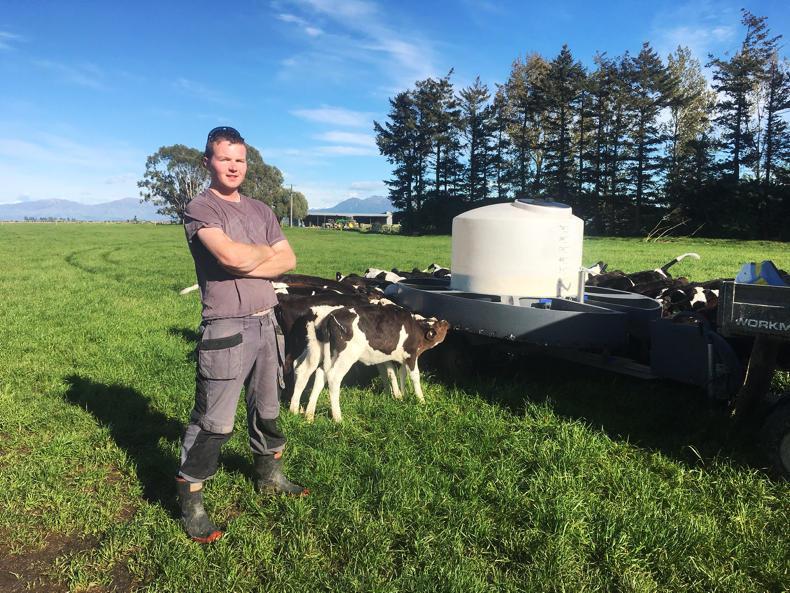
Each calf is tubed with two litres of fresh colostrum and moved to the calf shed where the calf rearer takes over responsibility. The in-calf heifers and cows closest to calving (springers) are run in two separate herds, which are allocated a grass break, hay and 4kg/DM maize daily.
Due to the freezing temperatures the last few nights, each evening we have had to move the calving mobs to paddocks sheltered by high hedgerows to mitigate against calf mortality, along with carrying out extra calving checks during the night. This has been very successful to date but if the weather softens we’ll discontinue this.
The later-calving mob has just finished the last of the kale on a neighbouring arable farm where the whole herd was wintered. This arrangement works well for our farm as none of the milking platform is tied up in the wintering of stock, yet the stock are within walking distance.
Having commenced calving 17 days ago, 255/730 cows have now calved. The colostrum mob (cows one to four days post-calving) along with in-calf heifers and springers have their daily grass allocation dusted with Magnesium and lime to reduce the likelihood of milk fever. Milkers are on a diet of grass, rolled barley and molasses, with the allocation of rolled barley increasing from 1kg on first milking to 4kg/day on day four post-calving.
This level of supplement is necessary to prolong the first rotation but overall the level of feed will not exceed 600kg per cow for the year.




SHARING OPTIONS