


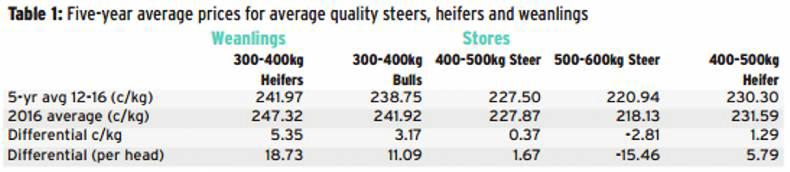
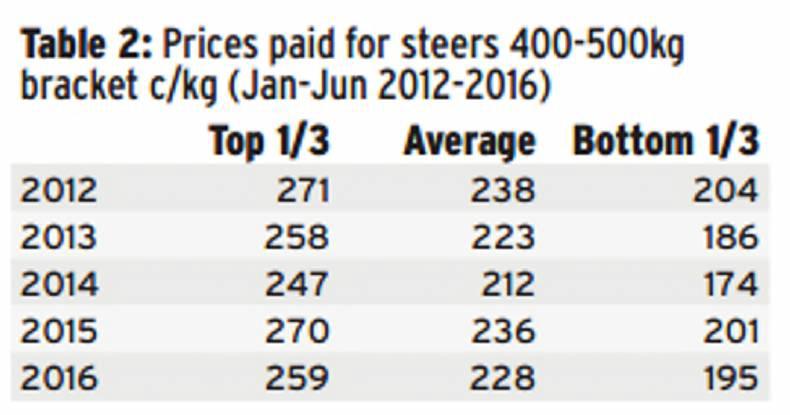
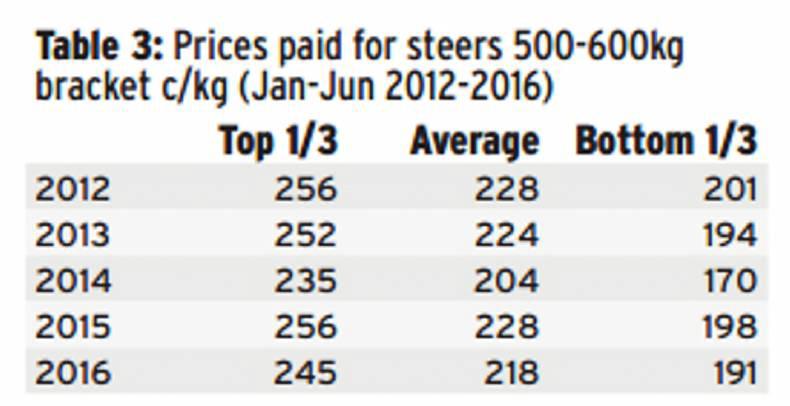
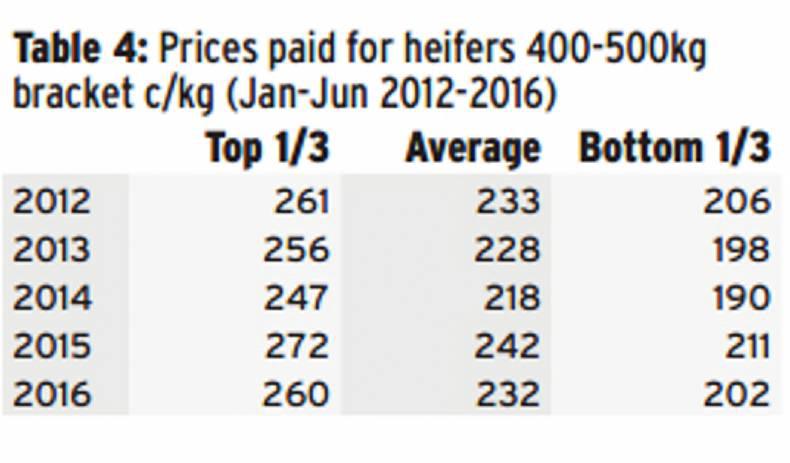
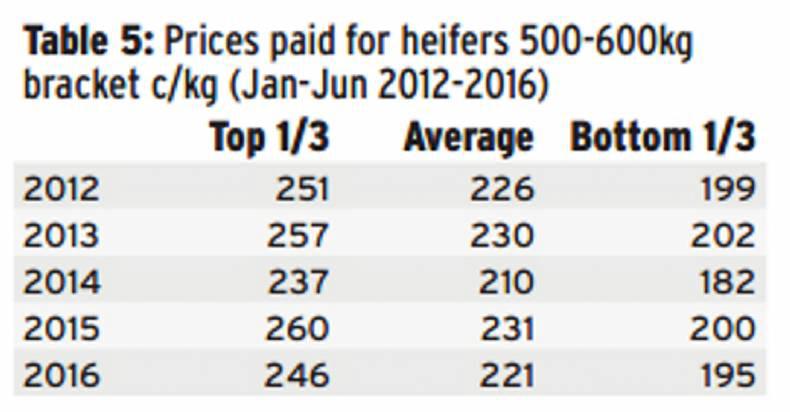
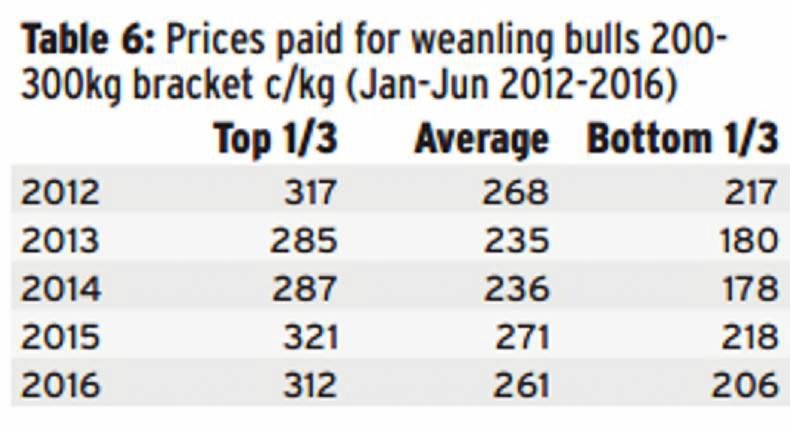
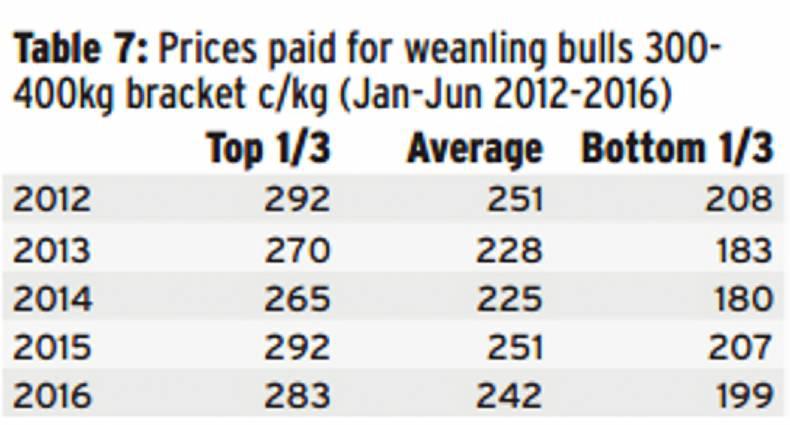
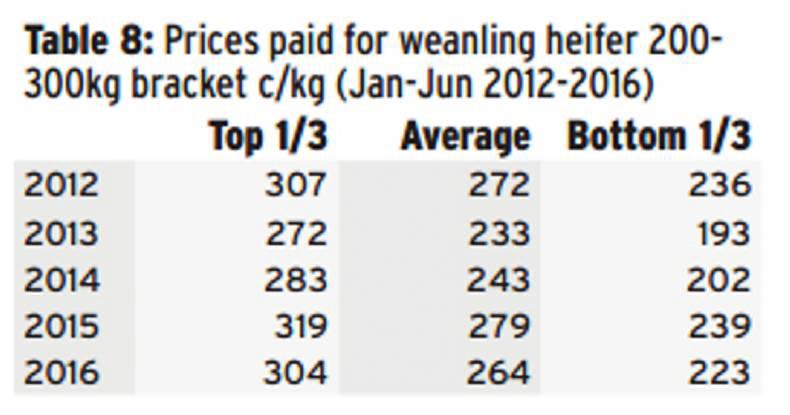
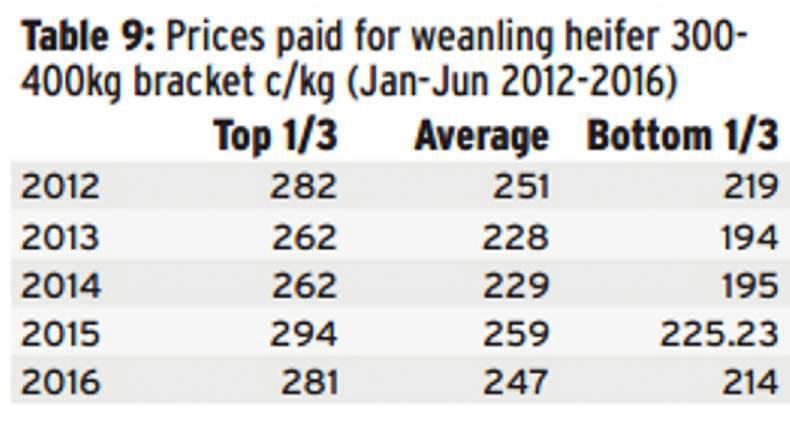
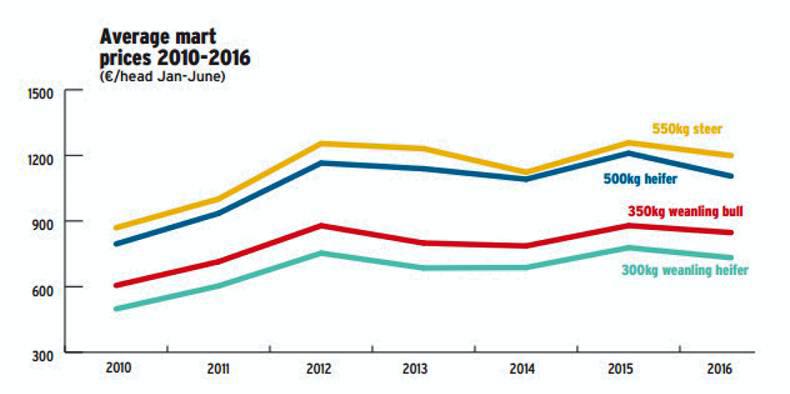
The average bullock and heifer prices were down by €30 to €84/head during the first half of this year when compared to the same period in 2015.
A more difficult beef trade, relatively high domestic live cattle prices compared to our EU counterparts and low live exports have undoubtedly resulted in much damper prospects for 2016 compared with last year.
However, despite lower market expectations since the start of the year, MartWatch analysis has shown that average prices are just 8-11c/kg behind last year for the first half of the year.
The spring saw a seasonal increase in live cattle prices, as is the norm. There was a definitive peak in prices in April 2015. However, due to poorer spring weather, demand was more variable in 2016 and the price peak which was seen in February for store cattle occurred again in late April and late May as farmers sourced cattle to meet the stocking rate demands under the Areas of Natural Contraints (ANC) scheme.
In the cast of weanlings, the trend was slightly different. Prices peaked in February and again rose to the same level in April when weather conditions improved.
Stores back by €60 to €84/head
While the store trade stayed quite strong in the spring, average prices for steers eased by €32/head in the case of average-quality 400kg steers, to €60/head for the average 600kg steer.
While buyers remained active for store cattle right through the spring, the tougher beef trade had greater effect on forward cattle as the price farmers and feeders could pay for these short-keep types was limited by the slightly reduced beef price.
Price reductions were smallest in the light store category as buyers were sourcing these to run at grass over the summer months with a view to finishing them in the autumn. Most farmers who used this system in the previous two years were successful in achieving a good return over the summer months, and thus paid higher prices in the spring compared to those buying forward store cattle.
Store heifers saw prices eased by up to 14c/kg in the case of the top third of weanling heifers from 500kg to 600kg. This equates to an easing in prices of €70 to €84/head on the same period last year. Average-quality types from 400kg to 500kg saw prices ease by €44 to €55/head, while forward heifers from 500kg to 600kg saw average prices drop by €55 to €66/head on the same period in 2015.
Weanlings down by 15c/kg
Weanling heifers saw the biggest reduction in prices on a per-kilo basis in the first half of 2016. Heifers from 200kg to 300kg saw prices ease by 15c/kg for average-quality types and 16c/kg for the bottom third in terms of quality. This equates to a price drop of €30/head on a 200kg heifer and as much as €45/head on a 300kg heifer.
Weanling bulls were not met with as much price pressure, and drops of 9c/kg to 11c/kg were evident. Similar to heifers, the sharpest decrease in prices on a per-kilo basis was for light bulls that saw prices reduce by 11c/kg or €27.50/head for the average 250kg bull. However, the reduction in prices paid for both weanling bulls and heifers was only about half that of the reduction in prices of forward store cattle.
Seasonal supply more evident
One factor that has become more evident over the past six months has been the increased seasonality of supply of cattle to the marts. Marts in stronger suckler areas reported much lower entries over the summer months than last year. In addition, particularly in the case of weanlings and better-quality cattle types, entries for special sales have continued to increase year on year, with farmers targeting larger sales where more buyers are active to sell the better-quality stock produced.
Increased focus on in-spec stock
In recent months there was been an increased focus on stock that will be slaughtered in-spec. Beef price pressure and the prospects of increased supply of finished cattle in the second half of the year have resulted in buyers becoming more choosey for cattle that will finish under 30 months in the case of steers and heifers, and under 16 months in the case of bulls.
While weight is also a factor for many buyers, access to slaughter plants which will take cattle over 420kg has resulted in some buyers continuing to be active of heavy lots. QA status and the number of movements is also proving to be quite important at ringsides around the country. Out-of-spec stock are selling for €100 to €150 less than their in spec counterparts.
Cow numbers up by 20-30%
The cow trade has seen a very changed landscape over the first half of 2016. Last autumn saw the cessation of the annual brucellosis testing for animals over the age of 24 months. The knock-on effect of this has been farmers opting to go to the live trade with heavy and fleshed cows which would normally have gone for direct slaughter.
In addition to the freeing up of movement of cows, the tight supply of finished cattle, particularly over the late spring and summer months, has been a major benefit to the trade. In some parts of the country, mart managers have said that the supply of cattle has increased by as much as 20-30%.
The short supply of fleshed cattle and cows over the summer months enticed factory agents to be very active for all fleshed types, and at times the prices which cows achieved in mart rings surpassed what the same cow would have achieved in the factory.
This strong trade enticed higher entries of cows throughout the summer, and brought farmers who normally finish cows to the live trade to sell.
Friesian calf prices running €10/head higher than last year
Domestic demand for calves through the spring was very strong again this year. High cattle prices resulted in some farmers looking at the opportunity of rearing calves as an alternative income source for the farm. Others looked at it as an option of increasing the number of cattle on hand for much smaller money than weanlings or stores.
In the case of Angus heifers and bull calves, prices increased by approximately €20/head for average quality types and up to €50/head for better quality calves when compared to last year. Hereford calves saw price increases of about €10 to €20 per head on last year. Friesian bull calves saw prices increase by about €10/head this spring when compared to last year.
However, in the case of Friesians, farmer demand was for better quality types, which resulted in shippers calves making from €60 to €90 mainly allowing them to continue to export.
To read the full Marts Focus Supplement click here.




SHARING OPTIONS