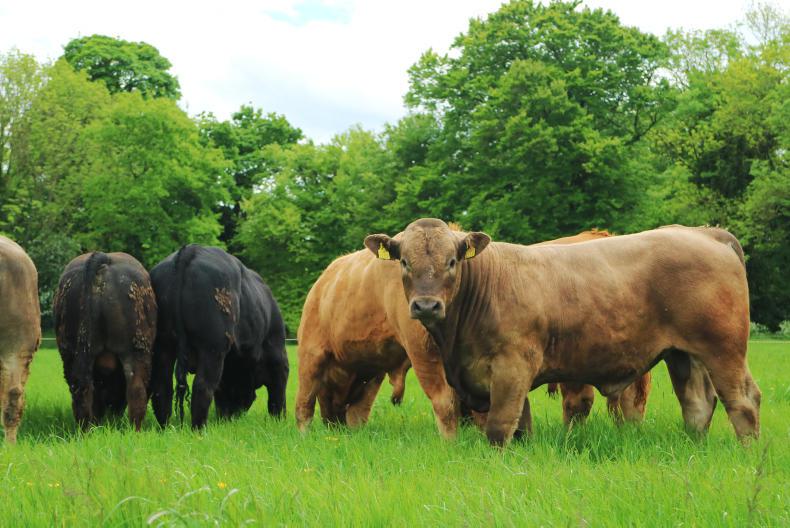
Heavy rain and colder temperatures have had an impact on farms across the country. After the heavy rainfall last weekend, more cattle were moved indoors as ground became saturated and the risk of damaging swards increased.
While it is important to have paddocks grazed out before closing for winter, this should not be prioritised over preventing ground damage.
Swards that become poached now will hold water over the winter, reducing spring growth. Some farmers still have small groups of lighter cattle at grass and hope to finish out the final rotation with these animals. However, in the majority of cases, these animals will be housed within a week to 10 days.
Nonetheless, the milder weather over October and early November has helped to stretch silage reserves on a number of BETTER farms.
It has also helped improve calf health at weaning, as younger stock remained at grass in relatively dry conditions during the process.

With the focus now switching to winter feeding, cattle should be grouped at housing according to feed requirement. Spring-calving cows should be grouped relative to calving date and body condition.
Thin cows should be run as a separate group of stock to get priority feeding. This will improve body condition pre-calving, thereby reducing calving issues and improving fertility post-calving.
Maiden heifers are normally grouped separately on programme farms. This helps to target feed to these animals and ensure they meet target weights for breeding at 15 months of age.
In most cases, calved cows are being fed 1kg to 2kg on top of high-quality silage. Meal feeding will most likely continue until after breeding has finished.
For weanlings that will go back to grass, front-loading meal feeding often gives a better growth response than flat-rate feeding meal over winter. For example, feeding 3kg/day of meal for the first 60 days of winter, then cutting meals to 1kg/day for the next 60 days is the same amount of meal feed as 2kg/day over 120 days.

Mike Dillane
Lixnaw, Co Kerry
Autumn grazing conditions were good on this farm and I have been able to hold cattle at grass well into November. I housed cows and calves just last week.
These cows were housed in good condition and are being offered round bale silage made at the end of July. The silage quality is excellent as it was made from reseeded grass. Cows suckling calves are not receiving meal at the moment.
I also housed some of my weanling heifers last week. There is still a group of 20 heifers out at grass and if ground conditions allow, they will stay out until the end of the month. There is easily two to three weeks of grazing ahead of these animals at present.
I am ad-lib feeding bulls to finish this winter. A group of bulls bought in back in July will be ready for slaughter this weekend.
Home-bred bulls will be coming ready for slaughter within the next month. These bulls will be killed under 16 months of age. Calving started in early September and has progressed well. I have 30 cows left to calve from 100 autumn-calving cows.
James Strain
Burnfoot, Co Donegal
All cattle were housed last week. Heavy rain made ground too wet for carrying stock and when stock were weighed, animal performance was suffering as a result.
I sold a group of bulls weighing 490kg liveweight locally. There are still seven bulls to be sold, but they weigh 430kg so I will hold them until the spring and sell them closer to 500kg. They are being fed 3kg of a blend of barley, maize, distillers and soya hulls.
Heifer weanlings are eating 2kg of a barley and soya mix along with first-cut silage. There will be seven heifers picked out for breeding in January so I am trying to keep these animals growing.
Calving is under way. There were a few problems at the start but things have settled down since then. I have 13 cows calved from a total of 34 cows.
Dry cows are being fed grass silage and minerals. The silage is more like haylage which was bought in September when I had to house stock and did not want to open the pit.
Calved cows are now on pit silage and 2kg of barley, soya and minerals.
Heinz Eggert
Co Kildare
Housing occurred last week on the farm. The weanlings were housed last Monday week and the cows were housed on Wednesday 9 November after heavy rain the previous night. I have focused on housing slightly earlier this year and have been watching the average farm cover.
As the farm has a high water table, grass growth in the spring is usually low. I started closing paddocks from 29 September, and regrowths have been good. The first closed paddocks now have an average cover of about 1,000 to 1,100kgDM/ha. The average farm cover is currently about 750kgDM/ha, which is ideal to ensure there is adequate grass in the spring.
The weanlings are currently on 3kg of ration per head along with good-quality silage. They will be reduced down to 2kg per day for January and 1kg per day in February, with the aim to turn them out again in mid-March. My bulls have had an average weight gain of 1.28kg/day from birth, while the heifers had an average weight gain of 1.18kg/day since birth.
David Walsh
Co Tipperary
I currently have all finishing cattle and weanlings housed. There are about 60 suckler cows and in-calf heifers out at grass along with 18 dairy-bred heifers. Grazing conditions have been quite good in recent weeks, which has been a huge benefit. I have been closing paddocks in rotation since early October and will probably house the cows in the coming week.
The bullocks that are in for finishing are all about 20-22 months of age and are currently on ad-lib 70+DMD silage along with 8kg of ration.
Cull cows that are being finished are being fed the same diet, while heifers are on 6.5kg of ration and ad-lib top-quality silage. Weanlings are currently getting 2kg of concentrates and good-quality grass silage.
I recently purchased a new stock bull. He is an August 2015-born bull and is a Sympa son. The last stock bull was culled due to lameness earlier in the year, and I was pleased with his progeny, so that was the main reason for sourcing another Sympa son.
Read more
Grass+ dairy: growth still good as cows are housed
Heavy rain and colder temperatures have had an impact on farms across the country. After the heavy rainfall last weekend, more cattle were moved indoors as ground became saturated and the risk of damaging swards increased.
While it is important to have paddocks grazed out before closing for winter, this should not be prioritised over preventing ground damage.
Swards that become poached now will hold water over the winter, reducing spring growth. Some farmers still have small groups of lighter cattle at grass and hope to finish out the final rotation with these animals. However, in the majority of cases, these animals will be housed within a week to 10 days.
Nonetheless, the milder weather over October and early November has helped to stretch silage reserves on a number of BETTER farms.
It has also helped improve calf health at weaning, as younger stock remained at grass in relatively dry conditions during the process.
With the focus now switching to winter feeding, cattle should be grouped at housing according to feed requirement. Spring-calving cows should be grouped relative to calving date and body condition.
Thin cows should be run as a separate group of stock to get priority feeding. This will improve body condition pre-calving, thereby reducing calving issues and improving fertility post-calving.
Maiden heifers are normally grouped separately on programme farms. This helps to target feed to these animals and ensure they meet target weights for breeding at 15 months of age.
In most cases, calved cows are being fed 1kg to 2kg on top of high-quality silage. Meal feeding will most likely continue until after breeding has finished.
For weanlings that will go back to grass, front-loading meal feeding often gives a better growth response than flat-rate feeding meal over winter. For example, feeding 3kg/day of meal for the first 60 days of winter, then cutting meals to 1kg/day for the next 60 days is the same amount of meal feed as 2kg/day over 120 days.
Mike Dillane
Lixnaw, Co Kerry
Autumn grazing conditions were good on this farm and I have been able to hold cattle at grass well into November. I housed cows and calves just last week.
These cows were housed in good condition and are being offered round bale silage made at the end of July. The silage quality is excellent as it was made from reseeded grass. Cows suckling calves are not receiving meal at the moment.
I also housed some of my weanling heifers last week. There is still a group of 20 heifers out at grass and if ground conditions allow, they will stay out until the end of the month. There is easily two to three weeks of grazing ahead of these animals at present.
I am ad-lib feeding bulls to finish this winter. A group of bulls bought in back in July will be ready for slaughter this weekend.
Home-bred bulls will be coming ready for slaughter within the next month. These bulls will be killed under 16 months of age. Calving started in early September and has progressed well. I have 30 cows left to calve from 100 autumn-calving cows.
James Strain
Burnfoot, Co Donegal
All cattle were housed last week. Heavy rain made ground too wet for carrying stock and when stock were weighed, animal performance was suffering as a result.
I sold a group of bulls weighing 490kg liveweight locally. There are still seven bulls to be sold, but they weigh 430kg so I will hold them until the spring and sell them closer to 500kg. They are being fed 3kg of a blend of barley, maize, distillers and soya hulls.
Heifer weanlings are eating 2kg of a barley and soya mix along with first-cut silage. There will be seven heifers picked out for breeding in January so I am trying to keep these animals growing.
Calving is under way. There were a few problems at the start but things have settled down since then. I have 13 cows calved from a total of 34 cows.
Dry cows are being fed grass silage and minerals. The silage is more like haylage which was bought in September when I had to house stock and did not want to open the pit.
Calved cows are now on pit silage and 2kg of barley, soya and minerals.
Heinz Eggert
Co Kildare
Housing occurred last week on the farm. The weanlings were housed last Monday week and the cows were housed on Wednesday 9 November after heavy rain the previous night. I have focused on housing slightly earlier this year and have been watching the average farm cover.
As the farm has a high water table, grass growth in the spring is usually low. I started closing paddocks from 29 September, and regrowths have been good. The first closed paddocks now have an average cover of about 1,000 to 1,100kgDM/ha. The average farm cover is currently about 750kgDM/ha, which is ideal to ensure there is adequate grass in the spring.
The weanlings are currently on 3kg of ration per head along with good-quality silage. They will be reduced down to 2kg per day for January and 1kg per day in February, with the aim to turn them out again in mid-March. My bulls have had an average weight gain of 1.28kg/day from birth, while the heifers had an average weight gain of 1.18kg/day since birth.
David Walsh
Co Tipperary
I currently have all finishing cattle and weanlings housed. There are about 60 suckler cows and in-calf heifers out at grass along with 18 dairy-bred heifers. Grazing conditions have been quite good in recent weeks, which has been a huge benefit. I have been closing paddocks in rotation since early October and will probably house the cows in the coming week.
The bullocks that are in for finishing are all about 20-22 months of age and are currently on ad-lib 70+DMD silage along with 8kg of ration.
Cull cows that are being finished are being fed the same diet, while heifers are on 6.5kg of ration and ad-lib top-quality silage. Weanlings are currently getting 2kg of concentrates and good-quality grass silage.
I recently purchased a new stock bull. He is an August 2015-born bull and is a Sympa son. The last stock bull was culled due to lameness earlier in the year, and I was pleased with his progeny, so that was the main reason for sourcing another Sympa son.
Read more
Grass+ dairy: growth still good as cows are housed






SHARING OPTIONS