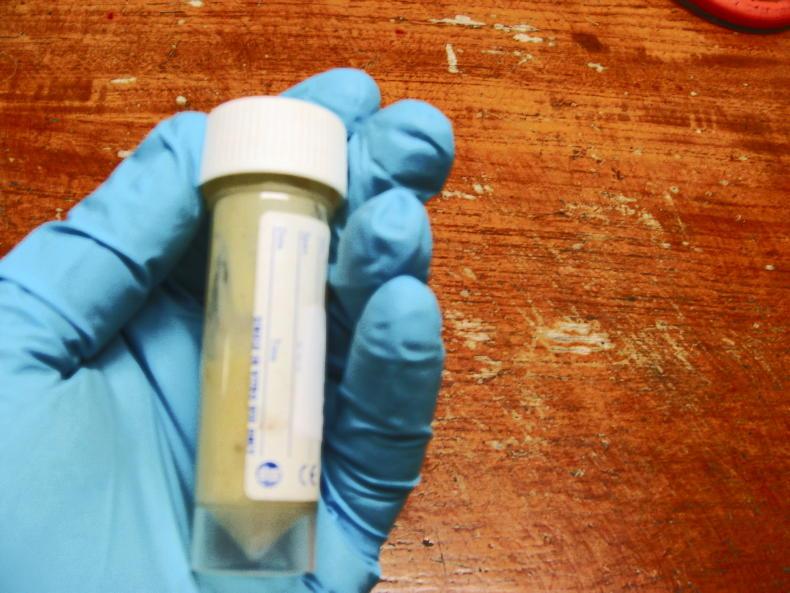
Animals can become infected in two ways – either through ingesting dung or being fed infected colostrum or milk. As the disease progresses in the dam, calves can become infected in the womb.
The problem is that an animal may test negative for the disease and by the time an animal develops signs she may well have other animals in the herd infected. Bringing in colostrum from another farm of unknown Johne’s status is high-risk. If possible, you should freeze surplus colostrum from your own cows of known Johne’s status. Feeding milk from other farms, spreading cattle slurry from other farms and grazing with young stock is also risky. Testing animals before purchase is unreliable and there are very few known disease-free herds from which to buy stock. The only way to control Johne’s on your farm is to protect young calves from exposure to infected colostrum, dung or milk, and reduce shedding by removing any infectious animals by repeated individual animal testing. More information on Johne's disease is available from Animal Health Ireland.
This content is available to digital subscribers and loyalty code users only. Sign in to your account, use the code or subscribe to get unlimited access.
The reader loyalty code gives you full access to the site from when you enter it until the following Wednesday at 9pm. Find your unique code on the back page of Irish Country Living every week.
CODE ACCEPTED
You have full access to the site until next Wednesday at 9pm.
CODE NOT VALID
Please try again or contact support.
Animals can become infected in two ways – either through ingesting dung or being fed infected colostrum or milk. As the disease progresses in the dam, calves can become infected in the womb.
The problem is that an animal may test negative for the disease and by the time an animal develops signs she may well have other animals in the herd infected. Bringing in colostrum from another farm of unknown Johne’s status is high-risk. If possible, you should freeze surplus colostrum from your own cows of known Johne’s status. Feeding milk from other farms, spreading cattle slurry from other farms and grazing with young stock is also risky. Testing animals before purchase is unreliable and there are very few known disease-free herds from which to buy stock. The only way to control Johne’s on your farm is to protect young calves from exposure to infected colostrum, dung or milk, and reduce shedding by removing any infectious animals by repeated individual animal testing. More information on Johne's disease is available from Animal Health Ireland.
If you would like to speak to a member of our team, please call us on 01-4199525.
Link sent to your email address
We have sent an email to your address. Please click on the link in this email to reset your password. If you can't find it in your inbox, please check your spam folder. If you can't find the email, please call us on 01-4199525.
ENTER YOUR LOYALTY CODE:
The reader loyalty code gives you full access to the site from when you enter it until the following Wednesday at 9pm. Find your unique code on the back page of Irish Country Living every week.
SHARING OPTIONS