



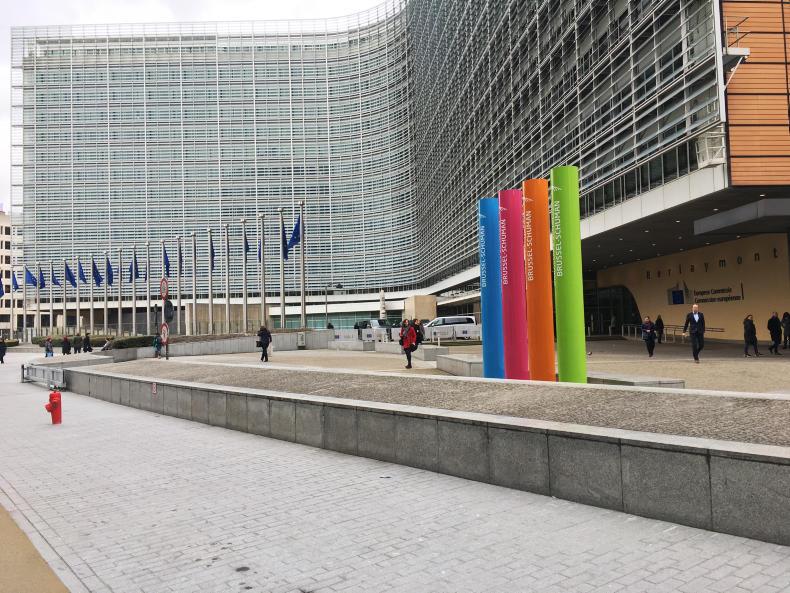
We have long highlighted the extent to which farmers’ financial standing within modern society has been eroding steadily for many years. That is hardly surprising when we look at the collapse in effective buying power of key agricultural outputs such as grain, milk and meat over recent decades.
Some will of course argue that this trend in commodity prices merely reflects the role of the Common Agricultural Policy in providing direct support to farmers in order to keep the price of food low. The argument had some validity at a time when supports were directly linked to production or provided in the form of market management tools, such as intervention.
However, in a bid to ready the CAP for a global market that, at least politically, required WTO compliance, these so called “amber box” measures have now been almost completely replaced by more politically acceptable “green box” measures – classed as minimally trade-distorting supports. This is why we have seen direct production-linked supports replaced by the combination of land area-based payments along with increased focus on environmental controls, animal welfare regulations and delivery of social goods.
There is no doubt that farmers across Europe are becoming increasingly frustrated, not only with the inability of CAP to protect the income of the farmer calving the cow, lambing the ewe or planting the seed, but also the level of regulation attached to new schemes – schemes that add costs and in many instances reduce the competitiveness of a sector that is increasingly being asked to compete in a global market.
It is a level of frustration that Brussels would be foolish to ignore. A warning shot has already been fired in the form of Brexit. The fact that somewhere between 50-60% of British farmers are estimated to have voted to leave the EU, despite CAP delivering over 100% of their income in 22 of the last 25 years, shows clearly the extent to which farmers are frustrated by and disconnected from the current CAP.
Worryingly, it is a mood that is extending across the English Channel to France. Reports this week suggest an increasing number of French farmers are pinning their hopes on the leader of the far right National Front Party, Marine Le Pen. The narrative is similar to what we heard across Britain in relation to a frustration with low prices, increased regulation and lack of freedom to farm. This is despite the French farmer being the largest beneficiary of support through CAP.
Of course, frustration with CAP is not limited to French and British farmers. Closer to home, many Irish farmers are also feeling the full financial impact of a flawed policy. Along with struggling to adjust to a basic payment model that now rewards the ownership of land rather than supporting the production of food, farmers are seeing schemes that once provided additional income being greatly eroded.In the case of the Knowledge Transfer Programme, farmers are holding on to just over 50% of the overall payment.
At the start of February, DG Agri launched its 12-week public consultation on modernising and simplifying CAP. It is expected to pave the way for the preparation of a European Commission communication on the future of CAP in November of this year. Farmers will be watching closely as to the extent to which the Commission acknowledges that the current CAP model has failed and is no longer aligned to the principles on which it was founded.
The Commission cannot ignore the global trend of renationalisation – probably most evident in the US, one of the world’s largest producers of agricultural commodities. Like the US farm bill, the future CAP must be prepared to move beyond the shackles of WTO and implement measures that protect farmer income and safeguard EU food production.



SHARING OPTIONS