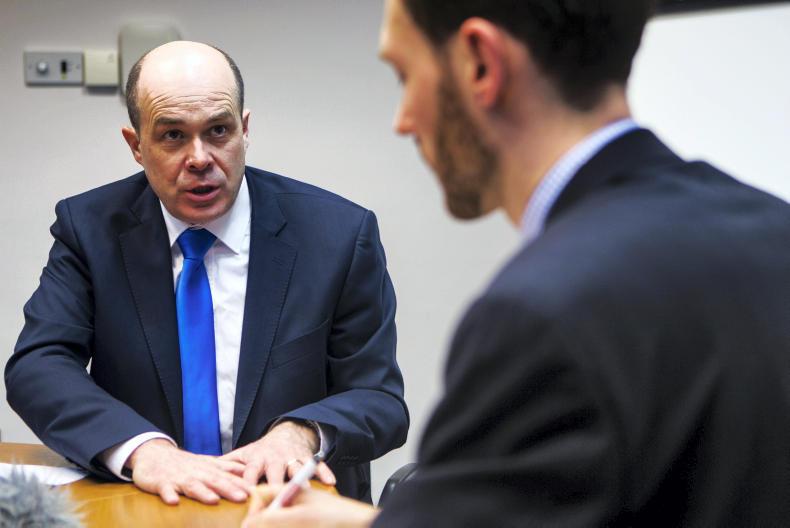
Minister for Communications, Climate Action and Environment Denis Naughten has said that two major renewable energy schemes due to start at the end of this year will focus on large industrial users. This will start with existing peat-fired power stations, aiming to create a biomass outlet to promote a national energy crop industry.
In an interview with the Irish Farmers Journal, Minister Naugthen said the upcoming Renewable Heat Incentive (RHI) scheme would not support small-scale, on-farm projects. “This is for large-scale users of heat. We need to ramp this up fairly quickly to meet our 2020 targets and the quickest and easiest way to do that is to target the large-scale energy users,” he said. Ireland must generate 12% of its heat needs from renewables within three years or face EU fines that could run into hundreds of millions. “If you create a lot of demand quite quickly, farmers can see that there are opportunities there, and that then will allow for, over time, it to be expanded to smaller users,” the minister said.
He acknowledged that many growers were sceptical about energy crops after grants to plant mischantus 10 years ago failed to generate a profitable industry. But he said incentives would combine with the establishment of Bioenergy Ireland, a semi-state distribution body in the works for several years, to establish a supply chain and an outlet for farmers.
Listen to extracts from the interview with Minister Naughten in our podcast below:
Listen to "Minister Denis Naughten on new renewable energy schemes" on Spreaker.
To create initial demand, Minister Naughten said he has extended existing renewable electricity incentives to subsidise the ESB’s peat-fired power stations at Lanesborough, Co Longford, and Shannonbridge, Co Offaly, to burn up to 40% biomass, much like Bord Na MÓna’s power station in Edenderry, Co Offaly. The Roscommon-Galway TD has an obvious interest in the industry’s midlands footprint. “We need to create alternative employment for the people that are currently employed in Bord na MÓna,” he said.
One challenge is to develop “an indigenous biomass industry” rather than import cheap biomass. Minister Naughten said that forest thinnings and timber byproducts would provide fuel while farmers establish energy crops, with willow and eucalyptus the most promising options. “We will put as many standards in place that will be much easier for Irish growers to comply with than international growers,” he said. “The final piece of the jigsaw is an establishment grant to establish the grants in the first place. We have had some preliminary discussions with [Agriculture] Minister [Michael] Creed on that.”
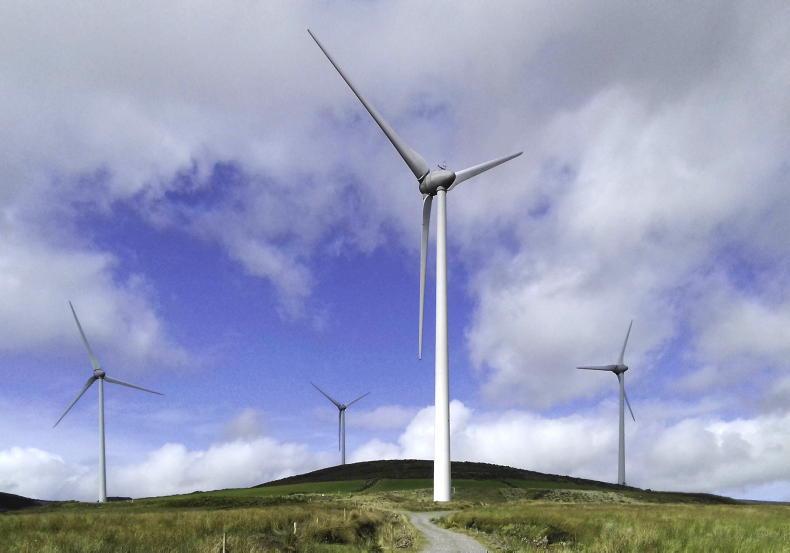
Also due to open at the end of this year, a renewable electricity support scheme will aim to broaden the mix of technologies used in Ireland, with less onshore, more offshore wind as well as solar and other sources.
However, Minister Naughten warned against developers who approach farmers “speculatively” to have their land signed over to solar projects. The amount of applications to have such projects connected to the electricity grid exceeds capacity and the minister said that he “won’t be paying for the grid connections to support this level of expansion”. He added that he would do everything in his power to prevent the resale of projects that did obtain a grid connection at a profit.
Acknowledging the need for better community engagement and “a long-term economic dividend” for people living near new energy projects, Minister Naughten said the open forum on renewable energy promised by the Government would take place as part of the National Dialogue on Climate Change launched last week, with the first public meetings due to take place shortly after Easter.
Read more
Farmers still in the dark on solar
Full coverage: renewable energy
Minister for Communications, Climate Action and Environment Denis Naughten has said that two major renewable energy schemes due to start at the end of this year will focus on large industrial users. This will start with existing peat-fired power stations, aiming to create a biomass outlet to promote a national energy crop industry.
In an interview with the Irish Farmers Journal, Minister Naugthen said the upcoming Renewable Heat Incentive (RHI) scheme would not support small-scale, on-farm projects. “This is for large-scale users of heat. We need to ramp this up fairly quickly to meet our 2020 targets and the quickest and easiest way to do that is to target the large-scale energy users,” he said. Ireland must generate 12% of its heat needs from renewables within three years or face EU fines that could run into hundreds of millions. “If you create a lot of demand quite quickly, farmers can see that there are opportunities there, and that then will allow for, over time, it to be expanded to smaller users,” the minister said.
He acknowledged that many growers were sceptical about energy crops after grants to plant mischantus 10 years ago failed to generate a profitable industry. But he said incentives would combine with the establishment of Bioenergy Ireland, a semi-state distribution body in the works for several years, to establish a supply chain and an outlet for farmers.
Listen to extracts from the interview with Minister Naughten in our podcast below:
Listen to "Minister Denis Naughten on new renewable energy schemes" on Spreaker.
To create initial demand, Minister Naughten said he has extended existing renewable electricity incentives to subsidise the ESB’s peat-fired power stations at Lanesborough, Co Longford, and Shannonbridge, Co Offaly, to burn up to 40% biomass, much like Bord Na MÓna’s power station in Edenderry, Co Offaly. The Roscommon-Galway TD has an obvious interest in the industry’s midlands footprint. “We need to create alternative employment for the people that are currently employed in Bord na MÓna,” he said.
One challenge is to develop “an indigenous biomass industry” rather than import cheap biomass. Minister Naughten said that forest thinnings and timber byproducts would provide fuel while farmers establish energy crops, with willow and eucalyptus the most promising options. “We will put as many standards in place that will be much easier for Irish growers to comply with than international growers,” he said. “The final piece of the jigsaw is an establishment grant to establish the grants in the first place. We have had some preliminary discussions with [Agriculture] Minister [Michael] Creed on that.”
Also due to open at the end of this year, a renewable electricity support scheme will aim to broaden the mix of technologies used in Ireland, with less onshore, more offshore wind as well as solar and other sources.
However, Minister Naughten warned against developers who approach farmers “speculatively” to have their land signed over to solar projects. The amount of applications to have such projects connected to the electricity grid exceeds capacity and the minister said that he “won’t be paying for the grid connections to support this level of expansion”. He added that he would do everything in his power to prevent the resale of projects that did obtain a grid connection at a profit.
Acknowledging the need for better community engagement and “a long-term economic dividend” for people living near new energy projects, Minister Naughten said the open forum on renewable energy promised by the Government would take place as part of the National Dialogue on Climate Change launched last week, with the first public meetings due to take place shortly after Easter.
Read more
Farmers still in the dark on solar
Full coverage: renewable energy





SHARING OPTIONS