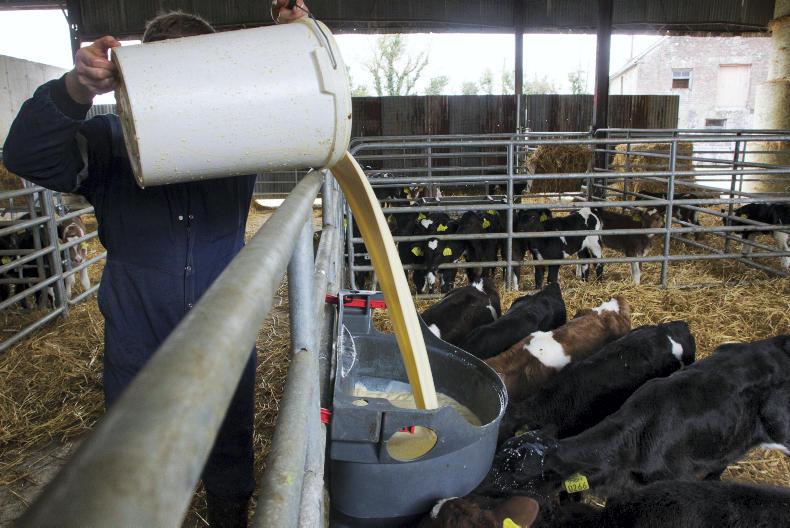
Dairy farmers with Johne's are pasteurising milk before feeding to calves, but they must be careful its done properly.
ADVERTISEMENT
Pasteurisation is a process used in food processing to reduce bacterial load. Some farmers that have a known Johne’s disease threat are pasteurising milk before feeding it to young calves. Is it a fool proof way of reducing Johne’s transfer?
AHI say where Johne’s disease is endemic and infection has been confirmed in a herd, pasteurisation of colostrum and milk from test-negative cows may increase the confidence that milk contains minimal Johne’s levels. However, milk from known test positive animals should not be used to feed any calf that will be retained for breeding purposes.
Pasteurisation can be an effective means to enable farmers to use colostrum and transition milk but it needs to be pasteurised at the right temperature and for the right length of time. Milk from cows being treated with antibiotics should not be used. Also remember over-heating may lead to the denaturing of the milk, whereas under-heating may result in a reduced capacity to inactivate Johne’s.
ADVERTISEMENT
The pasteurisation disadvantage is the purchase price, and the technical input required for installation, calibration and ongoing maintenance of the unit. Each system has specific requirements for optimal operation.
After pasteurisation the milk or colostrum should be stored in a refrigerator at 4°C, in capped bottles or lidded containers to avoid faecal contamination. It should be used within two days. Some farmers have paid up to €15,000 for a pasteuriser. The alternative is to use milk replacer.

This content is available to digital subscribers and loyalty code users only. Sign in to your account, use the code or subscribe to get unlimited access.
The reader loyalty code gives you full access to the site from when you enter it until the following Wednesday at 9pm. Find your unique code on the back page of Irish Country Living every week.
CODE ACCEPTED
You have full access to the site until next Wednesday at 9pm.
CODE NOT VALID
Please try again or contact support.
Pasteurisation is a process used in food processing to reduce bacterial load. Some farmers that have a known Johne’s disease threat are pasteurising milk before feeding it to young calves. Is it a fool proof way of reducing Johne’s transfer?
AHI say where Johne’s disease is endemic and infection has been confirmed in a herd, pasteurisation of colostrum and milk from test-negative cows may increase the confidence that milk contains minimal Johne’s levels. However, milk from known test positive animals should not be used to feed any calf that will be retained for breeding purposes.
Pasteurisation can be an effective means to enable farmers to use colostrum and transition milk but it needs to be pasteurised at the right temperature and for the right length of time. Milk from cows being treated with antibiotics should not be used. Also remember over-heating may lead to the denaturing of the milk, whereas under-heating may result in a reduced capacity to inactivate Johne’s.
The pasteurisation disadvantage is the purchase price, and the technical input required for installation, calibration and ongoing maintenance of the unit. Each system has specific requirements for optimal operation.
After pasteurisation the milk or colostrum should be stored in a refrigerator at 4°C, in capped bottles or lidded containers to avoid faecal contamination. It should be used within two days. Some farmers have paid up to €15,000 for a pasteuriser. The alternative is to use milk replacer.
If you would like to speak to a member of our team, please call us on 01-4199525.
Link sent to your email address
We have sent an email to your address. Please click on the link in this email to reset your password. If you can't find it in your inbox, please check your spam folder. If you can't find the email, please call us on 01-4199525.
ENTER YOUR LOYALTY CODE:
The reader loyalty code gives you full access to the site from when you enter it until the following Wednesday at 9pm. Find your unique code on the back page of Irish Country Living every week.
SHARING OPTIONS