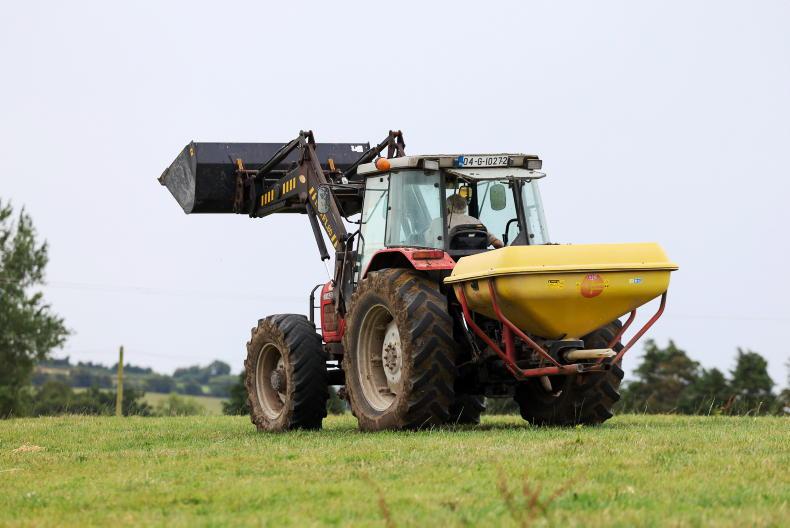
Given the forecasted dip in temperatures, this week's management notes focuses on grass tetany and fertiliser application rates to kickstart grass growth.
Ground conditions vary greatly across the country with many farmers on heavy soils still not able to travel to apply fertiliser. With grass demand rising, it is important to get fertiliser applied as soon as weather allows.
Where grass supplies are running behind target and no fertiliser has been applied to date, spreading 20 to 25 units nitrogen on farms with an average stocking rate (two to 2.5 ewes per acre) and 30 to 35 units on heavily stocked farms will help to kickstart growth. Farms with a good supply of grass should still be mindful to get 20 to 30 units nitrogen or slurry applied after grazing to keep grass supplies ahead of demand.
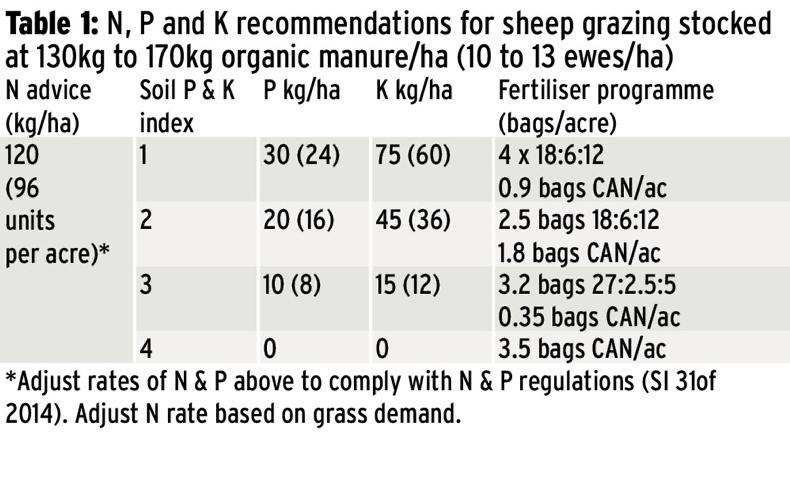
The importance of this is emphasised in the experience of the last two seasons with tight grass supplies in April and early May. Where soils are low in phosphorus, there will be merit in applying a compound fertiliser early in the year to help the sward meet its yield potential. Teagasc advice from Mark Plunkett is detailed in Table 1.
This content is available to digital subscribers and loyalty code users only. Sign in to your account, use the code or subscribe to get unlimited access.
However, if you would like to share the information in this article, you may use the headline, summary and link below:
Title: Sheep management: fertiliser application
Given the forecasted dip in temperatures, this week's management notes focuses on grass tetany and fertiliser application rates to kickstart grass growth.
The reader loyalty code gives you full access to the site from when you enter it until the following Wednesday at 9pm. Find your unique code on the back page of Irish Country Living every week.
CODE ACCEPTED
You have full access to the site until next Wednesday at 9pm.
CODE NOT VALID
Please try again or contact support.
Ground conditions vary greatly across the country with many farmers on heavy soils still not able to travel to apply fertiliser. With grass demand rising, it is important to get fertiliser applied as soon as weather allows.
Where grass supplies are running behind target and no fertiliser has been applied to date, spreading 20 to 25 units nitrogen on farms with an average stocking rate (two to 2.5 ewes per acre) and 30 to 35 units on heavily stocked farms will help to kickstart growth. Farms with a good supply of grass should still be mindful to get 20 to 30 units nitrogen or slurry applied after grazing to keep grass supplies ahead of demand.
The importance of this is emphasised in the experience of the last two seasons with tight grass supplies in April and early May. Where soils are low in phosphorus, there will be merit in applying a compound fertiliser early in the year to help the sward meet its yield potential. Teagasc advice from Mark Plunkett is detailed in Table 1.
If you would like to speak to a member of our team, please call us on 01-4199525.
Link sent to your email address
We have sent an email to your address. Please click on the link in this email to reset your password. If you can't find it in your inbox, please check your spam folder. If you can't find the email, please call us on 01-4199525.
ENTER YOUR LOYALTY CODE:
The reader loyalty code gives you full access to the site from when you enter it until the following Wednesday at 9pm. Find your unique code on the back page of Irish Country Living every week.
SHARING OPTIONS