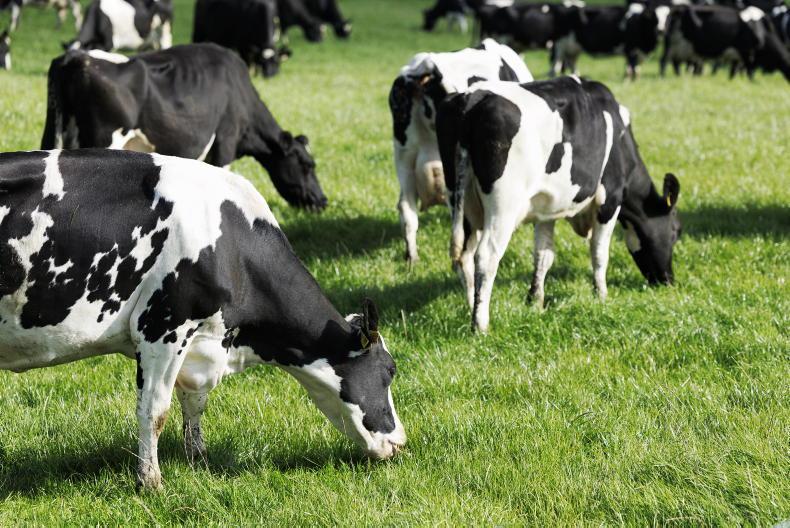
Agriculture accounts for approximately 33% of greenhouse gas (GHG) emissions. \ Donal O'Leary
ADVERTISEMENT
“Substituting 50% of the CAN spread on farms with urea + NBPT is equivalent to the amount of methane produced by 106,000 dairy cows."
This was according to Dr Patrick Forrestal of Teagasc, Johnstown Castle, who presented results of recent trials carried out on protected urea compared with the traditional use of CAN and untreated urea fertiliser products.
Forrestal said the initial results from this research is positive news for the Irish agricultural industry and a switch over to its use could be a possible way to reduce emissions.
ADVERTISEMENT
Forrestal said Ireland has significant emission reduction targets to meet in the near future.
“The Food Wise 2025 strategy foresees significant increases in agricultural production. However, on the other hand, the European Commission has set a 30% reduction in overall Irish emissions by 2030,” explained Forrestal.
He said as agriculture accounts for approximately 33% of greenhouse gas (GHG) emissions and 98% of ammonia emissions the pressure is mounting for agriculture to play a greater role in meeting these targets.
The positive results from the trial showed:
Protected urea is consistently as efficient as CAN with regard to nitrogen recovery and better than untreated urea (during summer).
Protected urea has a much lower GHG emission loss than CAN.
Protected urea and untreated urea has a similar yield performance to CAN throughout the year.
In terms of ammonia loss, protected urea has been shown to cut losses by 79% on average compared with untreated urea. The results showed that ammonia loss from protected urea was not significantly different to CAN.
The research was presented at the Teagasc agri-environmental conference in the Tullamore Court Hotel today.
Register for free to read this story and our free stories.
This content is available to digital subscribers and loyalty code users only. Sign in to your account, use the code or subscribe to get unlimited access.
The reader loyalty code gives you full access to the site from when you enter it until the following Wednesday at 9pm. Find your unique code on the back page of Irish Country Living every week.
CODE ACCEPTED
You have full access to the site until next Wednesday at 9pm.
CODE NOT VALID
Please try again or contact support.
“Substituting 50% of the CAN spread on farms with urea + NBPT is equivalent to the amount of methane produced by 106,000 dairy cows."
This was according to Dr Patrick Forrestal of Teagasc, Johnstown Castle, who presented results of recent trials carried out on protected urea compared with the traditional use of CAN and untreated urea fertiliser products.
Forrestal said the initial results from this research is positive news for the Irish agricultural industry and a switch over to its use could be a possible way to reduce emissions.
Forrestal said Ireland has significant emission reduction targets to meet in the near future.
“The Food Wise 2025 strategy foresees significant increases in agricultural production. However, on the other hand, the European Commission has set a 30% reduction in overall Irish emissions by 2030,” explained Forrestal.
He said as agriculture accounts for approximately 33% of greenhouse gas (GHG) emissions and 98% of ammonia emissions the pressure is mounting for agriculture to play a greater role in meeting these targets.
The positive results from the trial showed:
Protected urea is consistently as efficient as CAN with regard to nitrogen recovery and better than untreated urea (during summer).
Protected urea has a much lower GHG emission loss than CAN.
Protected urea and untreated urea has a similar yield performance to CAN throughout the year.
In terms of ammonia loss, protected urea has been shown to cut losses by 79% on average compared with untreated urea. The results showed that ammonia loss from protected urea was not significantly different to CAN.
The research was presented at the Teagasc agri-environmental conference in the Tullamore Court Hotel today.
If you would like to speak to a member of our team, please call us on 01-4199525.
Link sent to your email address
We have sent an email to your address. Please click on the link in this email to reset your password. If you can't find it in your inbox, please check your spam folder. If you can't find the email, please call us on 01-4199525.
ENTER YOUR LOYALTY CODE:
The reader loyalty code gives you full access to the site from when you enter it until the following Wednesday at 9pm. Find your unique code on the back page of Irish Country Living every week.
SHARING OPTIONS