For the vast majority of dairy farmers, 2017 has been an excellent year. Milk prices were strong right through the spring peak and well into the autumn, while grass growth was also plentiful throughout the year.
Looking back on the year it’s clear that butter was the biggest talking point of 2017 for the dairy industry.
The butter story in 2017 has been nothing short of phenomenal as prices rose to record highs in September to help fuel the strong milk prices enjoyed by dairy farmers this season.
Butter markets started to fall in October and prices declined rapidly
Butter is very much back in fashion with health conscious consumers, particularly in Europe and the US. Listening to its customers, the global food industry has been switching away from alternative vegetable oils and margarines in recent years and using butter as an ingredient once more.
This increased demand placed new strains on supply chains in 2017 as dairy co-ops and processors ran short of butter stocks. In Europe, there were more than 100,000t of butter sitting in stock in 2016. By March 2017, these stocks had completely evaporated and a price surge was on the cards.
In May, the first signs of the impending price spike began to unfold with prices rising rapidly in a few short days.
Speaking to the Irish Farmers Journal, a number of European dairy traders said they were astonished at the scramble among buyers to lay their hands on fast diminishing butter stocks. Having spent much of the spring months trading around the €4,500/t mark, the price of butter had suddenly shot up above €6,000/t by the end of June.
However, the butter price inflation wasn’t finished there.
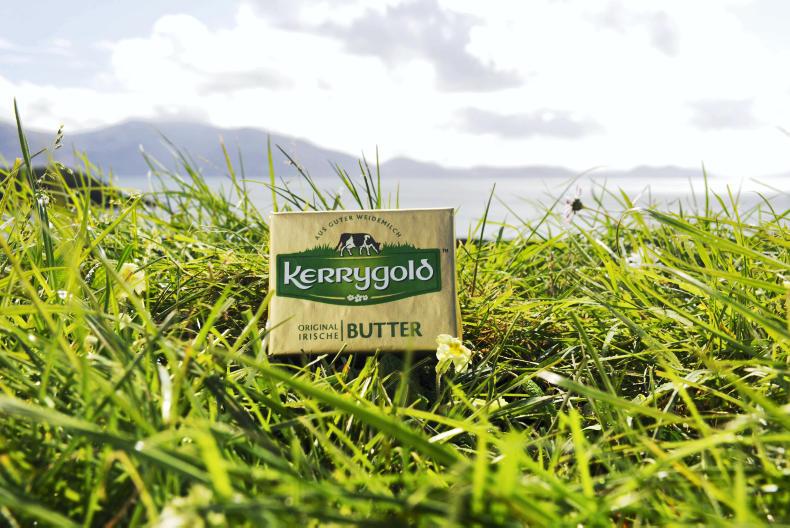
Continued tightness in German and French milk supplies throughout the summer saw the price of butter continue to rise until it eventually reached a record price of €7,000/t in September. At this level, butter was more than 60% more expensive than it was at the start of the year.
Prices overheat
Unfortunately for dairy farmers across Europe, the old rule that states what goes up must come down began to take effect shortly after this. The European butter market was beginning to overheat with prices at these record levels, which was also having a negative effect on the affordability of many buyers.
Butter markets started to fall in October and prices declined almost as rapidly as they had risen. By early November, the price of butter had fallen by more than €2,000/t to the same level it was at the beginning of May at €4,970/t.
This correction in Europe’s butter market was spurred on by recovering milk supplies from Germany, France and the UK – which are the three biggest dairy producers in Europe. Added to this, Dutch milk production continued to hold up despite all expectations it would decline after new phosphate quotas were introduced.
In the final weeks of 2017, butter prices have continued to fall and were trading at €4,300/t this week, which is almost exactly where prices were at in January 2017. It appears the butter boom has come full circle in 2017 and prices are back to more sustainable levels.
Let’s just hope it’s a soft landing and prices hold up into 2018.
Read more
‘2018 won’t be as good for dairy no matter how you look at it’
Kerrygold: 55 years of real butter
For the vast majority of dairy farmers, 2017 has been an excellent year. Milk prices were strong right through the spring peak and well into the autumn, while grass growth was also plentiful throughout the year.
Looking back on the year it’s clear that butter was the biggest talking point of 2017 for the dairy industry.
The butter story in 2017 has been nothing short of phenomenal as prices rose to record highs in September to help fuel the strong milk prices enjoyed by dairy farmers this season.
Butter markets started to fall in October and prices declined rapidly
Butter is very much back in fashion with health conscious consumers, particularly in Europe and the US. Listening to its customers, the global food industry has been switching away from alternative vegetable oils and margarines in recent years and using butter as an ingredient once more.
This increased demand placed new strains on supply chains in 2017 as dairy co-ops and processors ran short of butter stocks. In Europe, there were more than 100,000t of butter sitting in stock in 2016. By March 2017, these stocks had completely evaporated and a price surge was on the cards.
In May, the first signs of the impending price spike began to unfold with prices rising rapidly in a few short days.
Speaking to the Irish Farmers Journal, a number of European dairy traders said they were astonished at the scramble among buyers to lay their hands on fast diminishing butter stocks. Having spent much of the spring months trading around the €4,500/t mark, the price of butter had suddenly shot up above €6,000/t by the end of June.
However, the butter price inflation wasn’t finished there.
Continued tightness in German and French milk supplies throughout the summer saw the price of butter continue to rise until it eventually reached a record price of €7,000/t in September. At this level, butter was more than 60% more expensive than it was at the start of the year.
Prices overheat
Unfortunately for dairy farmers across Europe, the old rule that states what goes up must come down began to take effect shortly after this. The European butter market was beginning to overheat with prices at these record levels, which was also having a negative effect on the affordability of many buyers.
Butter markets started to fall in October and prices declined almost as rapidly as they had risen. By early November, the price of butter had fallen by more than €2,000/t to the same level it was at the beginning of May at €4,970/t.
This correction in Europe’s butter market was spurred on by recovering milk supplies from Germany, France and the UK – which are the three biggest dairy producers in Europe. Added to this, Dutch milk production continued to hold up despite all expectations it would decline after new phosphate quotas were introduced.
In the final weeks of 2017, butter prices have continued to fall and were trading at €4,300/t this week, which is almost exactly where prices were at in January 2017. It appears the butter boom has come full circle in 2017 and prices are back to more sustainable levels.
Let’s just hope it’s a soft landing and prices hold up into 2018.
Read more
‘2018 won’t be as good for dairy no matter how you look at it’
Kerrygold: 55 years of real butter






SHARING OPTIONS