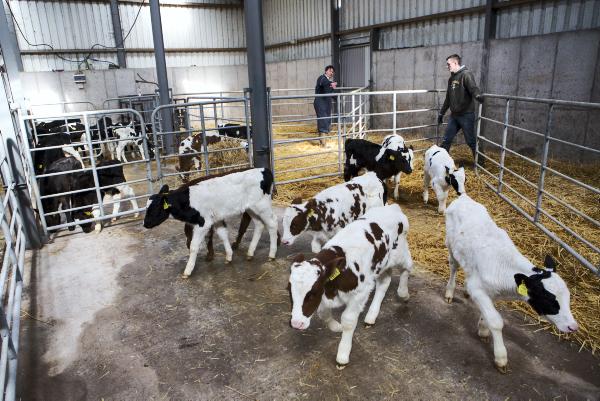
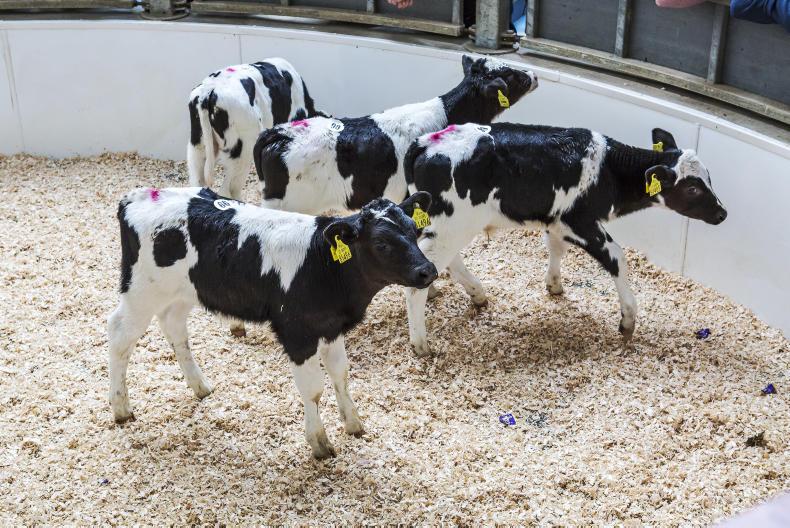
The Department of Agriculture plans to tighten rules so that calves must be at least 10 days old to be considered fit for transport.
The rule will apply to farm-to-farm sales, as well as to mart sales. It will remain a rule that calves whose navels have not completely healed cannot be transported.
A mechanism allowing movement before 10 days would be available for occasional and very exceptional circumstances involving animal health or welfare issues, the Department told farm organisations.
ADVERTISEMENT
IFA dairy chair Tom Phelan said: “Any changes must be practical and flagged to farmers well in advance of the peak calving season, which is now upon us. This will allow farmers plan for new management practices which may be required.”
It is vital for dairy farmers to be able to transport young calves in good animal welfare conditions, especially in the context of the development plans of the sector, he said.
“It is important to point out that our current welfare rules on transport of young calves are fully in line with EU Regulations.”
This content is available to digital subscribers and loyalty code users only. Sign in to your account, use the code or subscribe to get unlimited access.
The reader loyalty code gives you full access to the site from when you enter it until the following Wednesday at 9pm. Find your unique code on the back page of Irish Country Living every week.
CODE ACCEPTED
You have full access to the site until next Wednesday at 9pm.
CODE NOT VALID
Please try again or contact support.
The Department of Agriculture plans to tighten rules so that calves must be at least 10 days old to be considered fit for transport.
The rule will apply to farm-to-farm sales, as well as to mart sales. It will remain a rule that calves whose navels have not completely healed cannot be transported.
A mechanism allowing movement before 10 days would be available for occasional and very exceptional circumstances involving animal health or welfare issues, the Department told farm organisations.
IFA dairy chair Tom Phelan said: “Any changes must be practical and flagged to farmers well in advance of the peak calving season, which is now upon us. This will allow farmers plan for new management practices which may be required.”
It is vital for dairy farmers to be able to transport young calves in good animal welfare conditions, especially in the context of the development plans of the sector, he said.
“It is important to point out that our current welfare rules on transport of young calves are fully in line with EU Regulations.”
If you would like to speak to a member of our team, please call us on 01-4199525.
Link sent to your email address
We have sent an email to your address. Please click on the link in this email to reset your password. If you can't find it in your inbox, please check your spam folder. If you can't find the email, please call us on 01-4199525.
ENTER YOUR LOYALTY CODE:
The reader loyalty code gives you full access to the site from when you enter it until the following Wednesday at 9pm. Find your unique code on the back page of Irish Country Living every week.






SHARING OPTIONS