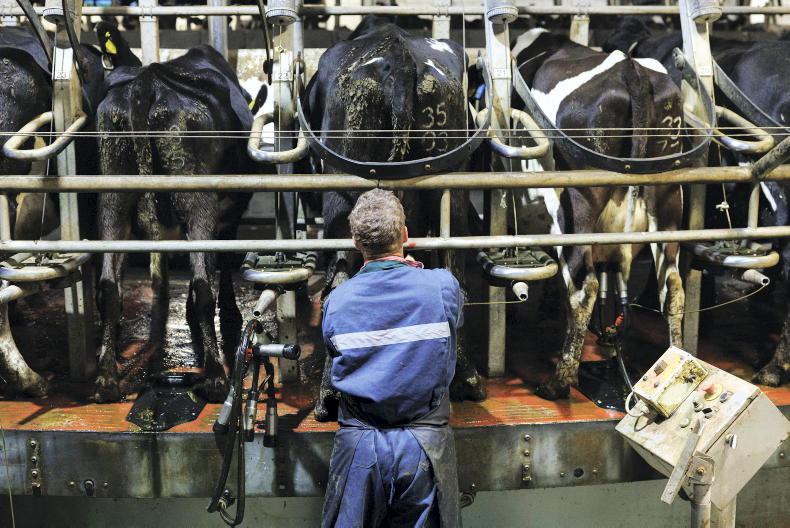
A cow producing 20 litres of milk and being fed a meal- and silage-based diet requires over 50 litres of water per day. \ Philip Doyle
ADVERTISEMENT
With cold weather and snow affecting many farms in the east and south, we outline some of the actions farmers are taking to keep farms working and producing milk.
In the cow shed
Milking cows must have access to drinking water at all times. A cow producing 20 litres of milk and being fed a meal- and silage-based diet requires over 50 litres of water per day. If no water is flowing into the shed, you have to try to draw water to cows in as safe a manner as possible. Be very careful that water is clean.
Many farmers with good wells (on farm sources) are keeping a trickle coming through the main water trough at all times by ensuring the ballcock stays down so there is always water running through the pipe.
Once-a-day milking: given the challenges and increased workload, many farmers will only milk once a day until the bad weather has passed.
Cattle can manage in cold weather if there is some shelter from biting cold winds. Newborn calves are most at risk.
Keep a close eye on mastitis as all cows will more or less be housed – lime and clean twice a day. Don’t overuse lime as it will cause cracking on skin.
Make sure that any outwintered stock have feed and some shelter from wind.
In the parlour
ADVERTISEMENT
Make sure that all doors into the parlour are kept closed. Some are erecting temporary shelter at the back (cow entrance) to parlour with bales or plastic sheeting.
Ensure that excess water is removed from the plant after the final rinse. Open all low-lying drains to ensure there is no water in the machine that can freeze.
Some farmers will remove the jetters from the claw pieces.
Some farmers are circulating 500g of salt with 20 litres of water in the final rinse – make sure to rinse before starting milking.
Again, some farmers have installed blow heaters to keep area warm, but be careful of the fire threat.
In the yard
Keep entrance lanes and yards as clear, as possible, where the lorry turns.
Keep the area where cows walk down to a minimum and put effort into keeping this area suitable for cows to walk on.
In the plant room
Some have installed a heat source but be very careful of the danger of causing a fire.
Keep any exposed pipes covered up.
Yourself and farm staff
Wear many layers of clothes and if you warm up be very careful when going out in the cold again – you may need to change the layer of clothes nearest your body.
Wear reflective clothing that can be seen from a distance.
Keep your mobile phone charged at all times.
Keep all clothing in a warm area to dry it out when not in use.
This content is available to digital subscribers and loyalty code users only. Sign in to your account, use the code or subscribe to get unlimited access.
The reader loyalty code gives you full access to the site from when you enter it until the following Wednesday at 9pm. Find your unique code on the back page of Irish Country Living every week.
CODE ACCEPTED
You have full access to the site until next Wednesday at 9pm.
CODE NOT VALID
Please try again or contact support.
With cold weather and snow affecting many farms in the east and south, we outline some of the actions farmers are taking to keep farms working and producing milk.
In the cow shed
Milking cows must have access to drinking water at all times. A cow producing 20 litres of milk and being fed a meal- and silage-based diet requires over 50 litres of water per day. If no water is flowing into the shed, you have to try to draw water to cows in as safe a manner as possible. Be very careful that water is clean.
Many farmers with good wells (on farm sources) are keeping a trickle coming through the main water trough at all times by ensuring the ballcock stays down so there is always water running through the pipe.
Once-a-day milking: given the challenges and increased workload, many farmers will only milk once a day until the bad weather has passed.
Cattle can manage in cold weather if there is some shelter from biting cold winds. Newborn calves are most at risk.
Keep a close eye on mastitis as all cows will more or less be housed – lime and clean twice a day. Don’t overuse lime as it will cause cracking on skin.
Make sure that any outwintered stock have feed and some shelter from wind.
In the parlour
Make sure that all doors into the parlour are kept closed. Some are erecting temporary shelter at the back (cow entrance) to parlour with bales or plastic sheeting.
Ensure that excess water is removed from the plant after the final rinse. Open all low-lying drains to ensure there is no water in the machine that can freeze.
Some farmers will remove the jetters from the claw pieces.
Some farmers are circulating 500g of salt with 20 litres of water in the final rinse – make sure to rinse before starting milking.
Again, some farmers have installed blow heaters to keep area warm, but be careful of the fire threat.
In the yard
Keep entrance lanes and yards as clear, as possible, where the lorry turns.
Keep the area where cows walk down to a minimum and put effort into keeping this area suitable for cows to walk on.
In the plant room
Some have installed a heat source but be very careful of the danger of causing a fire.
Keep any exposed pipes covered up.
Yourself and farm staff
Wear many layers of clothes and if you warm up be very careful when going out in the cold again – you may need to change the layer of clothes nearest your body.
Wear reflective clothing that can be seen from a distance.
Keep your mobile phone charged at all times.
Keep all clothing in a warm area to dry it out when not in use.
If you would like to speak to a member of our team, please call us on 01-4199525.
Link sent to your email address
We have sent an email to your address. Please click on the link in this email to reset your password. If you can't find it in your inbox, please check your spam folder. If you can't find the email, please call us on 01-4199525.
ENTER YOUR LOYALTY CODE:
The reader loyalty code gives you full access to the site from when you enter it until the following Wednesday at 9pm. Find your unique code on the back page of Irish Country Living every week.
SHARING OPTIONS