LIC Ireland and Eurogene AI held a series of meetings and farm walks across the country last week. Even though the main topic was preparing for the breeding season, a lot of discussion was on current weather and feed issues.
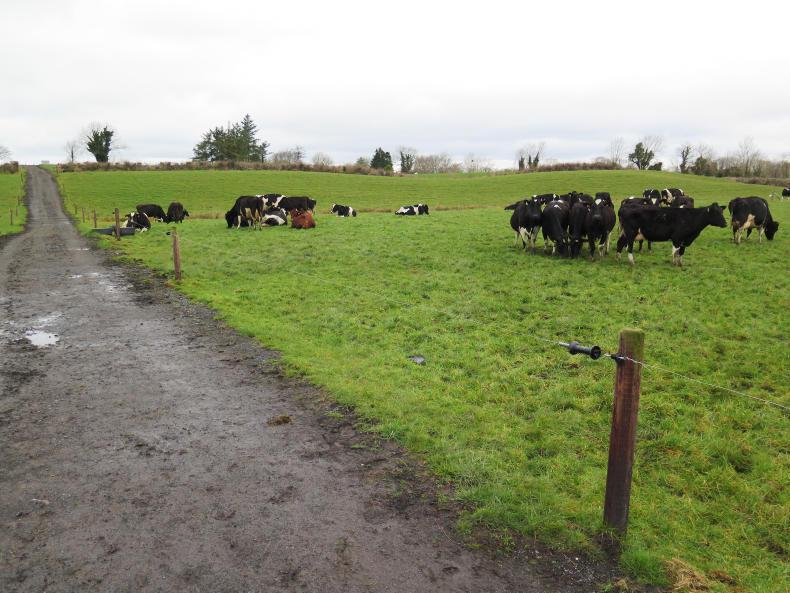
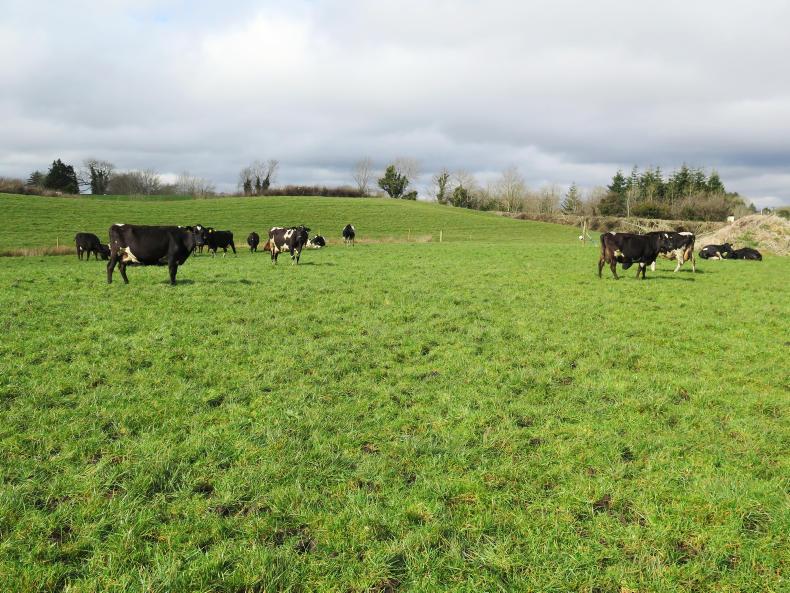
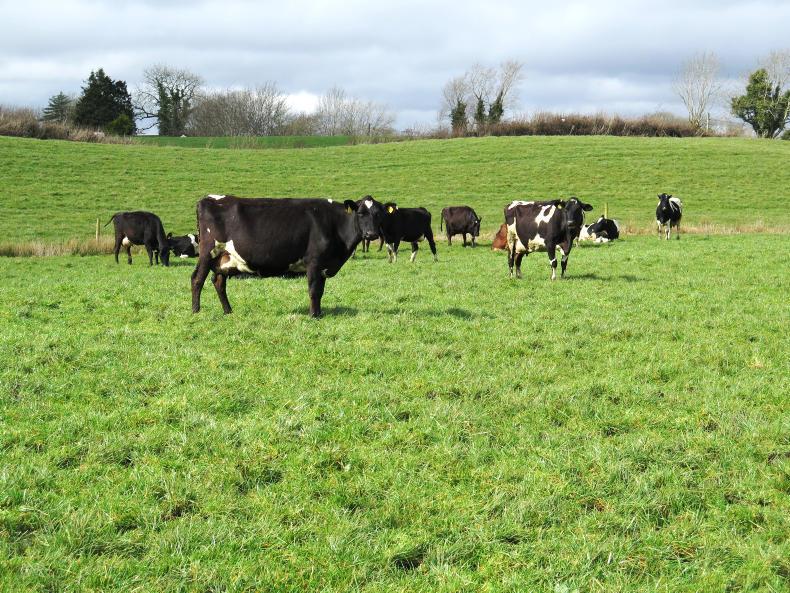
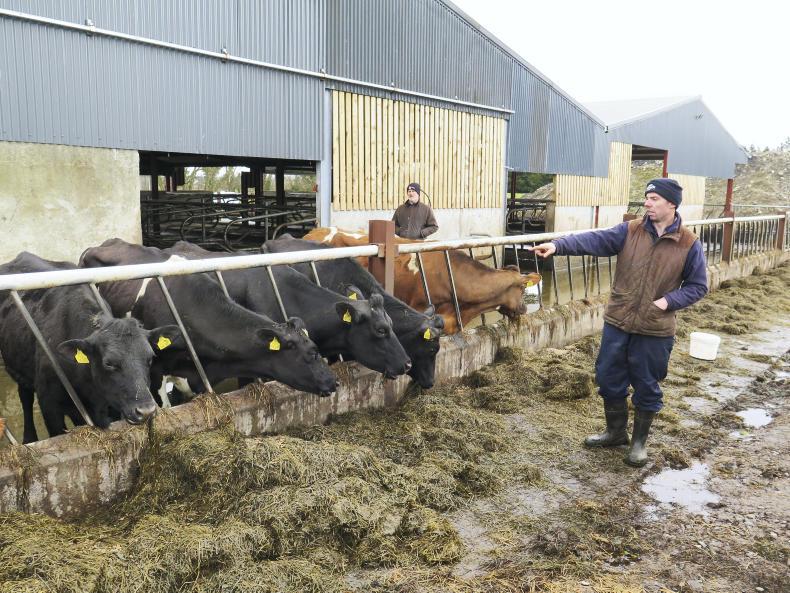
The Mayo meeting was held on Sean O’Donnell’s farm just outside Ballina last Thursday. Sean is milking 205 cows across two milking platforms. He leased a farm last year, built a new milking parlour on it and is now milking in the two places. Cows were out grazing on both farms on the day of the farm walk, despite the wintry conditions.
The issues in Mayo seem no different than anywhere else. Grass growth is low and silage is scarce. Farmers in the crowd were holding cows back, either giving them silage at night, or silage by day. Most of the farmers in attendance were feeding between 5kg and 8kg of meal. Silage is scarce and the quality of what is available is only moderate on many farms. One of the farmers, whose cows are out by day and in by night, said the cows are barely eating any silage at night.
“Even though there’s loads of silage in front of them, they queue up at the gate for half the night waiting to go out. They’d much prefer to be out,” he said.
Sean is feeding 4kg of meal on both farms. Average farm cover on the home farm is 500kg and the farm is growing 8kg per day. To reduce demand, he has the cows housed at night. There is more grass on the leased farm and the land is drier, so cows are out day and night there.
Even though there’s loads of silage in front of them, they queue up at the gate for half the night waiting to go out
His plan is to stretch out the first round until 16 April, by keeping them in at night. He reckons he will have enough silage to get him to that date, but he says the quality of the silage is poor and would be better suited to dry cow feed than milking cow feed.
“We normally start the second round on 10 April, even though last year we started it on 3 April it was too soon and I ended up chasing my tail until mid-May. We have eight paddocks left to graze and it’s a case of rationing them out until growth changes. Four of these have covers of above 1,000. The last paddocks to be closed only have covers of 500kg, they haven’t moved all winter,” Sean said.
He spread 46 units/acre of urea two weeks ago, and plans to go with another round of urea next week. Despite the upset to the normal routine, Sean’s cows are milking well. It’s nearly all mature cows on the home farm and they are milking 25.5l at 4.80% fat and 3.32% protein or 2.13kg MS/cow. All the heifers are on the outfarm and they are milking 20l at 4.66% fat and 3.54% protein or 1.65kg MS/cow.
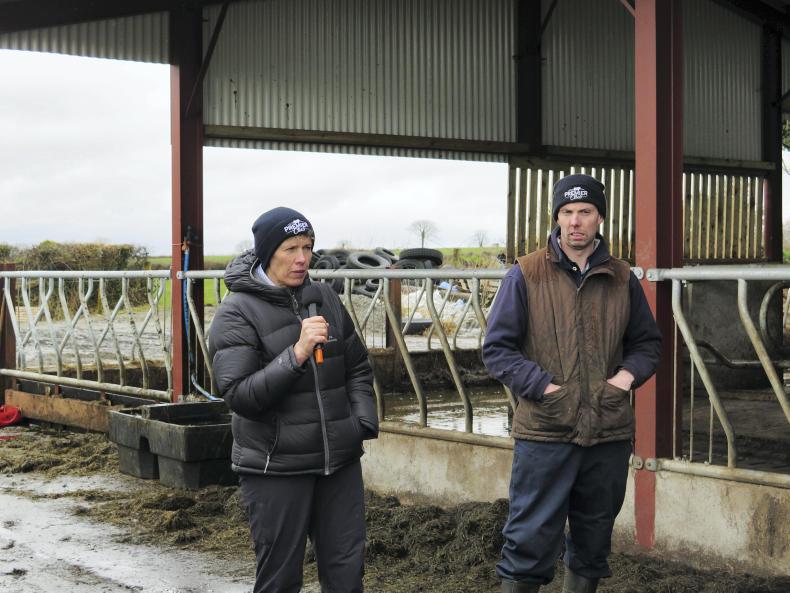
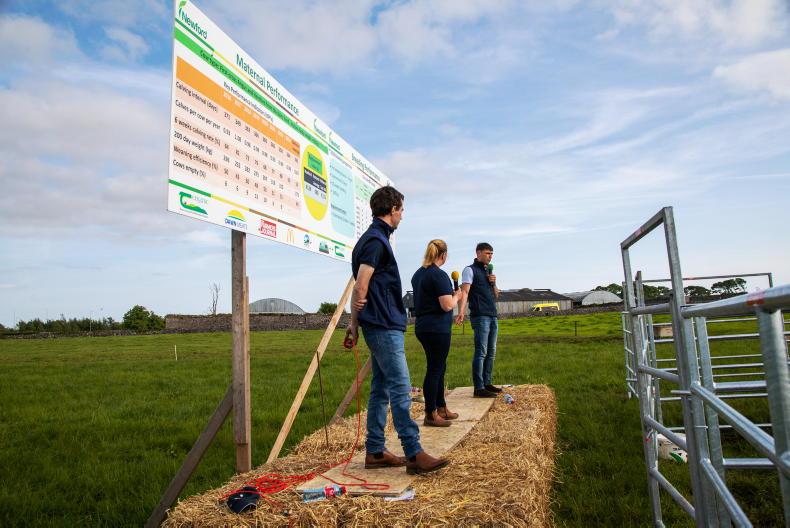
Joyce Voogt and Sean O'Donnell at the LIC farm walk in Mayo.Joyce Voogt and Sean O'Donnell at the LIC farm walk in Mayo.
Main speaker
The main speaker at the farm walk was Joyce Voogt, a vet that works for LIC in New Zealand. Joyce emphasised the importance of body condition score in the run-up to the breeding season. She said that once-a-day milking is a good way to improve the energy balance in cows.
“After two weeks of once-a-day the cow will flick to a positive energy balance, which will make a good difference. After four to six weeks, you should see big changes and the benefit will come in increased submission and conception rates. The key thing is to act as soon as you can. Any cow not bulling, lame or in low BCS should be put on once a day as soon as possible,” Joyce said.
In the pits: how will farmers restore silage stocks?
Dairy management notes : fodder, pug marks and nitrates
LIC Ireland and Eurogene AI held a series of meetings and farm walks across the country last week. Even though the main topic was preparing for the breeding season, a lot of discussion was on current weather and feed issues.
The Mayo meeting was held on Sean O’Donnell’s farm just outside Ballina last Thursday. Sean is milking 205 cows across two milking platforms. He leased a farm last year, built a new milking parlour on it and is now milking in the two places. Cows were out grazing on both farms on the day of the farm walk, despite the wintry conditions.
The issues in Mayo seem no different than anywhere else. Grass growth is low and silage is scarce. Farmers in the crowd were holding cows back, either giving them silage at night, or silage by day. Most of the farmers in attendance were feeding between 5kg and 8kg of meal. Silage is scarce and the quality of what is available is only moderate on many farms. One of the farmers, whose cows are out by day and in by night, said the cows are barely eating any silage at night.
“Even though there’s loads of silage in front of them, they queue up at the gate for half the night waiting to go out. They’d much prefer to be out,” he said.
Sean is feeding 4kg of meal on both farms. Average farm cover on the home farm is 500kg and the farm is growing 8kg per day. To reduce demand, he has the cows housed at night. There is more grass on the leased farm and the land is drier, so cows are out day and night there.
Even though there’s loads of silage in front of them, they queue up at the gate for half the night waiting to go out
His plan is to stretch out the first round until 16 April, by keeping them in at night. He reckons he will have enough silage to get him to that date, but he says the quality of the silage is poor and would be better suited to dry cow feed than milking cow feed.
“We normally start the second round on 10 April, even though last year we started it on 3 April it was too soon and I ended up chasing my tail until mid-May. We have eight paddocks left to graze and it’s a case of rationing them out until growth changes. Four of these have covers of above 1,000. The last paddocks to be closed only have covers of 500kg, they haven’t moved all winter,” Sean said.
He spread 46 units/acre of urea two weeks ago, and plans to go with another round of urea next week. Despite the upset to the normal routine, Sean’s cows are milking well. It’s nearly all mature cows on the home farm and they are milking 25.5l at 4.80% fat and 3.32% protein or 2.13kg MS/cow. All the heifers are on the outfarm and they are milking 20l at 4.66% fat and 3.54% protein or 1.65kg MS/cow.
Joyce Voogt and Sean O'Donnell at the LIC farm walk in Mayo.Joyce Voogt and Sean O'Donnell at the LIC farm walk in Mayo.
Main speaker
The main speaker at the farm walk was Joyce Voogt, a vet that works for LIC in New Zealand. Joyce emphasised the importance of body condition score in the run-up to the breeding season. She said that once-a-day milking is a good way to improve the energy balance in cows.
“After two weeks of once-a-day the cow will flick to a positive energy balance, which will make a good difference. After four to six weeks, you should see big changes and the benefit will come in increased submission and conception rates. The key thing is to act as soon as you can. Any cow not bulling, lame or in low BCS should be put on once a day as soon as possible,” Joyce said.
In the pits: how will farmers restore silage stocks?
Dairy management notes : fodder, pug marks and nitrates







SHARING OPTIONS