



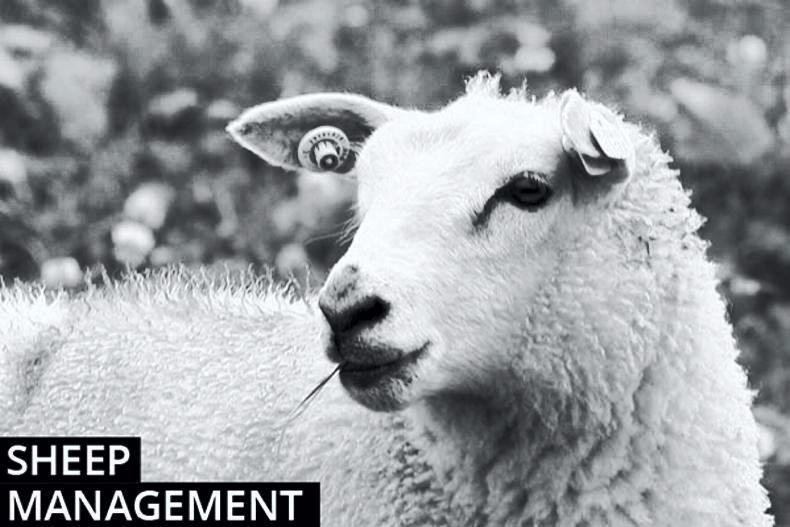
Hill ewe condition: The condition of ewes in hill flocks is reported as variable, with ewes coming off hills for lambing in poorer shape and flocks containing a higher percentage of thin ewes. Where possible, these ewes should be grouped with ewes rearing twin lambs for preferential treatment pre-and post-lambing. Frank Campion, programme adviser with the Teagasc BETTER farm sheep programme, says that all hill sheep participants are feeding meal to address ewes being in lower body condition than normal and also stretch tight grass supplies. Most are feeding 0.5kg concentrates, with twin-bearing ewes in cases receiving a little extra. This will be continued into early lactation, with silage and hay also introduced where grass supplies are depleted. To conserve grass supplies and reduce total meal requirement, some will send ewes in better condition with the strongest lambs back to the hill at an earlier stage than normal. To achieve this target, it is important that lambs get off to a good start with feeding being central to starting ewes and lambs off on the best foot.
Poor ground conditions are also an issue on some farms lambing outdoors. While not straightforward, keeping troughs moving to clean ground will help to keep udders clean and limit problems at lambing.
The majority of lowland participants in the Teagasc BETTER farm sheep programme are now also feeding concentrates to stretch grass supplies, with supplementation rates ranging on average from 0.7kg to 1kg. Yearling hoggets are lambing on some farms and with more space available some are returning hoggets to group pens post-lambing, to allow extra time indoors during inclement weather which is also serving to reduce grass demand.
Managing cashflow: The higher costs this spring are putting pressure on cashflow. Banks are encouraging farmers faced with fodder problems to talk to their local branch, which will help to devise a solution to overcome short-term issues. It is worth calculating the working capital that will be needed in the months ahead, with costs such as fertiliser also included as this will be vital in getting the grazing season back on track once weather improves. The pressure and stress on farmers is also challenging, and talking through issues before problems accumulate or worsen will help to relieve some pressure.
Creep feeding lambs: Where lambs are aged over five weeks and grass supplies are deficient, there is more merit in feeding concentrates directly to lambs both in terms of economics and performance. While cooked or crunch feeds will help to get lambs eating quicker, these are typically higher in cost and a standard high-energy cereal based ration will suffice once lambs are eating sufficient levels. Where grass supplies are depleted, ewes will still need access to forage or concentrate supplementation. Creep grazing will also provide a similar lift in performance to creep feeding, and positioning feeders close to creep gates or the other side of a creep gate once lambs are accustomed to eating will help to entice lambs to graze forward. Longer term, the merit of feeding meal reduces where lambs have access to grass with a height in excess of 6cm and in such a scenario meal can be reduced or removed once grass supplies recover.



SHARING OPTIONS