Dairygold made an operating profit of €32.4m last year, on the back of increased volumes of milk and strong butter prices. The profits were up 85% year on year, which is distorted by the fact that Dairygold raided its profits in 2016 to support milk prices. Operating profit margins of 3.4% were in line with targeted industry averages of 2% to 3%.
Turnover increased 28% to €965.5m driven by increased milk supplies and strong global dairy markets over the year. Milk volumes increased 8.3% to 1.3bn litres. Milk volumes are now up 55% since 2009. The co-op’s milk suppliers had indicated that volumes would increase by 50% to 60% by 2020 once quotas were lifted.
This target has now been met three years early. On a solids basis, Dairygold’s supply is up 64% as the quality of milk has significantly improved over the last eight years, meaning that the co-op now has 64% more product to sell that it did in 2009.
Earnings (EBITDA) increased 35% to €52.8m. At year end, the net asset value of the business increased 9% to €335.5m, while net bank debt reduced 10% to €79.6m. The business has a net debt to earnings ratio of 1.5 times, which is low given the level of investment and expansion in recent years.
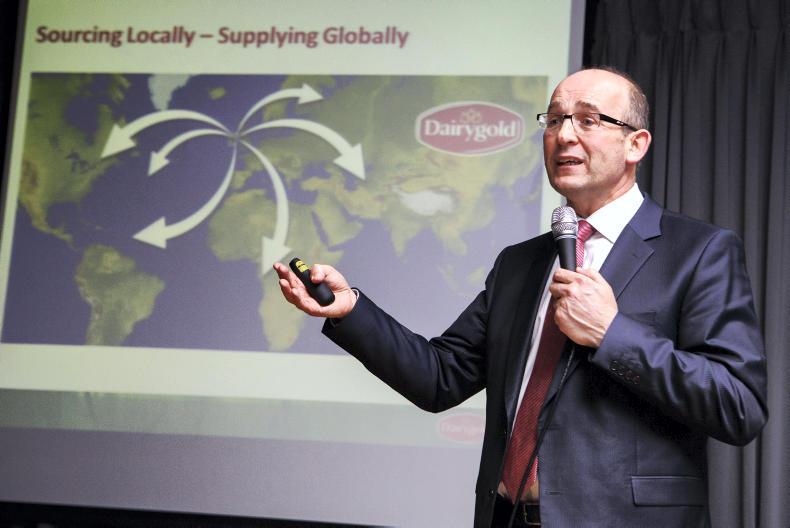
Dairygold CEO Jim Woulfe speaking in Cork at the IFA Seminar titled 'A Framework For Dairy Growth'. Photo: Donal O' LearyJim Woulfe, CEO of Dairygold, said the “solid foundation of dairy investment has delivered increased milk processing capabilities and is enabling sustained business development”. He added that volatility in dairy markets last year highlighted the importance of pursing a value-added growth strategy.
Evolving
Dairygold chair John O’Gorman said the Society continued to evolve and strengthen its position. He added that 2017 was a milestone year for Dairygold, with a record volume of milk supplies.
Dairygold paid an average milk price in 2017 of 37.6c/litre, an increase of 10.6c/litre on 2016. Despite the global market returning significantly less than the milk price paid to producers in the last quarter of 2017, the co-op held its milk price.
The food ingredients business reported a 26% rise in turnover to €733m, driven by the increase in milk volumes and strong market returns. Turnover in Dairygold’s agribusiness division increased 4% to €220m, driven by increased demand for feed and fertiliser to support expanding production on-farm.
Dairygold focused on value-added
With 60% of Dairygold’s suppliers intending to increase supply between now and 2025, Dairygold is expecting a further 22% increase in milk supply. But it wants to move that milk further up the value chain. To do so, Dairygold looks set to invest a further €100m at its Mallow site to produce finished infant formula. It has now become a 265,000t dairy business. The investment will allow Dairygold produce finished infant formula and adult nutrition products for a wide range of customers.
By investing in a new dryer in Mallow, it will reduce any bottlenecks at other sites
This investment comes on top of the €250m Dairygold has invested over the last seven years. At the same time, net debt now stands at just under €80m. This net debt figure at 1.5 times annual profits is impressive given the overall scale. In effect, the net debt represents only the most recent investment in its Nutritionals campus in Mallow of €86m, which means that all other assets are effectively debt free.
Four sites
Dairygold now has four well-invested sites – Mogeely, focused on continental cheeses; Clonmel Road, Mitchelstown, focused on cheddar; Castlefarm, Mitchelstown, focused on fats and protein; and now Mallow, focused on high-end nutritionals and infant formula.
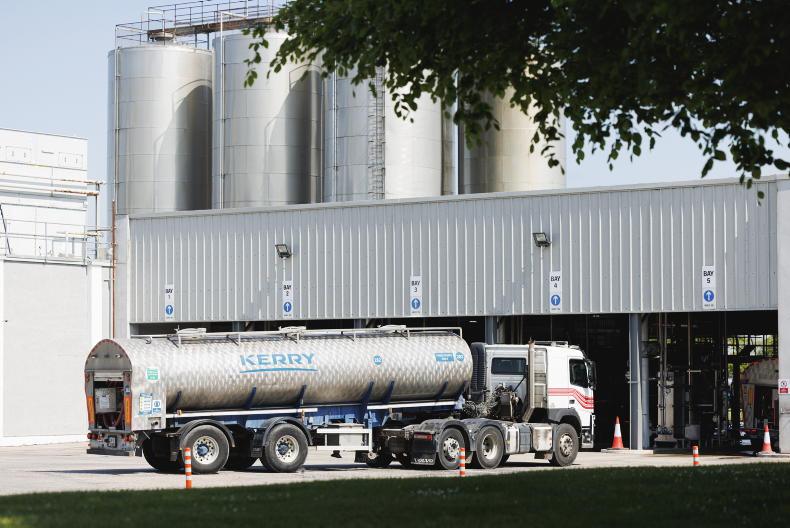
Up to now, Dairygold has been dealing with a wall of milk, investing in additional stainless steel to process it. With this next phase of expansion, it is shifting its investment focus to add more value to the milk. It appears the focus of future investments will be on capturing a greater portion of the value along the chain by bringing the product to finished stage.
With more cheese output from its €77m joint venture investment in Mogeely, Dairygold needs additional whey processing. By investing in a new dryer in Mallow, it will reduce any bottlenecks at other sites.
The additional investment in Mallow will help deliver on Dairygold’s twin objectives of processing its members’ expanding milk supply while expanding its range of higher-value products. It will also open up routes to market including new customers and geographies. Every €14m Dairygold can add to the business is the equivalent of an additional 1c/litre to its farmer suppliers.
Challenges
But challenges also exist for the business. Firstly, almost 40% of Dairygold’s milk supply ends up as cheese. The new Tina joint venture facility in Mogeely will have the capacity to produce up to 20,000t of cheese per annum. While cheese is in growth mode, Dairygold is exposed to the UK market. Dairygold’s two UK cheese businesses are performing despite the threat of Brexit.
It is likely that the UK businesses will source more cheese locally in the future. This means Dairygold needs to source alternative routes to market for Irish cheese. Given its low debt and healthy balance sheet, the business would have the ability to acquire additional routes to market. Given the likely limitations within the UK, it could look at cheese ingredients facilities in Europe in the future.
Read more
More co-ops import fodder to address ‘critical’ shortage
February bonuses push west ahead
Dairygold made an operating profit of €32.4m last year, on the back of increased volumes of milk and strong butter prices. The profits were up 85% year on year, which is distorted by the fact that Dairygold raided its profits in 2016 to support milk prices. Operating profit margins of 3.4% were in line with targeted industry averages of 2% to 3%.
Turnover increased 28% to €965.5m driven by increased milk supplies and strong global dairy markets over the year. Milk volumes increased 8.3% to 1.3bn litres. Milk volumes are now up 55% since 2009. The co-op’s milk suppliers had indicated that volumes would increase by 50% to 60% by 2020 once quotas were lifted.
This target has now been met three years early. On a solids basis, Dairygold’s supply is up 64% as the quality of milk has significantly improved over the last eight years, meaning that the co-op now has 64% more product to sell that it did in 2009.
Earnings (EBITDA) increased 35% to €52.8m. At year end, the net asset value of the business increased 9% to €335.5m, while net bank debt reduced 10% to €79.6m. The business has a net debt to earnings ratio of 1.5 times, which is low given the level of investment and expansion in recent years.
Dairygold CEO Jim Woulfe speaking in Cork at the IFA Seminar titled 'A Framework For Dairy Growth'. Photo: Donal O' LearyJim Woulfe, CEO of Dairygold, said the “solid foundation of dairy investment has delivered increased milk processing capabilities and is enabling sustained business development”. He added that volatility in dairy markets last year highlighted the importance of pursing a value-added growth strategy.
Evolving
Dairygold chair John O’Gorman said the Society continued to evolve and strengthen its position. He added that 2017 was a milestone year for Dairygold, with a record volume of milk supplies.
Dairygold paid an average milk price in 2017 of 37.6c/litre, an increase of 10.6c/litre on 2016. Despite the global market returning significantly less than the milk price paid to producers in the last quarter of 2017, the co-op held its milk price.
The food ingredients business reported a 26% rise in turnover to €733m, driven by the increase in milk volumes and strong market returns. Turnover in Dairygold’s agribusiness division increased 4% to €220m, driven by increased demand for feed and fertiliser to support expanding production on-farm.
Dairygold focused on value-added
With 60% of Dairygold’s suppliers intending to increase supply between now and 2025, Dairygold is expecting a further 22% increase in milk supply. But it wants to move that milk further up the value chain. To do so, Dairygold looks set to invest a further €100m at its Mallow site to produce finished infant formula. It has now become a 265,000t dairy business. The investment will allow Dairygold produce finished infant formula and adult nutrition products for a wide range of customers.
By investing in a new dryer in Mallow, it will reduce any bottlenecks at other sites
This investment comes on top of the €250m Dairygold has invested over the last seven years. At the same time, net debt now stands at just under €80m. This net debt figure at 1.5 times annual profits is impressive given the overall scale. In effect, the net debt represents only the most recent investment in its Nutritionals campus in Mallow of €86m, which means that all other assets are effectively debt free.
Four sites
Dairygold now has four well-invested sites – Mogeely, focused on continental cheeses; Clonmel Road, Mitchelstown, focused on cheddar; Castlefarm, Mitchelstown, focused on fats and protein; and now Mallow, focused on high-end nutritionals and infant formula.
Up to now, Dairygold has been dealing with a wall of milk, investing in additional stainless steel to process it. With this next phase of expansion, it is shifting its investment focus to add more value to the milk. It appears the focus of future investments will be on capturing a greater portion of the value along the chain by bringing the product to finished stage.
With more cheese output from its €77m joint venture investment in Mogeely, Dairygold needs additional whey processing. By investing in a new dryer in Mallow, it will reduce any bottlenecks at other sites.
The additional investment in Mallow will help deliver on Dairygold’s twin objectives of processing its members’ expanding milk supply while expanding its range of higher-value products. It will also open up routes to market including new customers and geographies. Every €14m Dairygold can add to the business is the equivalent of an additional 1c/litre to its farmer suppliers.
Challenges
But challenges also exist for the business. Firstly, almost 40% of Dairygold’s milk supply ends up as cheese. The new Tina joint venture facility in Mogeely will have the capacity to produce up to 20,000t of cheese per annum. While cheese is in growth mode, Dairygold is exposed to the UK market. Dairygold’s two UK cheese businesses are performing despite the threat of Brexit.
It is likely that the UK businesses will source more cheese locally in the future. This means Dairygold needs to source alternative routes to market for Irish cheese. Given its low debt and healthy balance sheet, the business would have the ability to acquire additional routes to market. Given the likely limitations within the UK, it could look at cheese ingredients facilities in Europe in the future.
Read more
More co-ops import fodder to address ‘critical’ shortage
February bonuses push west ahead






SHARING OPTIONS