


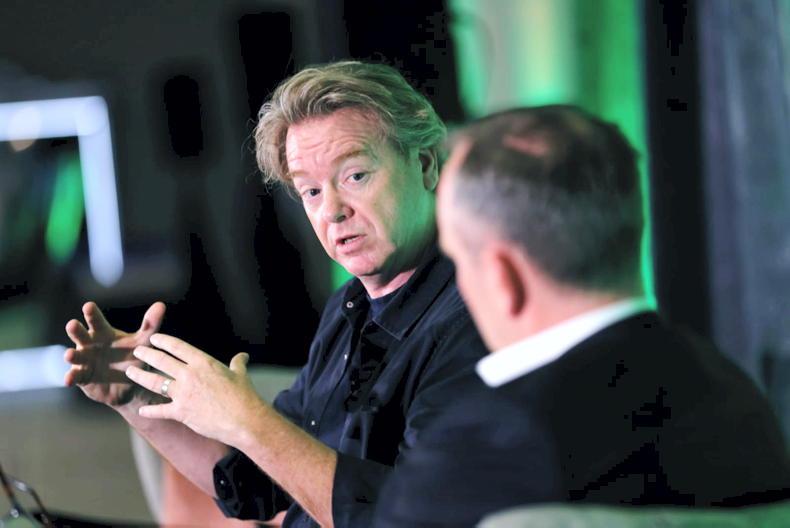
For a man in his late sixties, Tom Vilsack shows no signs of jetlag despite having travelled through nine different time zones in the last fortnight. Ireland is the last stop on Vilsack’s hectic travel schedule which included visits to London, Brussels and China on top of domestic meetings in the US.
Vilsack spent eight years as the US secretary for agriculture in the Obama administration and now finds himself working as chief executive and president of the US Dairy Export Council (USDEC), a non-profit organisation that represents the global trade interests of US dairy processors.
In an exclusive interview with the Irish Farmers Journal, Vilsack says the US dairy industry has set a goal of increasing exports from 15% of production today to 20% of production in the next three to five years. This would be the equivalent of almost 20bn litres of milk exported, or 5bn litres more than currently exported.
To achieve this, USDEC is putting more resources on the ground in key export regions. Vilsack himself is just back from China where he signed a memorandum of understanding with a Chinese university to allow US dairy processors carry out joint research projects on the ground in China using US dairy ingredients.
“This allows our members create relationships in China. It also gives us an opportunity to better understand that market,” said Vilsack. “The one thing I’ve learned in my negotiations with the Chinese is that everything is long-term. By our definition of long-term we talk in years but in China they talk in decades and centuries.”
The ambition of the US dairy industry to increase its presence in global markets is not new, particularly with US dairy farmers expanding production at a steady rate of almost 2% per annum over recent years. This year, the US is set to produce over 96bn litres of milk, with strong production growth coming from Texas and states in the Midwest.
However, the US is largely an exporter of skimmed milk powder (SMP) and whey products, with the majority of cheese and butterfat production consumed at home. Almost half of all dry whey production in the US and close to two-thirds of skimmed powder is exported to the world market, with Mexico, Canada and southeast Asia the most important destinations.
NAFTA
The major concern hanging over the US dairy industry at this moment in time is the ongoing renegotiation of the North American Free Trade Agreement (NAFTA) between the US, Mexico and Canada.
For the US dairy industry, Mexico is a critical export market which accounts for 25% of all dairy exports.
“It’s safe to say that Mexico is the most important market for US dairy,” says Vilsack, who has visited Mexico twice since taking the helm at USDEC.
“We are hopeful that as the NAFTA negotiations conclude what we have with Mexico will be preserved,” he said. Vilsack added that the USDEC had been careful to remind Mexico it had to be cautious of any commitments it makes around dairy products that have geographical indicators (GIs) to the EU in the current trade agreement being finalised between Europe and Mexico.
When it comes to Canada, Vilsack wants to see a fixing of what he views as a broken dairy trading arrangement, where the Canadian dairy industry is heavily protected through supply management measures.
“The Canadians have built a system which allows them to undercut the world market on powder. This only exacerbates the issues which are being dealt with here in Europe (intervention stockpile) because of an oversupply,” says Vilsack.
The former agriculture secretary says the NAFTA negotiations around dairy are sensitive but the Trump administration had created an expectation the Canadian system would be dealt with in some way.
Vilsack said the original hope was that the NAFTA negotiations would be concluded in the next month or so to avoid any interference with the upcoming Mexican elections or the midterm November elections in the US.
“They’re going to have to work really, really hard over the next couple of weeks to make that deadline,” he added.
Labour
The other big concern for the US dairy industry arising out of President Trump’s election has been access to labour. It’s estimated that immigrant labour has a hand in the production of 70% of all US agricultural output, whether it’s crops, dairy or meat production. Over half the cows in the US are milked by Hispanic workers.
“Just like Ireland, we’ve got a labour issue in the US. Our issues are a result of a broken immigration system, which our political leaders do not have the will or the capacity to fix,” said Vilsack. “It’s disappointing because agriculture is in the crosshairs as a result.”
Vilsack said a potential shortage in labour has encouraged some US dairy farmers to look at mechanisation, while it could also lead to consolidation at farm level.
Overall, Vilsack said the mood among US farmers is “very anxious”.
“Farmgate prices are not very good right now and the trade issues are causing deep concern. The tariffs with China have soya bean, pork and beef producers deeply concerned,” he said.
“The NAFTA negotiations have many of the same producers, including the dairy industry, deeply concerned also. Pulling out of Trans-Pacific Partnership (TPP) was not well received by the ag community in the US,” said Vilsack.
On Brexit
Asked if the US dairy industry saw Brexit as an opportunity, Vilsack says it depends.
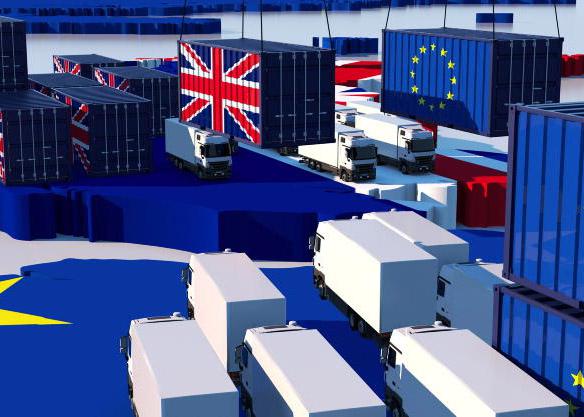
“When I recently visited with EU officials in Brussels and then with officials in the UK, I came away with the belief that these were two passing ships in the night. The EU and the UK are theoretically headed to the same destination but there was no agreement on what route they were both going to take,” said Vilsack.
If the Brexit negotiations conclude with the UK closely aligned to the EU in terms of standards and rules around GIs, hormones and GM food, then the opportunities may be limited for US exporters.
“We do see Brexit as an opportunity. However, I think if we were to encourage our administration to focus on bilateral free trade deals from a dairy perspective, we would be much happier if they focused on agreements with Japan, Vietnam or southeast Asia, because we feel there is real opportunity there for us,” said Vilsack.



SHARING OPTIONS