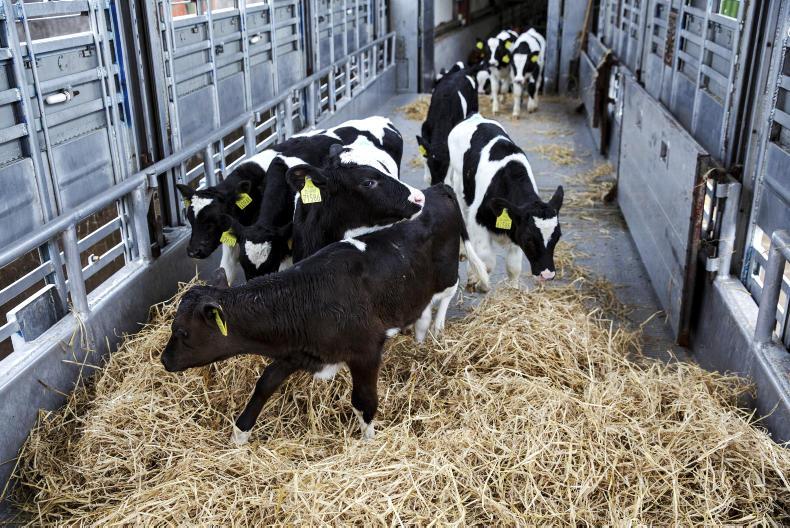
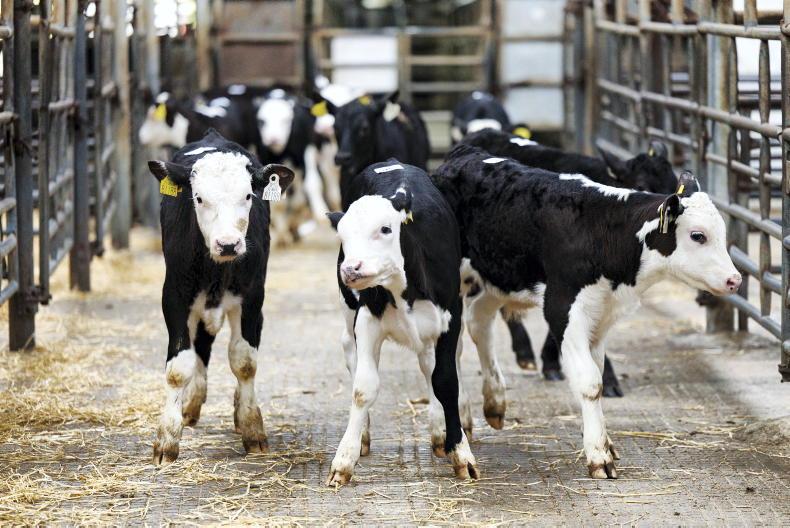
Calf exports continue to be buoyant, helping give steady prices at mart sales.
By 15 April, the total exported reached 84,254 calves, up by over 14,000 on last year. Last year’s total of 100,000 calves is likely to be exceeded in 2018.
That is particularly the case as most of the growth this year has been to Spain and demand there is seasonally increasing while demand in the Netherlands is now winding down.
Exports to the Netherlands are running about 6% or 1,943 behind 2017.
According to Bord Bia’s Joe Burke, this is because supply of domestic calves there has been higher than last year. Because of cuts in dairy herds, more heifer calves have been offered for veal production. Higher numbers of German calves have also been offered to Dutch veal producers.
Demand
There is no problem on the demand side, he said. “Finished veal calves are a good trade and prices have held up. Demand is good.”
In contrast, exports to Spain are up by 26% so far this year at 33,000 head. Demand is expected to remain strong there in the weeks ahead. There is new interest there in Angus calves, Burke said.
“The breed has become more popular there. A number of finishers are now planning to finish these calves and market the beef under an Angus label.”
“The other market that is performing well is Belgium. Calf exports there have doubled from 5,000 head at this point last year to 10,500 this year.”
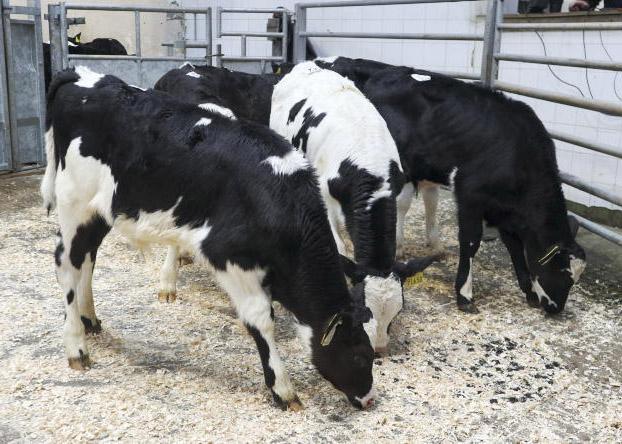
Numbers of Friesian calves continue to drop and prices are €2-€3 per head stronger this week. Prices for good Hereford calves are similarly up. However, with more Angus calves appearing prices for plainer ones are down this week by €2-€3 per head.
Read more
Exporters start buying weanling bulls for Turkey
In pictures: surge in cattle numbers at Bandon
Calf exports continue to be buoyant, helping give steady prices at mart sales.
By 15 April, the total exported reached 84,254 calves, up by over 14,000 on last year. Last year’s total of 100,000 calves is likely to be exceeded in 2018.
That is particularly the case as most of the growth this year has been to Spain and demand there is seasonally increasing while demand in the Netherlands is now winding down.
Exports to the Netherlands are running about 6% or 1,943 behind 2017.
According to Bord Bia’s Joe Burke, this is because supply of domestic calves there has been higher than last year. Because of cuts in dairy herds, more heifer calves have been offered for veal production. Higher numbers of German calves have also been offered to Dutch veal producers.
Demand
There is no problem on the demand side, he said. “Finished veal calves are a good trade and prices have held up. Demand is good.”
In contrast, exports to Spain are up by 26% so far this year at 33,000 head. Demand is expected to remain strong there in the weeks ahead. There is new interest there in Angus calves, Burke said.
“The breed has become more popular there. A number of finishers are now planning to finish these calves and market the beef under an Angus label.”
“The other market that is performing well is Belgium. Calf exports there have doubled from 5,000 head at this point last year to 10,500 this year.”
Numbers of Friesian calves continue to drop and prices are €2-€3 per head stronger this week. Prices for good Hereford calves are similarly up. However, with more Angus calves appearing prices for plainer ones are down this week by €2-€3 per head.
Read more
Exporters start buying weanling bulls for Turkey
In pictures: surge in cattle numbers at Bandon







SHARING OPTIONS