






Don’t blindly treat liver fluke without understanding if you have a fluke issue. That is the key message from one of Scotland’s leading parasite experts Philip Skuce of the Moredun Research Institute.
“If you want to tackle liver fluke or even just get a handle on its impact on your farm, the first thing you need to do is some monitoring or diagnostic testing to understand your particular situation,” said Philip.
“You firstly need to understand a bit about the life-cycle of liver fluke, ie what may be happening on your farm and when, but the next biggest step, before you start treatment or managing the issue, is to know the parasite’s impact on your herd or flock. Too often I see farmers treating for fluke without knowing if that treatment is working or not.”
Does dwindling drug efficacy mean the battle is over?
Not at all. Whilst the development of new antiparasitic drugs is a massive issue, one of the big developments for us is to improve the diagnostics of liver fluke. This will allow us to manage the disease better. We are working on the ability to risk assess fields to tell farmers how likely a field is to carry the infectious fluke cysts or the infected mud snails.
We are also investigating whether we can tell if an animal has fluke through a sample of their saliva, which is hopefully more sensitive and less invasive than some of the tests available.
We are working to drive the cost of diagnostic testing down and to make fluke diagnosis quicker and easier for all concerned.
Do we have to get rid of wet fields?
In Scotland that’s not going to be likely, especially in the wetter west of the country. It’s more a question of pasture management and knowing how big an issue liver fluke is on your farm.
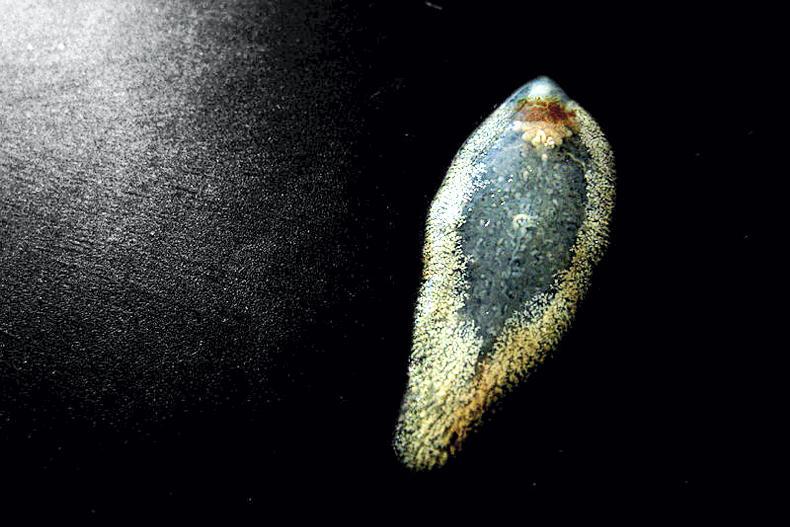
The push for grazed wetlands, as part of some agri-environment schemes, has the potential to increase the amount of suitable habitat for the mud snail which is critical to the liver fluke life cycle. As their name suggests, the snails like mud which has short grass and exposed mud, with plenty of moisture. The snails also like a neutral pH so applying lime to raise soil pH could also increase snail numbers, plus it provides calcium for their shells.
Can you get liver fluke in indoor animals?
Worryingly, we are hearing reports of cattle which have never been outside showing signs of liver fluke in abattoirs. We are investigating the ability of the infectious liver fluke cysts to survive in silage. We already know that the cysts can survive in low pH, equivalent to that found in well-made silage but we want to know if they cope with the lack of oxygen and high temperatures associated with the ensiling process.
Can we not kill the snails on the ground?
Sadly, we don’t have a way of killing the snails themselves other than making the environment less suitable eg through drainage. We used to be able to treat the snails with copper sulphate, but when you kill the snails in this way, you also kill a host of other potentially beneficial life forms, so this treatment was banned in the 1960s. The best way to discourage snails is dry soils and thick swards.
Is rumen fluke a growing issue?
Rumen fluke has been about since the 1950s but has seen a spike in recent years. Studies in Ireland show that 40-50% of cattle have it and a recent Welsh study showed up to 60% of cattle carry rumen fluke. Sheep can be infected too. Adult animals appear to tolerate quite a high number of rumen fluke before production is impacted. But a big dose of immature rumen fluke can inflame the intestine and has been responsible for deaths in both sheep and cattle.
There are three things we have recently found out about rumen fluke:
Skuce on:
Drug resistance
We have only found resistance to one fluke drug, triclabendazole. When this came onto the market, it blew the competition away as it was capable of killing most stages of fluke in the host animal, right down to the very damaging immature fluke. Unfortunately, triclabendazole has become a victim of its own success and has been over-used ie multiple treatments without a break, so we are now seeing resistance to this valuable product. You can test for flukicide resistance on your farm if you think there could be an issue. Faecal egg counts or faecal antigen (coproantigen) tests before and after treatment would be a good place to start.
Future wormers and fluke drugs
I often get asked when the next fluke drug is coming onto the market and the answer is I simply don’t know when or if we will get another one.
We need to remember that fluke is only really an issue in the north west of Europe and some parts of the southern hemisphere, so the market is not too lucrative for drugs companies to invest in R&D of new products, much as we might like them to.
The rapid emergence of drug resistant parasites also means that this is not a sustainable business model for the pharmaceutical industry.
Pour-ons vs injections vs drenches
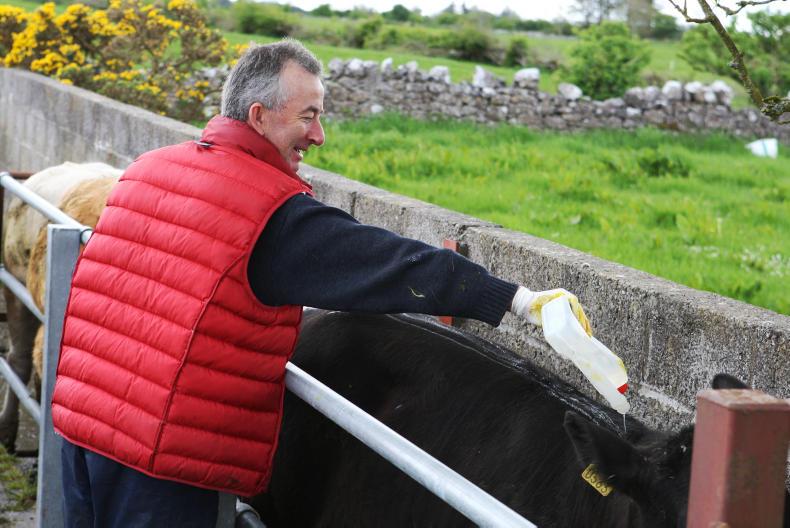
In clinical trials all these methods of dosing work, otherwise they would not be licensed. However, real life conditions can be quite different. There is anecdotal evidence that pour-ons are more susceptible to being poorly administered or licked off by other animals, leading to potential under-and over-dosing issues.
One of the fluke drugs, nitroxynil, is available as an injectable for sheep and cattle. I’ve heard it’s not the first choice for sheep because it’s quite a thick fluid and occasionally causes issues with staining of hides.
That said, it is a very effective flukicide, so it’s down to the farmer to weigh up the pros and cons of the different treatment options.
Little known fact: Rumen fluke is very common in the tropics. People even stir fry and eat them!
80% of farmers say they don’t do any diagnostic testing for fluke. If you sell to abattoirs, ask for reports on the liver to understand the prevalence and stage of the disease in your sheep or cattle.
It’s also a good idea to regularly dung sample to check prevalence of the disease and drug efficacy.





SHARING OPTIONS