


When it comes to spraying weeds, pests and plant diseases, accuracy is key. Accurate pesticide application not only ensures value for money by hitting the target pest, but also helps minimise the risk to the environment such as water bodies, soils and non-target plants and animals.
This article explores the basic principles of spraying, the key maintenance points of the sprayer (many of which are key criteria for passing the Pesticide Application Equipment Test) and the methods for calculating output and sprayer forward speed.
Think accuracy
 The key to accurate and cost-effective chemical use is to ensure each square metre of the field receives the same amount of chemical. Take a 1ha field. There are 10,000 square metres in this area. Each square metre must receive the same amount of active ingredient mixed with the same amount of water.
Focusing on the amount sprayed per square metre will help you concentrate on getting the essentials right no matter what size field you’re spraying. Accurate spraying helps avoid under- and over-application.
Under-application: Under-application can lead to reduced rates which in turn can lead to reduced sensitivity of the target pest, contributing to the build-up of resistance. Reduced rates are possible in some scenarios but with grassland weed control in particular, label recommendations should be adhered to.
 Over-application: Previous studies have indicated that in some cases, applicators can unknowingly apply as much as five times the recommended product rate. Over-application can lead to higher concentrations of the active being applied to the crop. This may be harmful to the crop and the environment and leave high levels of residues. It will also lead to a higher cost per acre as a greater quantity of the spray will be applied.
Correct sprayer set up is the first step in hitting the intended target and achieving the desired consistent coverage.
Key sprayer checks
For most tillage farmers a sprayer is an essential piece of equipment used for at least eight months of the year. For many grassland farmers, however, the use of their sprayer is confined to one to two months of the year when weed control takes place. After a long period of inactivity, there are a number of elements which must be checked.
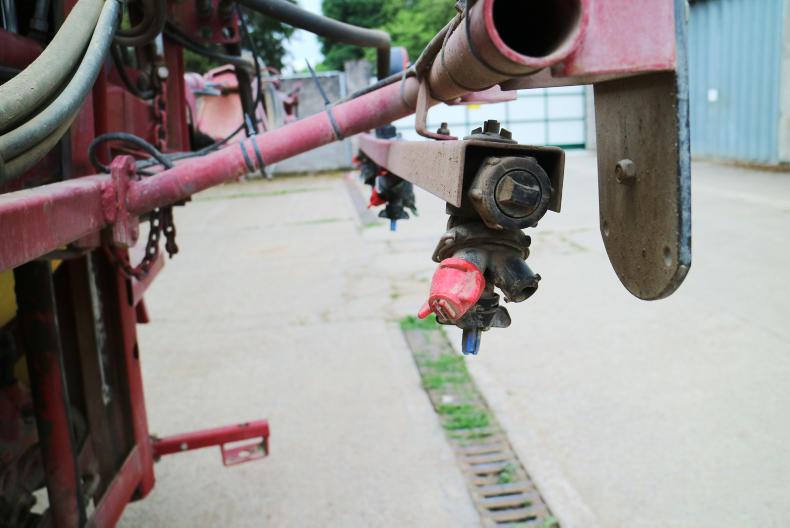
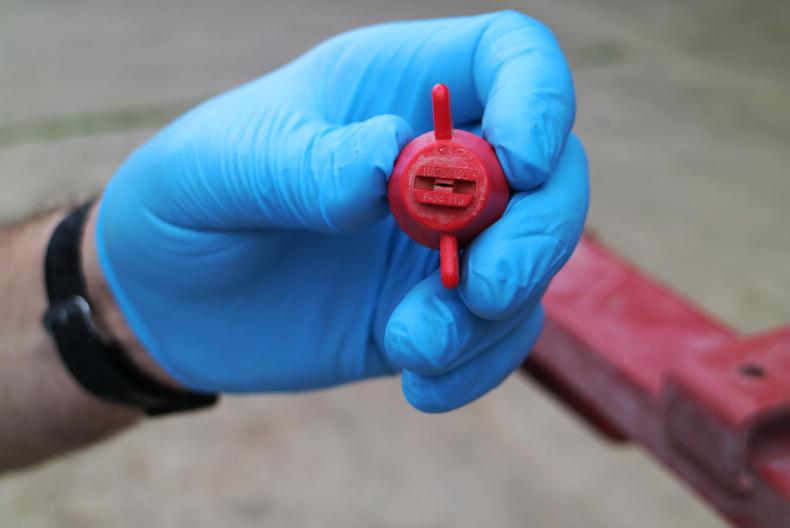
 Nozzles: Nozzles are the most important part of the sprayer and should be checked regularly and replaced when the variation in nozzle output is greater than 10% of its rated output. As nozzles wear, their flow rate increases and the evenness of the spray pattern deteriorates. This can lead to both over- and under-application of the chemical. Sprayer nozzles are standardised, making them easier to identify and use. Most grassland farmers are running 04 (red) or 05 (brown) flat fan nozzles. Nozzle output is proportional to nozzle size, pressure and speed.
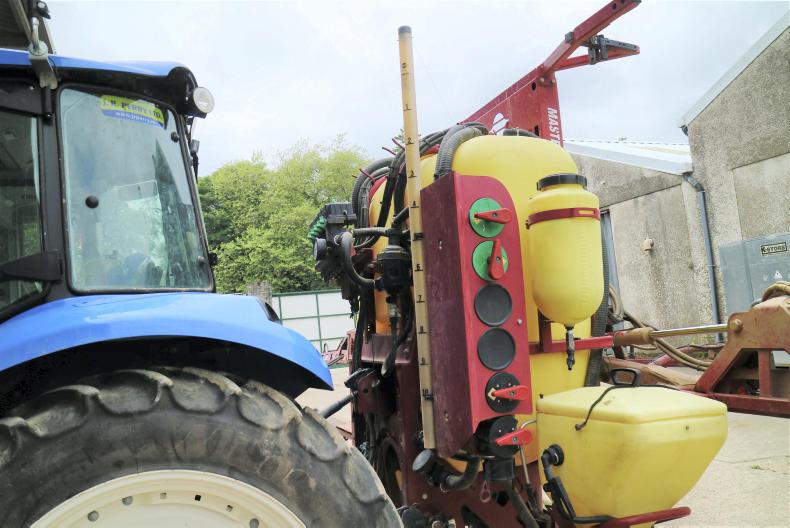
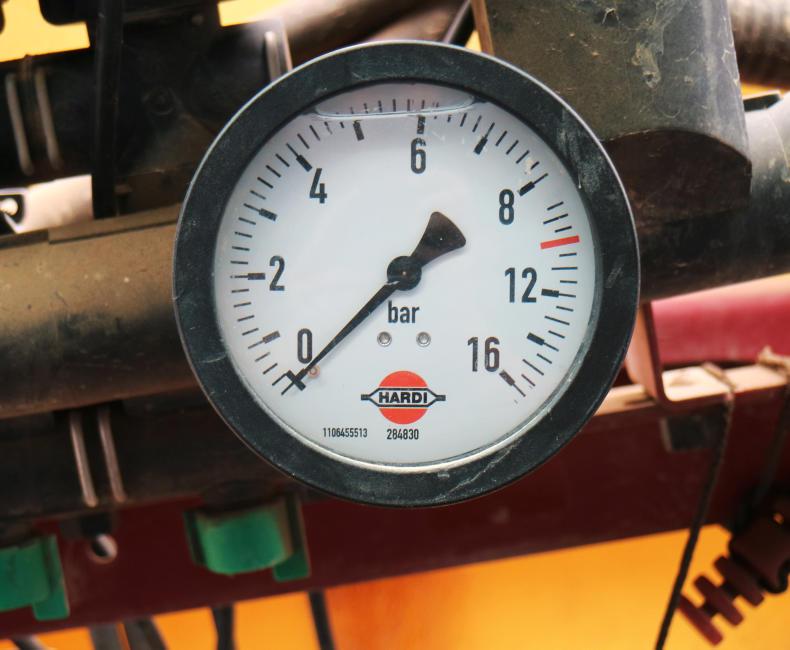
Pressure gauge: The sprayer’s pressure gauge should be accurate, the correct size (63mm diameter plus), have the correct markings and be visible from the cab. The tank level gauge should also be readable from the cab.
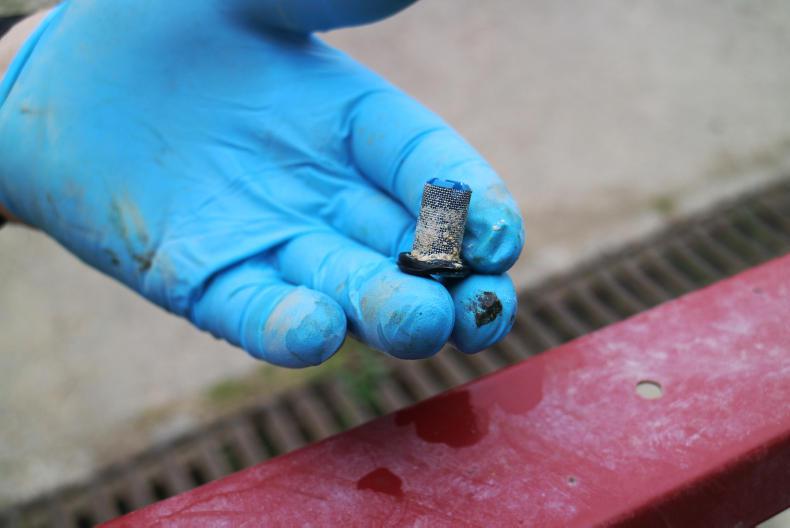
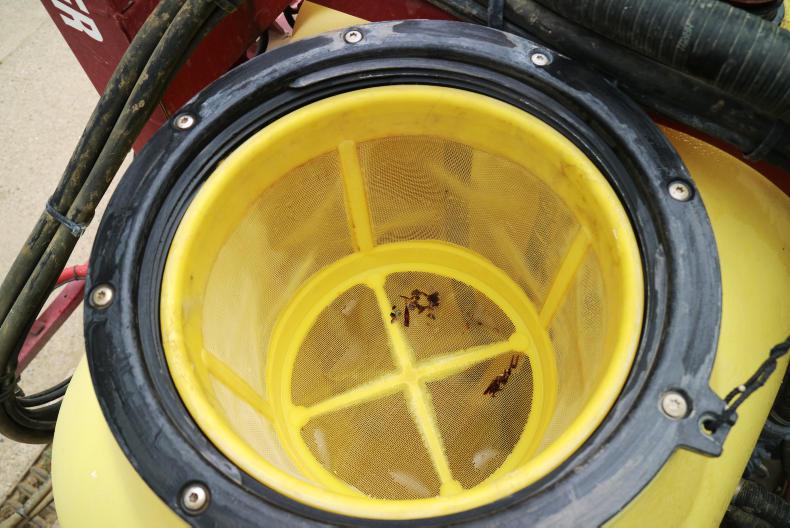
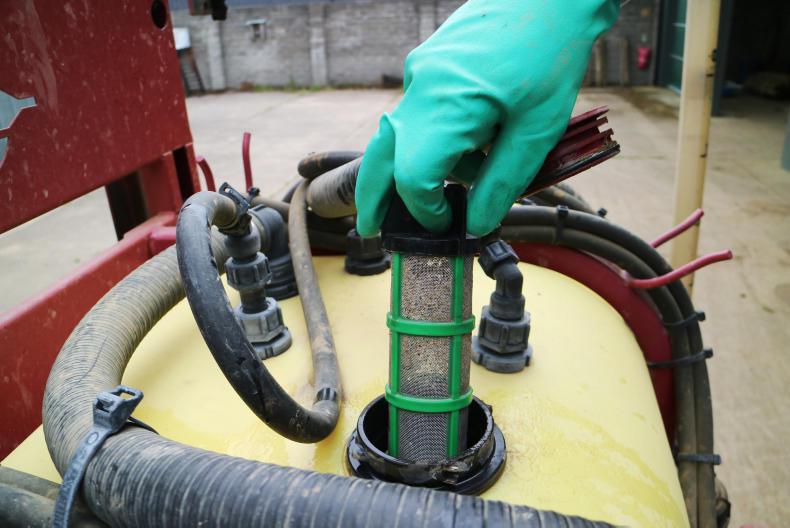
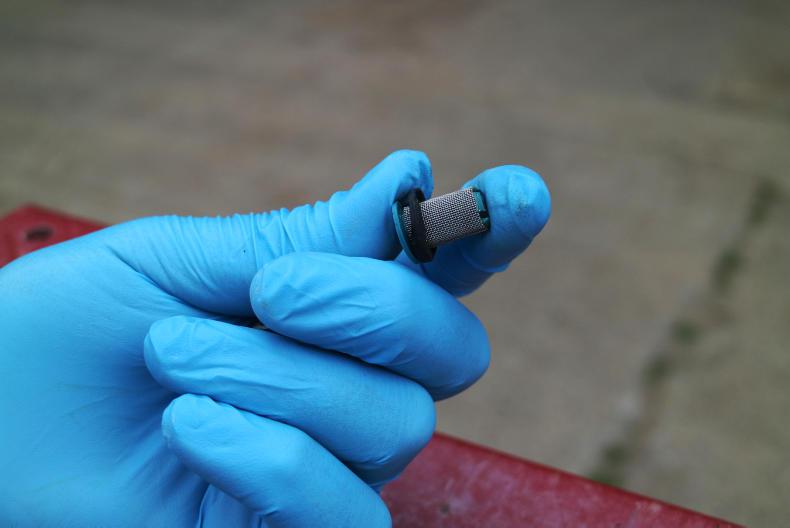
Filters: The main suction filter assembly should be removed and cleaned after each spraying period. The basket filter and the sprayer intake filter should also be checked and cleaned regularly. The nozzle filter should be checked and cleaned at least once per season. Ensure the correct size of nozzle filter is used.
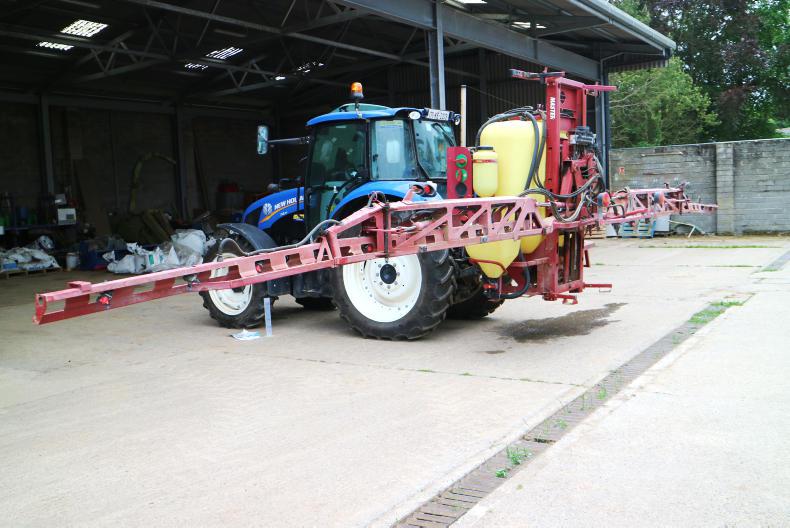
 Boom: Check to see if the boom is level all the way across. If the boom is unlevel, check bushings, bearings and suspension systems. Always ensure the lift arms are level when attaching a mounted sprayer. If there is any difference, adjust the link arm height to correct. Even just a quarter turn on the link arm can make several centimetres difference at the end of the boom. The booms must also have a functioning break-back device fitted.
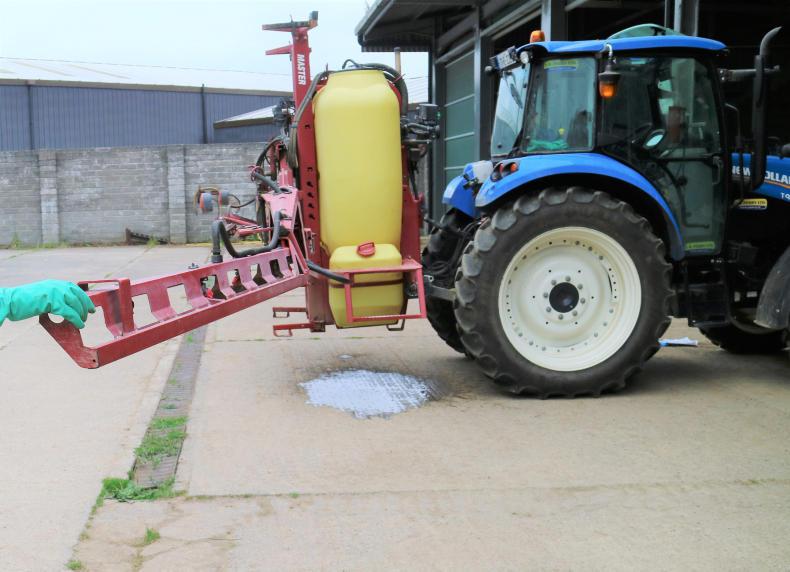
Hoses, pipes and joints: Inspect all of the hoses for signs of wear, paying attention to where booms have folded over and may have rubbed or pinched a hose. Also check the hoses when the booms are folded, ensuring no hose is under tension. If a hose needs to be replaced, replace it with one suitable for use in a sprayer. Always be on the lookout for leaks at connection points.
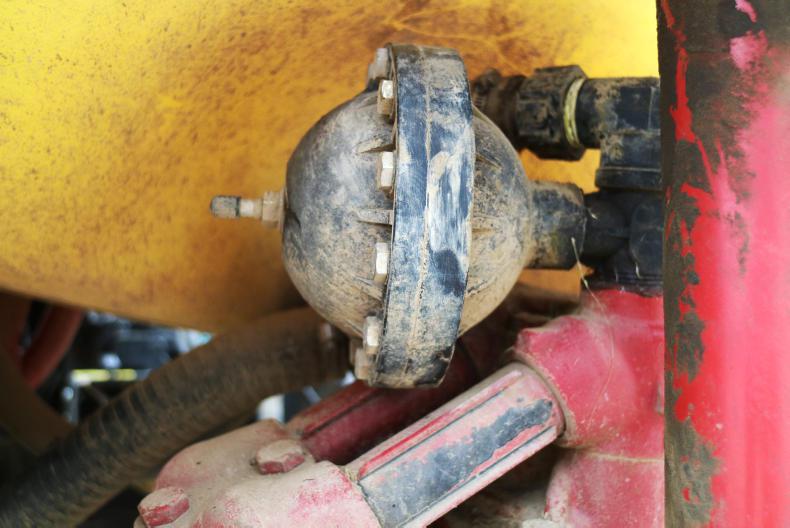
Air pressure regulator: If spray is pulsating from the nozzles and the needle on the pressure gauge is fluttering, the most likely cause of this is that the pressure regulating chamber (identified by having a bicycle valve on the top and usually situated by the pump), does not have sufficient air to equalise the sprayer. To solve this, increase the air pressure in the chamber using a pump to slightly above the working pressure, typically three bar.
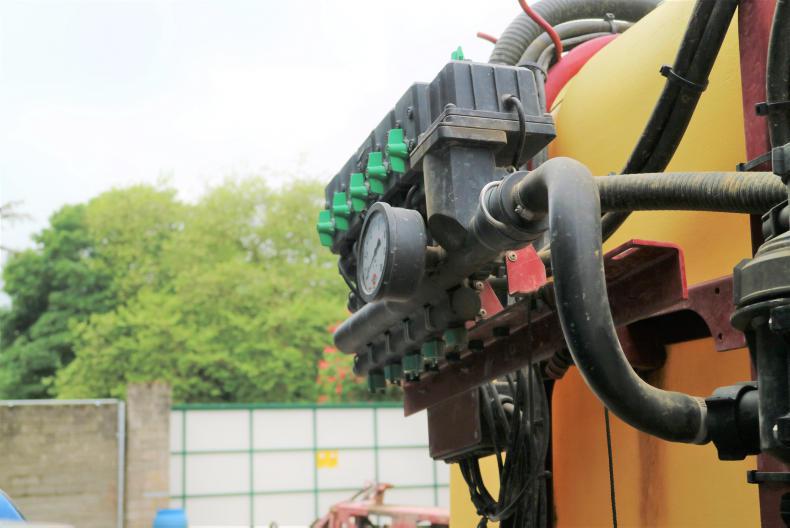
Pressure compensation valves: While still looking at the pressure gauge, switch off different sections of the boom to check that the pressure remains consistent at all times.
If the pressure goes up when one section is switched off, this will increase the output of the remaining boom sections and possibly decrease the droplet size. The pressure can be regulated and balanced by adjusting the rotating caps on the back of the section-isolating valves.
Oil and grease: Fill oil reservoirs and grease the grease nipples before use. Re-grease as indicated in the service manual. Ensure all components of the PTO are greased, covered and are secured using a safety clip.
Tractor tyre pressure: Finally, check that the tyre pressure is correct and even on the sprayer tractor. The pressure should be equal on each side, especially the rear tyres as this can have a significant impact on the boom level.
Sprayer output
In order to know what volume of spray is being applied, you must first determine the output from your nozzles.
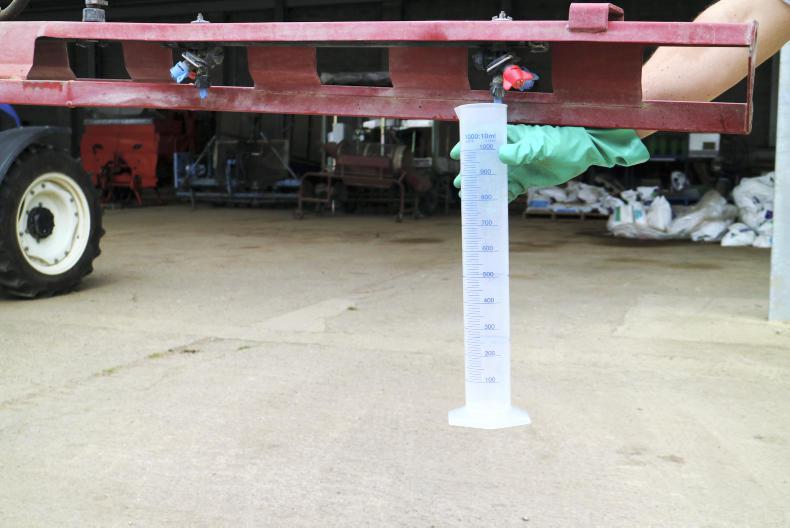
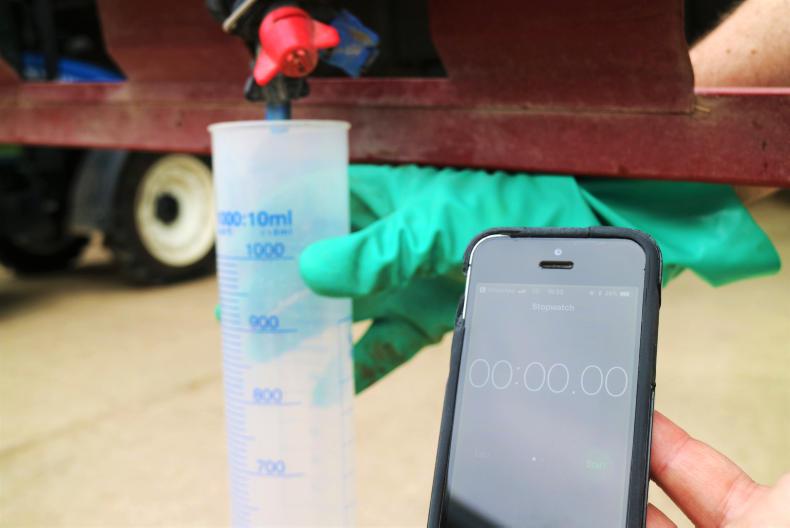
Nozzle output: To determine nozzle output, fill the sprayer with water, set the sprayer to working pressure, and then use a measuring cylinder, collect the output from an individual nozzle for exactly 30 seconds. Repeat this with the other nozzles and calculate the average output per nozzle. 
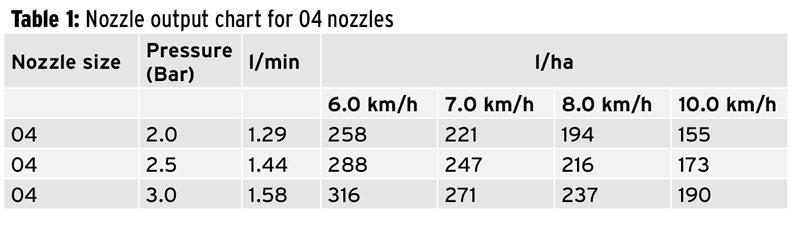
Using the manufacturer’s nozzle output chart, the forward speed can be calculated based on target litres per hectare.
See Table 1 for an example of 04 nozzle output.
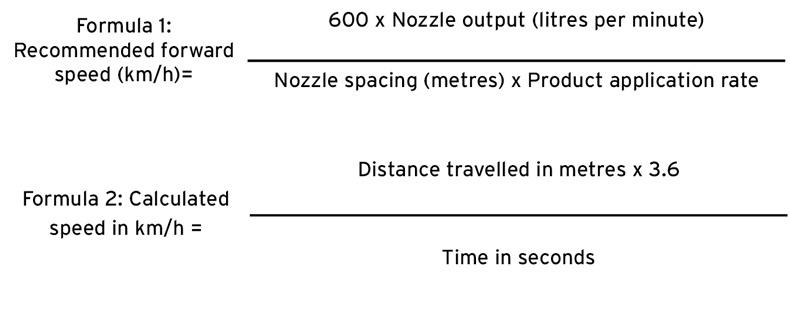
You can also use Formula 1 to determine the speed you need to drive based on current working pressure.
If any individual nozzle is more than 10% out from the average output, or from the manufacturer’s recommended output, the set should be replaced.
Forward speed: If the tractor doesn’t have a speedometer, the forward speed can be measured in the field by recording the time taken to travel a known distance and using Formula 2.





SHARING OPTIONS