


Safety with children
It’s been an unusual year from a cold and wet spring where silage was scarce, to a warm and dry summer where grass is scarce. Both instances require extra work and both instances put extra strain on farmers. But safety must be paramount.
Children are now on their summer holidays and whether you have children of your own or not, you need to be on the lookout. Obviously, the risks are greatest where children are let around the farmyard, but even where they are not, risks prevail. With all the warm weather, children are out and about and there’s a big risk that children from neighbouring houses will wander into fields and farmyards where there are hazards. I think the safety risks with kids not from a farm are greater than those from a farm. They have even less awareness of hazards than farm kids.
The hazards are obvious: working machinery, open slurry stores and livestock back in sheds or being fed silage in fields. You really can’t take any chances with children.
Opening high bales
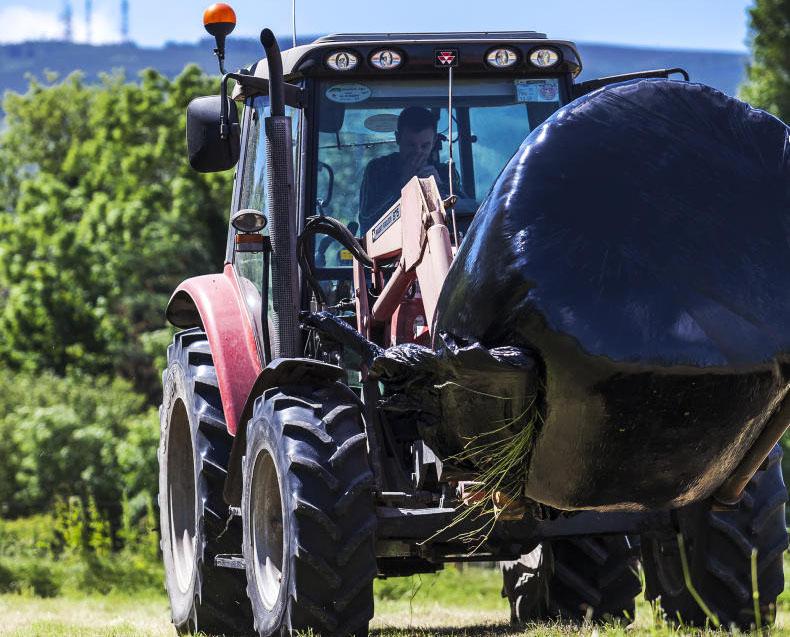
Most farmers are not used to feeding silage in summer time. The difference is bales of silage are being transported to fields and put into round feeders which involves taking off the plastic from a height when normally the plastic would be taken off at ground level. Never stand under a loader or under a bale when it is being opened because it could come away. Round bales of silage weigh almost one tonne – you would not walk away from one falling on you.
Diet feeder wagons
Some farmers are back using diet feeder wagons to mix silage and straights. Have these machines got appropriate maintenance since they were last used? Most farmers did not intend to use them again until next winter. While routine maintenance involves greasing and oiling, is safety equipment in good order? Key points here are the PTO shaft cover and covers over chains and drives.
Novelty risks
Many farmers are feeding alternatives such as straights like palm kernel and soya hulls. Some have devised ways of feeding it out in yards and in troughs in fields. Be careful of hungry cows running towards feed. If feed is being dispensed in the field, make sure the cows are not in the paddock at the same time as you as there is a risk of being trampled as they go towards the feed. Older farmers are more at risk here.
Augers
Make sure feeding equipment is turned off before getting in contact with augers and other moving parts. Sometimes, blockages can occur at the base of bins where moisture or wet feeds were being fed. Never attempt to free the blockage when the auger is running. Even where the auger is off, turn off the switch to the motor to prevent the auger coming on automatically or by someone else on the farm pressing a button.
Ventilation
Never enter a feed store without proper ventilation. Some feeds release gases that can displace oxygen. This is particularly a risk in vats and silos. Only enter with the proper ventilation equipment.
Hydrate and protect
Drinking enough is critical during the heatwave. Because people are perspiring more, our demands for water increase and you could get dehydrated very quickly. Keeping out of direct sunlight is a help. Farmers should wear caps and hats to keep the sun off their face. Sun protection lotion should also be worn at all times. It’s not just to protect against sunburn. The incidence of skin cancer and melanoma is higher among farmers and those that work in the outdoors compared to the rest of the population.




SHARING OPTIONS