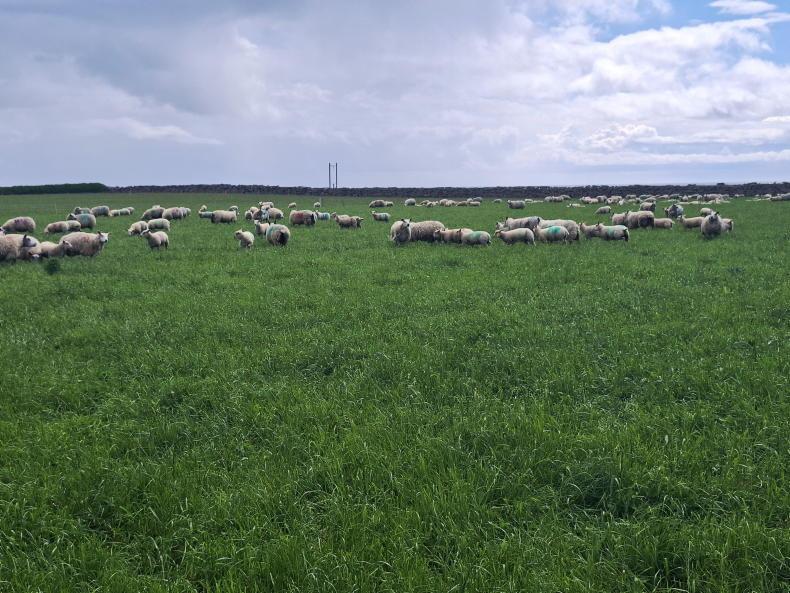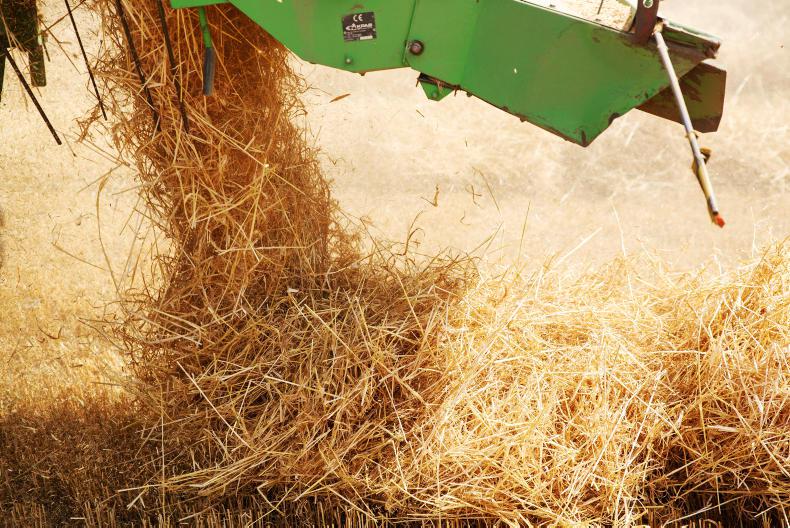
Steady harvest progress is being made across the country. The winter harvest is well under way in Kerry and winter barley has performed reasonably well. The winter oilseed rape harvest commenced in Down this week. Initial yields appear to be back on last year. Meanwhile, the spring pea harvest will start this week in Kildare.

Athy, Co Kildare
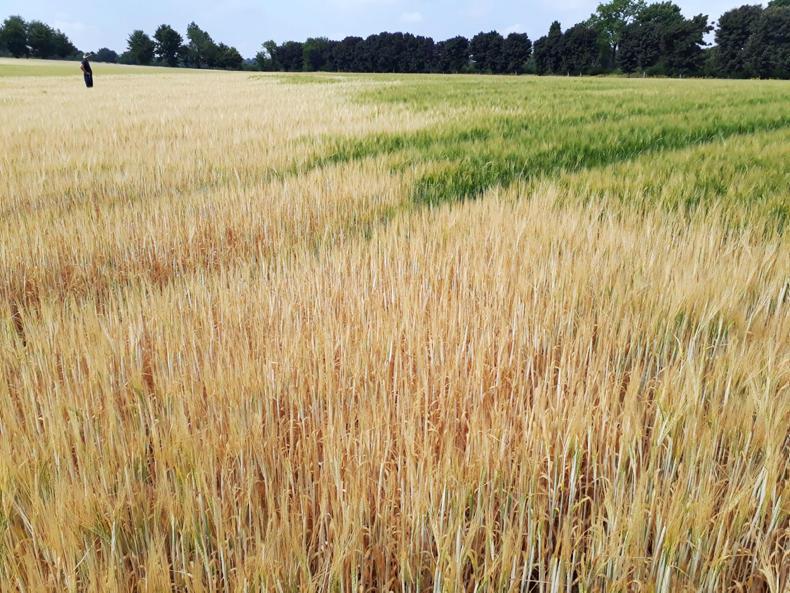
One of Andrew's Limona spring barley fields. The stark difference between soil types is very evident this year.
With a soil moisture deficit of close to 90mm in the area, a few light showers of rain, which amounts to around 15mm, isn’t enough to make an impact in Athy, explained Andrew.
The only crop that is likely to receive any benefit from the rain at this stage is beans.
Andrew’s most forward crops are peas and oats. Rain would only cause them harm at his stage.
Peas tend to fall over around this time of year and heavy rain would only further lodge the crop, as it is ripening fast.
Quality is crucial for Andrew’s Venture spring peas. If the peas are stained by water penetration in the pods, this could breech the 4% to 5% staining thresholds set by Bachelors.
The crop didn’t receive a T2 this year on account of the low disease pressure. The pod count is back on previous years.
“The pod count is back, there’s normally five to six flower trusses which contain two pods, but this year there’s only three or four,” said Andrew.
Fewer flowers on spring beans
His spring beans appear to have aborted most of the flower trusses this year due to the extreme stress caused by the heat.
Pod numbers are extremely low and Andrew estimates that pod numbers range from three to 12 on the plants.
“If I get a tonne an acre off them I’d be doing pretty well. This is down from our average of 2.4t/ac last year.”
It’s now looking increasingly likely that any increase in protein payment this year won’t be enough to compensate for the yield loss.
Harvest to kick off this week
The spring oats and pea harvest could commence at the end of this week, said Andrew, which would be the earliest he can recall.
His Husky spring oats have come in very quick and grain size is a concern.
Screenings and protein levels could yet prove to be a big issue with his spring malting barley.
It’s still unknown what effects the weather will have on protein levels, but Andrew feels that lower grain numbers will have a negative effect.
“I’m more afraid of protein levels being too high, but it’s such a funny year that things could go either way.”

Poyntzpass,
Co Down
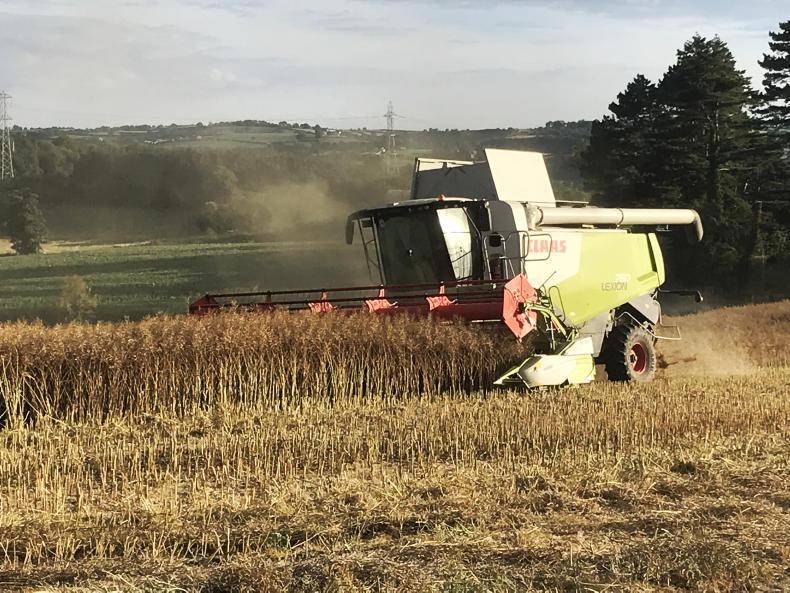
Simon harvesting winter oilseed rape at 9.8% moisture on his Claas Lexion 760 TT.
The settled spell was broken by just a few days of rain in Poyntzpass, Co Down. However, there is a marked difference in the weather, as cooler overcast conditions are now dictating the weather.
His winter oilseed rape (WOSR) was sprayed off with Roundup Powermax (2.0kg/ha) and a pod-sticker on 6 July, but it took around three weeks to come in.
The WOSR harvest started this week. The headlands were slightly green, but the field average was around 9.8%.
Initial yield averages suggest yields are back this year at around 1.4t to 1.5t/ac, although the best crops have yet to be harvested. This compares with 2017 averages of between 1.6t and 1.8t/ac. Simon usually chops the oilseed rape straw, but in response to the high straw demand in his area, he now plans to bale everything.
Simon uses a Claas Lexion 760 TT combine on tracks, with a 25ft header with extendable bed.
His winter oats received two fungicides this year and remains another week to 10 days away from harvest. The winter wheat is coming in fast and some crops will be harvested before the oats. Simon applied a pre-harvest application of Roundup to some of the wheat crops today, with the intention of harvesting next week.
Spring oats starting to turn
His spring oats received just one fungicide application again this year as a result of the low disease pressure.
Despite holding up well against the tough conditions, his crops are short, but grain numbers look reasonable.
“I’d certainly be expecting some yield penalty in our spring crop,” explained Simon. The spring oats are just beginning to turn.
His spring beans have also withstood the weather reasonably well. Pod numbers are good, but they have formed very low on the plant. The crop received a T2 of Alto Elite on 6 July (2.0l/ha), as well as Stealth (50ml/ha) to target black bean aphids which were detected in the crop, and remains clean.
“Things are going to come all at once. Wheat and oats are at a similar stage, so we’ll be cutting between different crops.”

Tralee, Co Kerry
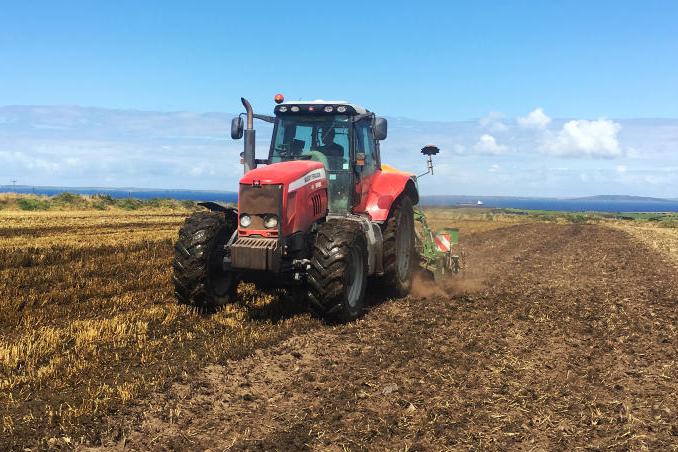
Ronan Barron sowing Interval forage rape following winter barley.
A few showers over the past number of days has been the extent of any rain in Tralee, as the winter barley harvest draws to an end.
Ronan would welcome some rain at this stage, as he’s just after sowing a catch crop after winter barley and good soil moisture will help the crop to strike.
Ronan sowed 18ha of Interval hybrid forage rape following winter barley, with the aim of grazing the crop later in the year.
The ground received an application of slurry before drilling the crop, which was sown at 4.0kg/ha earlier this week.
The ground will be sown with spring barley next year.
“We’ve capitalised on the early harvest and sowed the cover crop in the field, which had a slug problem, as it’s more suited for spring crops,” explained Ronan.
Ronan started his winter barley harvest on 10 July and had a clean run with his Claas Tucano 430 with an 18ft header. He finished last week.
Crop yields ranged from 3.2t to 4.3t/ac, but averaged around 3.7t/ac across the farm.
The crop came in between 16% and 22% moisture content and between 57 and 64KPH. His Quadra winter barley yielded slightly better than his Carneval and Tower. Just a small number of areas in the fields lodged this year.
Straw yields were excellent and it was baled after harvesting, as the straw was dry enough. Demand for straw is very high.
For the majority of loads, screenings wasn’t an issue this year, but some crops did prove difficult to fully de-awn.
Good potential in spring crops
The grains on his spring crops have been filling well and he is happy with the plant counts, considering how late they were sown.
His spring barley is beginning to turn now, but the crops remained disease-free all year.
Despite the challenging season, he is optimistic about barley performance. The harvest is around three weeks away.
Spring oats are still very green and are approximately four to five weeks from harvest.
“I’d say many spring barley crops in Kerry should yield around 3.0t/ac. They won’t be a disaster, but I’d think straw yields will be well back.”
Read more
From the Tramlines: rain greeted with mixed reactions
From the tramlines: harvest starts as dry weather continues to bite
Steady harvest progress is being made across the country. The winter harvest is well under way in Kerry and winter barley has performed reasonably well. The winter oilseed rape harvest commenced in Down this week. Initial yields appear to be back on last year. Meanwhile, the spring pea harvest will start this week in Kildare.

Athy, Co Kildare

One of Andrew's Limona spring barley fields. The stark difference between soil types is very evident this year.
With a soil moisture deficit of close to 90mm in the area, a few light showers of rain, which amounts to around 15mm, isn’t enough to make an impact in Athy, explained Andrew.
The only crop that is likely to receive any benefit from the rain at this stage is beans.
Andrew’s most forward crops are peas and oats. Rain would only cause them harm at his stage.
Peas tend to fall over around this time of year and heavy rain would only further lodge the crop, as it is ripening fast.
Quality is crucial for Andrew’s Venture spring peas. If the peas are stained by water penetration in the pods, this could breech the 4% to 5% staining thresholds set by Bachelors.
The crop didn’t receive a T2 this year on account of the low disease pressure. The pod count is back on previous years.
“The pod count is back, there’s normally five to six flower trusses which contain two pods, but this year there’s only three or four,” said Andrew.
Fewer flowers on spring beans
His spring beans appear to have aborted most of the flower trusses this year due to the extreme stress caused by the heat.
Pod numbers are extremely low and Andrew estimates that pod numbers range from three to 12 on the plants.
“If I get a tonne an acre off them I’d be doing pretty well. This is down from our average of 2.4t/ac last year.”
It’s now looking increasingly likely that any increase in protein payment this year won’t be enough to compensate for the yield loss.
Harvest to kick off this week
The spring oats and pea harvest could commence at the end of this week, said Andrew, which would be the earliest he can recall.
His Husky spring oats have come in very quick and grain size is a concern.
Screenings and protein levels could yet prove to be a big issue with his spring malting barley.
It’s still unknown what effects the weather will have on protein levels, but Andrew feels that lower grain numbers will have a negative effect.
“I’m more afraid of protein levels being too high, but it’s such a funny year that things could go either way.”

Poyntzpass,
Co Down

Simon harvesting winter oilseed rape at 9.8% moisture on his Claas Lexion 760 TT.
The settled spell was broken by just a few days of rain in Poyntzpass, Co Down. However, there is a marked difference in the weather, as cooler overcast conditions are now dictating the weather.
His winter oilseed rape (WOSR) was sprayed off with Roundup Powermax (2.0kg/ha) and a pod-sticker on 6 July, but it took around three weeks to come in.
The WOSR harvest started this week. The headlands were slightly green, but the field average was around 9.8%.
Initial yield averages suggest yields are back this year at around 1.4t to 1.5t/ac, although the best crops have yet to be harvested. This compares with 2017 averages of between 1.6t and 1.8t/ac. Simon usually chops the oilseed rape straw, but in response to the high straw demand in his area, he now plans to bale everything.
Simon uses a Claas Lexion 760 TT combine on tracks, with a 25ft header with extendable bed.
His winter oats received two fungicides this year and remains another week to 10 days away from harvest. The winter wheat is coming in fast and some crops will be harvested before the oats. Simon applied a pre-harvest application of Roundup to some of the wheat crops today, with the intention of harvesting next week.
Spring oats starting to turn
His spring oats received just one fungicide application again this year as a result of the low disease pressure.
Despite holding up well against the tough conditions, his crops are short, but grain numbers look reasonable.
“I’d certainly be expecting some yield penalty in our spring crop,” explained Simon. The spring oats are just beginning to turn.
His spring beans have also withstood the weather reasonably well. Pod numbers are good, but they have formed very low on the plant. The crop received a T2 of Alto Elite on 6 July (2.0l/ha), as well as Stealth (50ml/ha) to target black bean aphids which were detected in the crop, and remains clean.
“Things are going to come all at once. Wheat and oats are at a similar stage, so we’ll be cutting between different crops.”

Tralee, Co Kerry

Ronan Barron sowing Interval forage rape following winter barley.
A few showers over the past number of days has been the extent of any rain in Tralee, as the winter barley harvest draws to an end.
Ronan would welcome some rain at this stage, as he’s just after sowing a catch crop after winter barley and good soil moisture will help the crop to strike.
Ronan sowed 18ha of Interval hybrid forage rape following winter barley, with the aim of grazing the crop later in the year.
The ground received an application of slurry before drilling the crop, which was sown at 4.0kg/ha earlier this week.
The ground will be sown with spring barley next year.
“We’ve capitalised on the early harvest and sowed the cover crop in the field, which had a slug problem, as it’s more suited for spring crops,” explained Ronan.
Ronan started his winter barley harvest on 10 July and had a clean run with his Claas Tucano 430 with an 18ft header. He finished last week.
Crop yields ranged from 3.2t to 4.3t/ac, but averaged around 3.7t/ac across the farm.
The crop came in between 16% and 22% moisture content and between 57 and 64KPH. His Quadra winter barley yielded slightly better than his Carneval and Tower. Just a small number of areas in the fields lodged this year.
Straw yields were excellent and it was baled after harvesting, as the straw was dry enough. Demand for straw is very high.
For the majority of loads, screenings wasn’t an issue this year, but some crops did prove difficult to fully de-awn.
Good potential in spring crops
The grains on his spring crops have been filling well and he is happy with the plant counts, considering how late they were sown.
His spring barley is beginning to turn now, but the crops remained disease-free all year.
Despite the challenging season, he is optimistic about barley performance. The harvest is around three weeks away.
Spring oats are still very green and are approximately four to five weeks from harvest.
“I’d say many spring barley crops in Kerry should yield around 3.0t/ac. They won’t be a disaster, but I’d think straw yields will be well back.”
Read more
From the Tramlines: rain greeted with mixed reactions
From the tramlines: harvest starts as dry weather continues to bite
SHARING OPTIONS