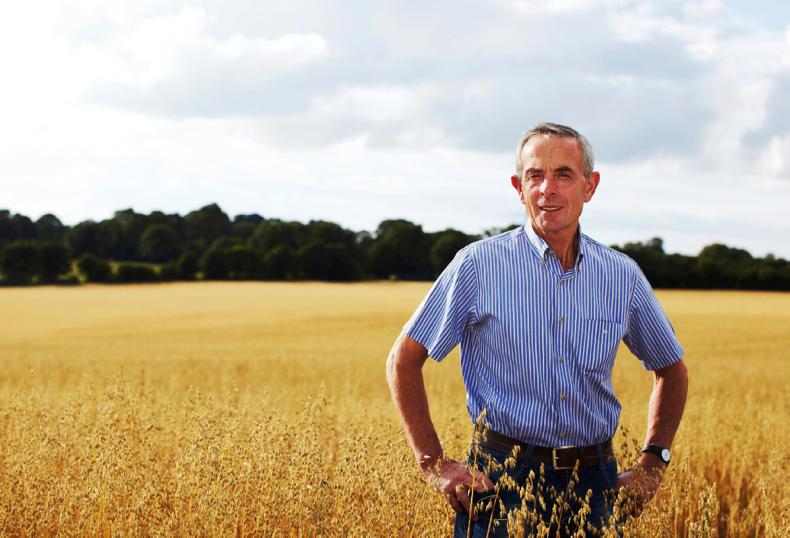
I am on the way out. John is on the way in,” Pat Lalor begins over a cup of tea, as the challenges and triumphs of his 174-year-old family farm begin to be revealed.
Pat and his son John divide half of their time between the 120-hectare farm in Co Westmeath and the other half with their business, Kilbeggan Organic Foods, which was established in 2011.
This year’s targets and successes on the evenly divided winter-sown oats and grassland enterprise are fruitful. With less than six hectares left to cut, Pat reveals the oat crop’s average yield of 6.5t/ha, with moisture levels as low as 12% and an average bushel weight between 53-56kph.
In 1999, Pat made the move to organic cereal farming. Honest and to the point, Pat says: “The reason was to make more money. It wasn’t to save the world or anything like that.
“Some farmers are organic because they like the lifestyle, but they usually have another source of income. I am a full-time commercial organic farmer working to put bread and butter on the table.”
Once ‘in’, the organic licence is only valid for one year and subject to ongoing inspections. These intense but accountable audits on feed, crops, housing, animal health history and soil are welcomed by Pat and John, who feel they are necessary: “That’s what we signed up for. If you’re not prepared to have things up to scratch at all times, then don’t go into it.”
Features of organic farming
Pat compares features of organic with conventional farming: “It is done through a very definite set of regulations, laid down by law. You have to follow those rules and if you don’t you’ll be dumped.”
Changes were made through a two-year conversion period, during which Pat had to practice organically, but remained uncertified. This detox period was tough economically due to a decrease in stock and non-organic payment for organically farmed produce. Having already decreased fertiliser usage in the 1980s, Pat explains: “It just wasn’t paying. We always had farmyard manure so I decided I was better off with less stock and therefore less costs, rather than a whole lot of stock and pushing everything to the limit. In dairying, you may get paid by pushing things closer to the limit but not with dry stock, in my view.”
Veterinary practices are completely regulated. However, disease rates are very low on Ballard farm because of the lower stocking rates.
Animal management remains largely the same as in conventional farming, but organic cereals would require a lot of retraining for Pat: “Because a cow is still a cow. She calves once per year and needs to be fed daily, but as regards growing cereals, it’s a different ball game. You’re on a different planet.”
The ban on chemicals is a big adjustment when converting to organic. Thus, education and upskilling are fundamental to Pat and John’s successful careers. John’s return from Australia in 2015 to the family enterprise was unanticipated for the physiotherapist, who would now dedicate his career to Ballard organic farm. John returned to education, completing a diploma in business development at UCD and has since applied for an MA in organic farming.
“When I began organic farming in ’99, there were very few commercial organic cereal growers. So, I went over to England regularly to field days and seminars to learn the trade,” Pat explains. Like father like son, he too completed a BA in training and education in NUIG, followed by an MA in science at the University of Limerick.
After growing other cereal crops during changeover, Pat soon learned that oats were the most suited crop to organic farming and Irish soil and weather conditions. Along with their ability to inhibit the germination of surrounding weeds, oats have become part of the family business, Kilbeggan Organic Foods.
In his experience, sowing the oats in winter also helps to control weeds, as they go dormant in autumn and don’t awaken until about March, by which time the winter crop has already outgrown them.
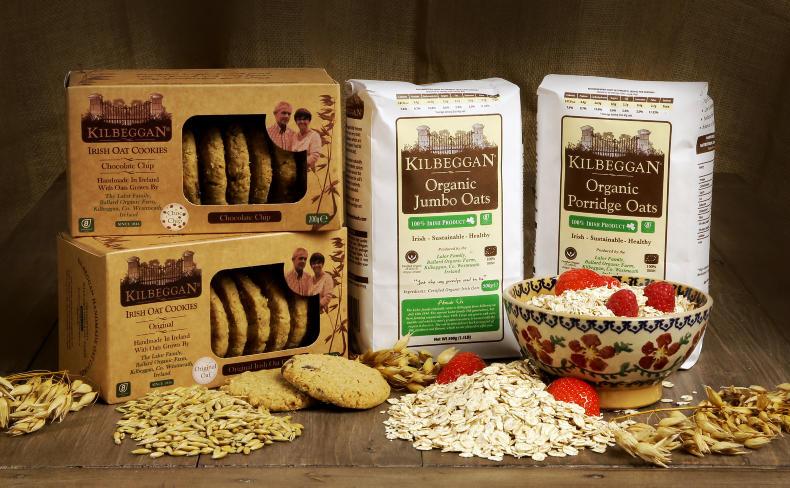
Kilbeggan Organic Food range
Soil management
Soil management is key to John and Pat’s achievements, with crop rotation at the centre of this strategy; two years oats, two years red clover in ryegrass, and then back to oats again. Soil organic matter is currently 6.8% on Ballard Farm. Thus, they recommend prevention over cure.
“Conventional farmers can solve problems in their crops, when they arise, with chemicals. We have to farm in a preventative way, minimising problems. Soil biology is vital – if you have enough micro biology in your soil, they naturally process the required solutions for you,” Pat explains.
Looking back over his career, Pat is glad to support organic produce and the environment. In line with his dad, John says, of the future of Ballard organic farm: “It is more sustainable than conventional farming, but it depends a lot on how you market your produce off the farm.”
Practicing what they preach in Kilbeggan Organic Foods, the pair oversee every step of their business, from drying the grain in their own yard to deciding the design of the porridge packaging. Kilbeggan Organic Foods sells nationwide to an array of customers, independent retailers and chains. The single-origin oat business complements and sustains Pat and John’s farm life.
“Our focus is in adding value to the crop that we are sowing now and that’s what the business does.” This entrepreneurial attitude means Pat and John are always looking for new possibilities for their food range. Although marketing and merchandise were out of their comfort zone, the two are proud to say they did it with a little education and a lot of dedication.
Pat’s advice to potential organic converts is to the point: “It’s a hard grind. There’s no pot of gold at the end of it. It’s you and the soil, that’s it. If you like it. Go for it. End of story.” CL
Find more out more about Kilbeggan organic foods at www.kilbegganorganicfoods.com.
I am on the way out. John is on the way in,” Pat Lalor begins over a cup of tea, as the challenges and triumphs of his 174-year-old family farm begin to be revealed.
Pat and his son John divide half of their time between the 120-hectare farm in Co Westmeath and the other half with their business, Kilbeggan Organic Foods, which was established in 2011.
This year’s targets and successes on the evenly divided winter-sown oats and grassland enterprise are fruitful. With less than six hectares left to cut, Pat reveals the oat crop’s average yield of 6.5t/ha, with moisture levels as low as 12% and an average bushel weight between 53-56kph.
In 1999, Pat made the move to organic cereal farming. Honest and to the point, Pat says: “The reason was to make more money. It wasn’t to save the world or anything like that.
“Some farmers are organic because they like the lifestyle, but they usually have another source of income. I am a full-time commercial organic farmer working to put bread and butter on the table.”
Once ‘in’, the organic licence is only valid for one year and subject to ongoing inspections. These intense but accountable audits on feed, crops, housing, animal health history and soil are welcomed by Pat and John, who feel they are necessary: “That’s what we signed up for. If you’re not prepared to have things up to scratch at all times, then don’t go into it.”
Features of organic farming
Pat compares features of organic with conventional farming: “It is done through a very definite set of regulations, laid down by law. You have to follow those rules and if you don’t you’ll be dumped.”
Changes were made through a two-year conversion period, during which Pat had to practice organically, but remained uncertified. This detox period was tough economically due to a decrease in stock and non-organic payment for organically farmed produce. Having already decreased fertiliser usage in the 1980s, Pat explains: “It just wasn’t paying. We always had farmyard manure so I decided I was better off with less stock and therefore less costs, rather than a whole lot of stock and pushing everything to the limit. In dairying, you may get paid by pushing things closer to the limit but not with dry stock, in my view.”
Veterinary practices are completely regulated. However, disease rates are very low on Ballard farm because of the lower stocking rates.
Animal management remains largely the same as in conventional farming, but organic cereals would require a lot of retraining for Pat: “Because a cow is still a cow. She calves once per year and needs to be fed daily, but as regards growing cereals, it’s a different ball game. You’re on a different planet.”
The ban on chemicals is a big adjustment when converting to organic. Thus, education and upskilling are fundamental to Pat and John’s successful careers. John’s return from Australia in 2015 to the family enterprise was unanticipated for the physiotherapist, who would now dedicate his career to Ballard organic farm. John returned to education, completing a diploma in business development at UCD and has since applied for an MA in organic farming.
“When I began organic farming in ’99, there were very few commercial organic cereal growers. So, I went over to England regularly to field days and seminars to learn the trade,” Pat explains. Like father like son, he too completed a BA in training and education in NUIG, followed by an MA in science at the University of Limerick.
After growing other cereal crops during changeover, Pat soon learned that oats were the most suited crop to organic farming and Irish soil and weather conditions. Along with their ability to inhibit the germination of surrounding weeds, oats have become part of the family business, Kilbeggan Organic Foods.
In his experience, sowing the oats in winter also helps to control weeds, as they go dormant in autumn and don’t awaken until about March, by which time the winter crop has already outgrown them.

Kilbeggan Organic Food range
Soil management
Soil management is key to John and Pat’s achievements, with crop rotation at the centre of this strategy; two years oats, two years red clover in ryegrass, and then back to oats again. Soil organic matter is currently 6.8% on Ballard Farm. Thus, they recommend prevention over cure.
“Conventional farmers can solve problems in their crops, when they arise, with chemicals. We have to farm in a preventative way, minimising problems. Soil biology is vital – if you have enough micro biology in your soil, they naturally process the required solutions for you,” Pat explains.
Looking back over his career, Pat is glad to support organic produce and the environment. In line with his dad, John says, of the future of Ballard organic farm: “It is more sustainable than conventional farming, but it depends a lot on how you market your produce off the farm.”
Practicing what they preach in Kilbeggan Organic Foods, the pair oversee every step of their business, from drying the grain in their own yard to deciding the design of the porridge packaging. Kilbeggan Organic Foods sells nationwide to an array of customers, independent retailers and chains. The single-origin oat business complements and sustains Pat and John’s farm life.
“Our focus is in adding value to the crop that we are sowing now and that’s what the business does.” This entrepreneurial attitude means Pat and John are always looking for new possibilities for their food range. Although marketing and merchandise were out of their comfort zone, the two are proud to say they did it with a little education and a lot of dedication.
Pat’s advice to potential organic converts is to the point: “It’s a hard grind. There’s no pot of gold at the end of it. It’s you and the soil, that’s it. If you like it. Go for it. End of story.” CL
Find more out more about Kilbeggan organic foods at www.kilbegganorganicfoods.com.
SHARING OPTIONS