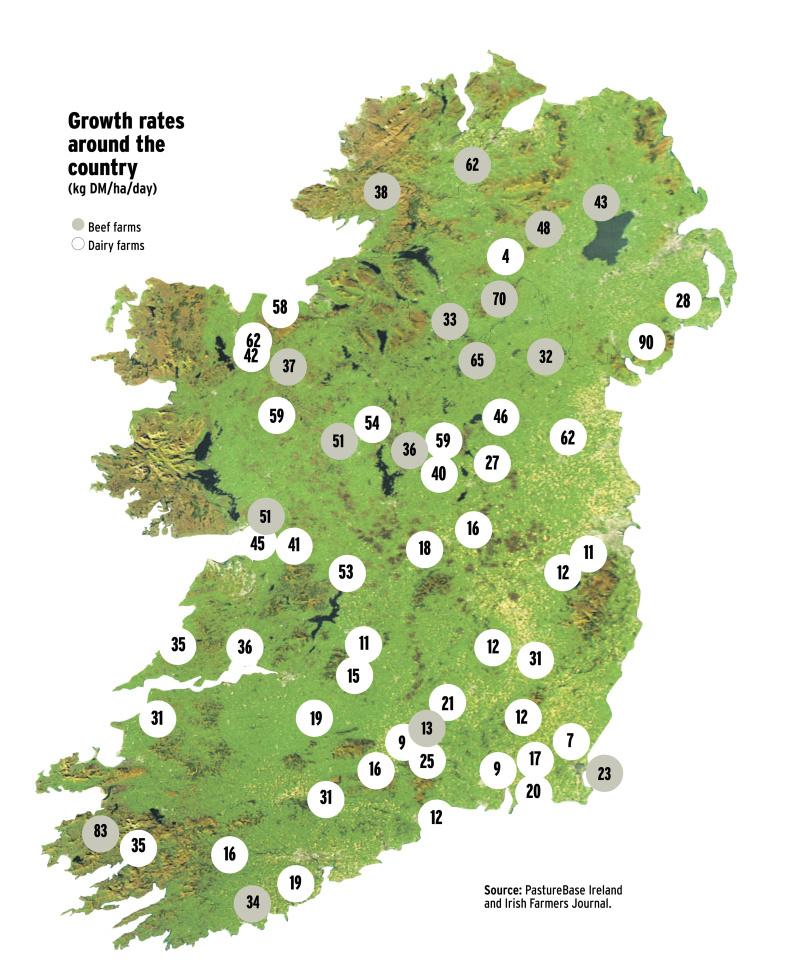
Average grass growth for the country this week is 29kg/day, which is up about 7kg/day on last week. Most of this increase was recorded in the west, or wherever rain fell. But elsewhere, growth rates remain extremely low – in the mid-teens on average.
But change is on the way, with low pressure due to move in from Thursday, hopefully bringing rain with it. It’s critically important to measure what is happening in the fields. Many farmers have stopped measuring grass because they say they know it’s not growing. I think this is a mistake. You need to know what’s happening on your farm. For the drought to be over, you’d need to get at least 15mm of rain followed by soft or mild weather.
If this comes this week, the first thing to do is to slow up cows even further. Go on a 40-or a 50-day rotation length for a week or two. You want to give the farm a chance to recover.
Recovery is an average farm cover of 600 to 700kg/ha or a cover per cow of 200kg. You want to push grass ahead of the cows to maximise the burst of growth to be in a position where the farm will have surplus by mid-September. To achieve this, you need to go really slow after the rain comes. If it means not grazing at all for a week then so be it.
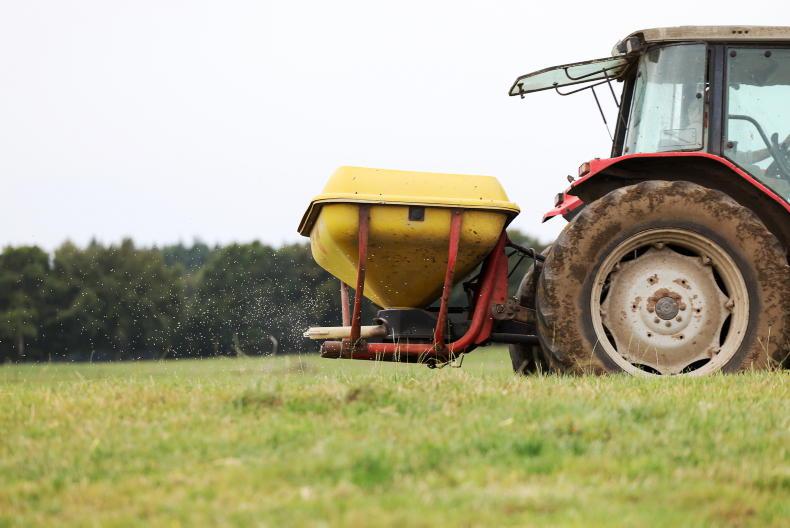
How much and when to spread fertiliser depends on how much has been spread over the last six weeks. If you think there is still around 50 units/acre available to the plant then do not spread any more. Even where nitrogen hasn’t been spread in six weeks, it is not limiting in the soil so the timing of spreading is not critical.
I would hold off for a minimum of 10 days after the rain before spreading again. There is plenty of nitrogen in the soil so spreading more too soon will lead to excess nitrate uptake in the grass which will make it sour and could cause nitrate poisoning.

Average growth rate is up slightly, but still very low in the drought affected parts.There is hope that low pressure will bring rain this week.You need to go on a very long round length after the rain comes to let grass recover.Don’t worry about spreading fertiliser before the rain. Read more
Growth up, but not for everyone
Average grass growth for the country this week is 29kg/day, which is up about 7kg/day on last week. Most of this increase was recorded in the west, or wherever rain fell. But elsewhere, growth rates remain extremely low – in the mid-teens on average.
But change is on the way, with low pressure due to move in from Thursday, hopefully bringing rain with it. It’s critically important to measure what is happening in the fields. Many farmers have stopped measuring grass because they say they know it’s not growing. I think this is a mistake. You need to know what’s happening on your farm. For the drought to be over, you’d need to get at least 15mm of rain followed by soft or mild weather.
If this comes this week, the first thing to do is to slow up cows even further. Go on a 40-or a 50-day rotation length for a week or two. You want to give the farm a chance to recover.
Recovery is an average farm cover of 600 to 700kg/ha or a cover per cow of 200kg. You want to push grass ahead of the cows to maximise the burst of growth to be in a position where the farm will have surplus by mid-September. To achieve this, you need to go really slow after the rain comes. If it means not grazing at all for a week then so be it.
How much and when to spread fertiliser depends on how much has been spread over the last six weeks. If you think there is still around 50 units/acre available to the plant then do not spread any more. Even where nitrogen hasn’t been spread in six weeks, it is not limiting in the soil so the timing of spreading is not critical.
I would hold off for a minimum of 10 days after the rain before spreading again. There is plenty of nitrogen in the soil so spreading more too soon will lead to excess nitrate uptake in the grass which will make it sour and could cause nitrate poisoning.

Average growth rate is up slightly, but still very low in the drought affected parts.There is hope that low pressure will bring rain this week.You need to go on a very long round length after the rain comes to let grass recover.Don’t worry about spreading fertiliser before the rain. Read more
Growth up, but not for everyone
SHARING OPTIONS