


Only 5% of soil samples taken on NI farms participating in Business Development Groups (BDG) have optimal soil nutrient status, visitors to CAFRE Greenmount were told on Tuesday.
Speaking at a sustainable soil management event, Dr Aidan Cushnahan from CAFRE said that 46% of the 1,600 samples taken on BDG farms were either low or very low for pH status and required lime.
He said that silage fields were generally low in potash (K), and overall, 45% of the samples analysed had a sub-optimal potash status. Regarding phosphate (P), 32% of fields were classified as low or very low.
“Land is an expensive resource, yet most soils are not optimal for nutrient status. You need to know what’s in your soil to get the most out of it,” Cushnahan said.
Giving an example of soils that have a pH of 5.5, Cushnahan said that only 77% of nitrogen and potassium and 48% of phosphorus in the soil is available for grass plants.
“A compound fertiliser is costing around £280 a tonne, but up to half of it would not be utilised and would go somewhere else, which is no benefit to you or the environment,” he said.
Listen to "Dry weather helps soil compaction" on Spreaker.
Excess
The issue of soils with excess phosphate, and its impact on water quality, was also discussed, with Cushnahan stating that one-third of soil samples taken on BDG farms were above optimal for this nutrient.
Farmers were urged to make the most of the nutrients available in slurry to address deficiencies in soils, before applying compound fertilisers. In effect, getting the balance right between nutrients coming on to farms, mostly in the form of feed and fertiliser, and nutrients exported off-farm, such as milk, livestock or grain.
Cushnahan said that initial calculations by CAFRE technologists of the overall inputs and outputs of NI agriculture show that there are significant surpluses of phosphate.
He suggested that stricter regulations are possible in the future.
“If this issue is not addressed, it will be addressed for you, be under no illusions,” Cushnahan warned.
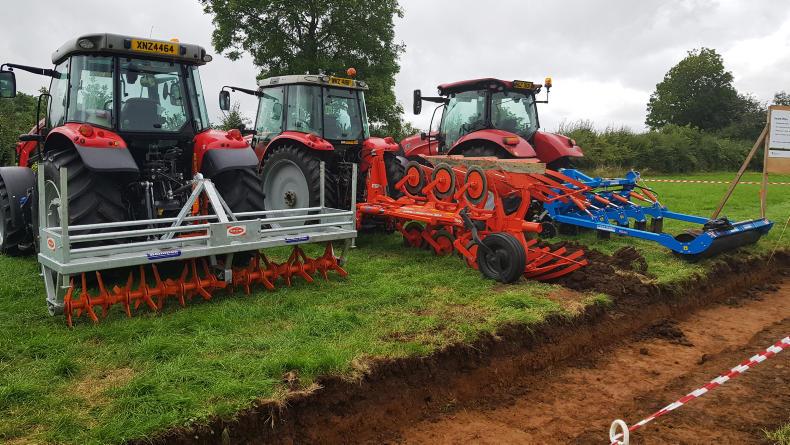
The dry summer has addressed issues with soil compaction on many farms in NI, Brian Irvine from CAFRE said at the sustainable soil management event at Greenmount on Tuesday.
“It has been a one-in-40-year event. It has caused shrinking and drying of clay soils and created cracks and fissures in the ground. It has done a mountain of work for us,” Irvine said.
Cracks
He told visitors to Greenmount that cracks in the ground will let more air into the soil for plant roots and will help with drainage. “This field we are standing in got 80mm of rain on Saturday and coped with it,” Irvine said.
Farmers were urged to try to maintain the current cracks in soils by avoiding poaching or heavy traffic when conditions become wet.



SHARING OPTIONS