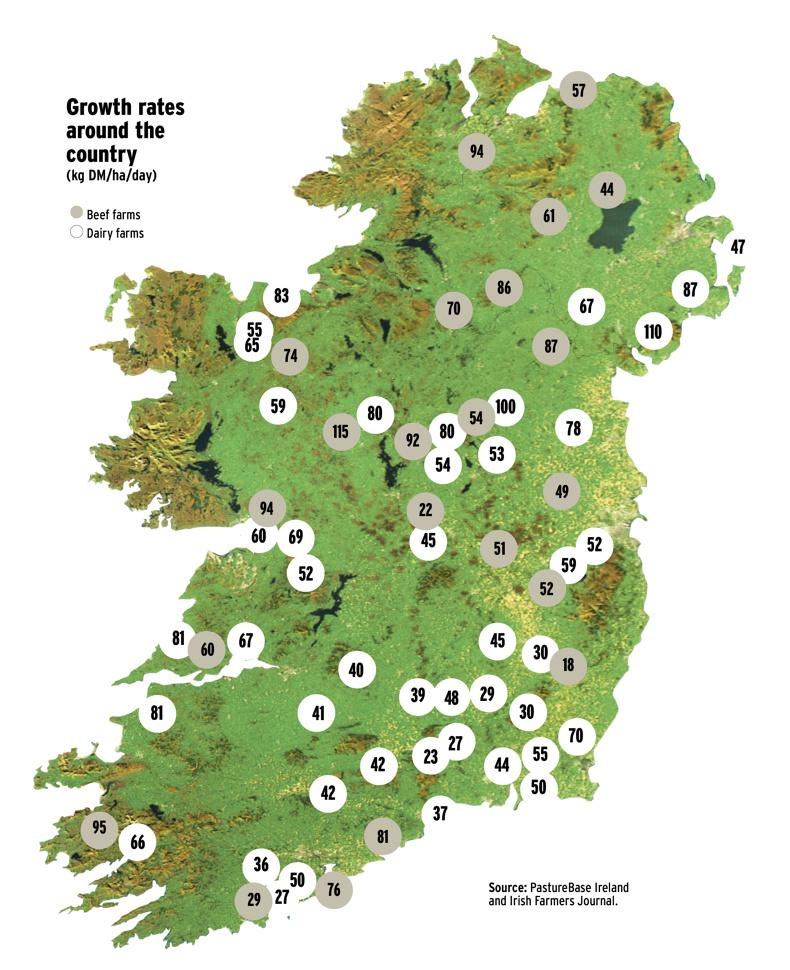
Grass growth is variable. Farmers on heavier land or in areas that got rain are growing well in excess of 55kg/day and will be skipping over paddocks for bales, if they haven’t already done so.
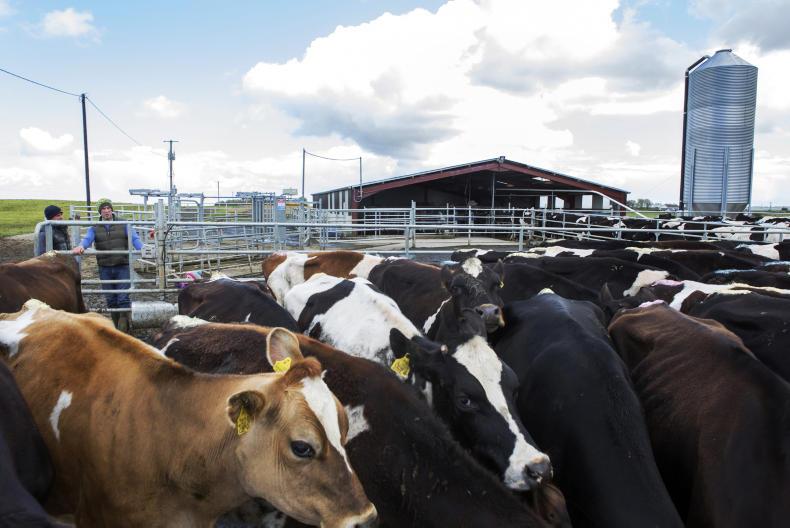
Remember, if continuing to supplement with meal to build silage stocks, you must be on 12-hour breaks and allocating grass pro-rata based on how much meal is being fed.
If feeding 3kg of meal, allocate 3kg less of grass. Most cows eat about 18kg/day but some higher-yielding herds might be eating more. It’s difficult to achieve good residuals if feeding a lot of supplement and not using a strip wire.
Is there merit in carrying a higher cover of grass into autumn this year? It normally doesn’t pay to carry more grass than you need to. Leaf death, tiller mortality, slower regrowth and difficulties grazing in wet weather are all reasons not to build up too much grass too soon. Targeting an average farm cover of 1,100kg/ha to 1,200kg/ha in early September as opposed to late September will grow more grass and should allow for more surplus paddocks to be cut in late September. Normally, high covers grazed or cut in late September take a long time to recover. But higher soil temperatures, more energy in grass after a drought and an extension to the fertiliser spreading deadline should help improve regrowth this year.
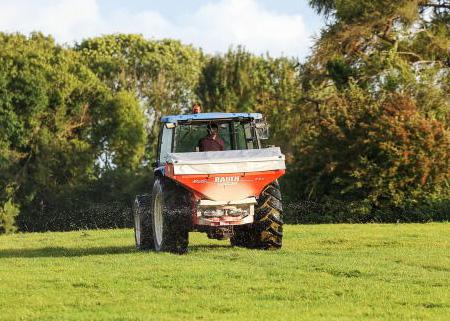
Getting average farm cover up anywhere near 1,000kg/ha is wishful thinking for those back in drought. Matching grass demand with growth is challenging enough. Farms in these areas are growing between 20kg and 30kg a day and need rain badly. On fertiliser, it is good to look at it on a monthly basis as grazing rotations have gone out of synch. Most farms should be spreading 30 units of nitrogen per month. That would be 30 units in August, September and a final application in late September for October.
Read more
Grass +: get measuring for the autumn run-in
Grass growth is variable. Farmers on heavier land or in areas that got rain are growing well in excess of 55kg/day and will be skipping over paddocks for bales, if they haven’t already done so.
Remember, if continuing to supplement with meal to build silage stocks, you must be on 12-hour breaks and allocating grass pro-rata based on how much meal is being fed.
If feeding 3kg of meal, allocate 3kg less of grass. Most cows eat about 18kg/day but some higher-yielding herds might be eating more. It’s difficult to achieve good residuals if feeding a lot of supplement and not using a strip wire.
Is there merit in carrying a higher cover of grass into autumn this year? It normally doesn’t pay to carry more grass than you need to. Leaf death, tiller mortality, slower regrowth and difficulties grazing in wet weather are all reasons not to build up too much grass too soon. Targeting an average farm cover of 1,100kg/ha to 1,200kg/ha in early September as opposed to late September will grow more grass and should allow for more surplus paddocks to be cut in late September. Normally, high covers grazed or cut in late September take a long time to recover. But higher soil temperatures, more energy in grass after a drought and an extension to the fertiliser spreading deadline should help improve regrowth this year.
Getting average farm cover up anywhere near 1,000kg/ha is wishful thinking for those back in drought. Matching grass demand with growth is challenging enough. Farms in these areas are growing between 20kg and 30kg a day and need rain badly. On fertiliser, it is good to look at it on a monthly basis as grazing rotations have gone out of synch. Most farms should be spreading 30 units of nitrogen per month. That would be 30 units in August, September and a final application in late September for October.
Read more
Grass +: get measuring for the autumn run-in








SHARING OPTIONS