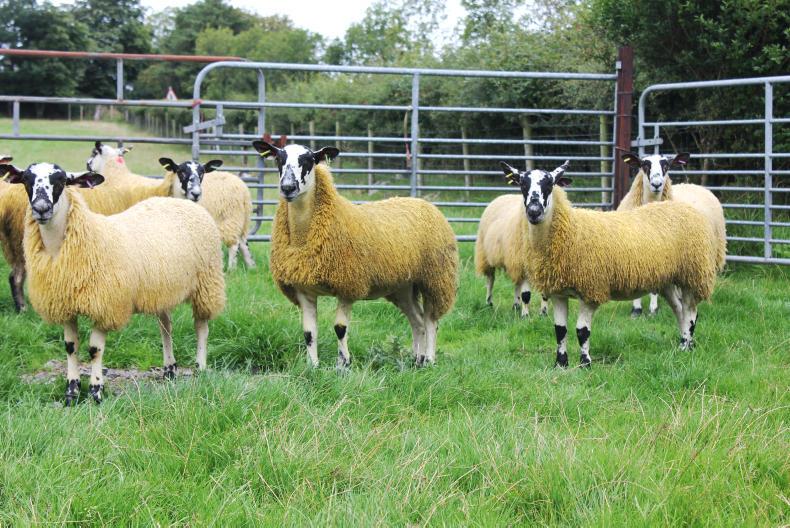
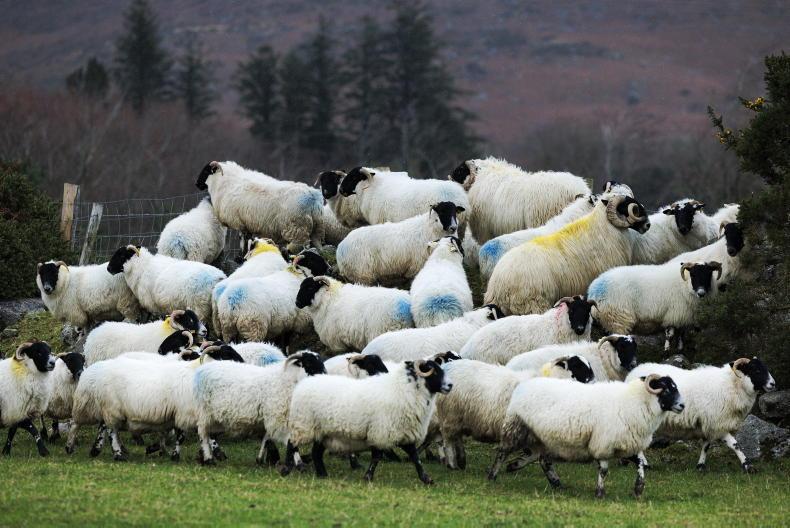
Despite the current fashion for composite breeds of sheep, it appears that the average NI shepherd remains resolutely in favour of the tried and tested. This may be due to the conservative nature of many farmers and their reluctance to change, or perhaps it has more to do with the undeniable fact that most of the newly emerging breeds are just not pleasing enough to the stockman’s eye.
If you’ve recently been shopping for a bit of quality at the breeding sales, it cannot have escaped your notice that either Suffolk x Cheviot type ewes or Mules still rule the roost. With regard to prices, the anecdotal stories of replacements being cheaper are certainly not true at the upper end of the market.
Breeding sheep
My breeding sheep requirements this year centred around a shearling Charollais ram, along with some ewe lambs.
My plan to reduce sheep numbers by 50 head had become less resolute as the weeks passed since lambing finished – and despite my wife reminding me of my solemn promise, I have ended up with just 20 less than last year.
However, I didn’t buy any hoggets and instead have decided to increase the number of ewe lambs put to the ram. This means lambing considerably fewer mature sheep, which should help to spread numbers throughout the lambing period. The increase in ewe lambs has put more pressure on the workload of my Charollais rams,so I had one eye open for a decent additional ram.
I spied a tidy, strong shearling at a local ram fair and bought him for 560 guineas (£588). Not only will he cover the ewe lambs, he’ll also be useful if the older rams decide to take sore feet in the middle of the season.
I bought him from a well-known breeder that I’ve worked with on numerous occasions in the past, so that reinforced my decision.
Homebred
Before buying any ewe lambs, 28 Texel x Mules were picked out from my own flock in the middle of August. They had been tagged at birth and had ticked the essential box of only coming from trouble-free mothers (if there’s such thing in the ovine world).
Only lambs weighing more than 45kg got through to the next round. The final act of selection only concerned those borderline cases, where several of them all weighed around 45kg.
This is when good old-fashioned prejudice rose to the surface and we chose the best looking. I realise that beauty is in the eye of the beholder, but I definitely favour anything that leans heavily toward the more extreme Mule characteristics.
I cannot claim that they will make better breeding sheep than the ‘plainer’ animals, but it’s my party and I can play whatever game I choose.
Mule
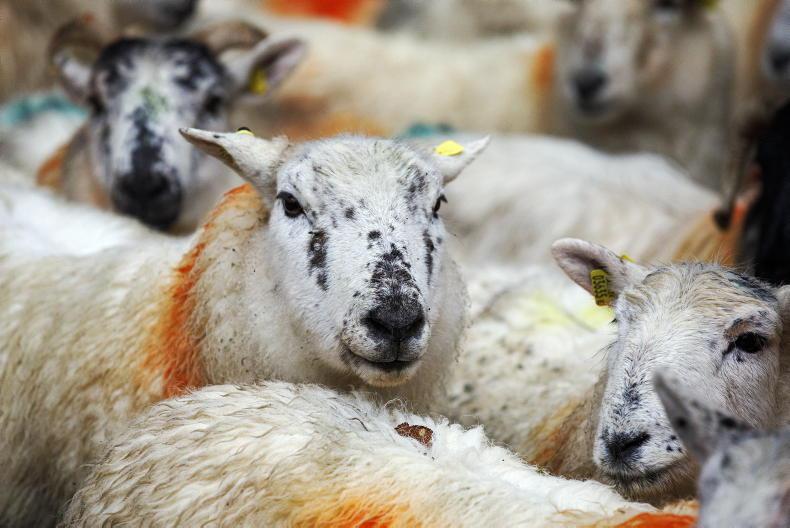
I then took whimsical decision-making to a whole new level and bought Mule ewe lambs.
With no knowledge of their parentage, sibling status, level of nutrition or disease history, I came home from the main Mule sale in Ballymena with 20 good-looking lambs.
This is the opposite of my selection process for homebred stock and I really cannot offer any excuses. They cost £132 apiece. They may not last as long as the half Texels and won’t make as much in the fat ring when sold as culls. But despite this list of negatives, I am absolutely delighted with my purchases. I consider them drop-dead gorgeous.
Perhaps it proves the point that I am someone with a foot unashamedly in two camps. Part of me likes to farm with my head and part of me likes to farm with my heart. A sensible balance of these two body parts may not be such a bad thing.
Read more
Watch: lessons from the 2018 lambing season
Farmer Writes: rearing a politically correct pullet
Despite the current fashion for composite breeds of sheep, it appears that the average NI shepherd remains resolutely in favour of the tried and tested. This may be due to the conservative nature of many farmers and their reluctance to change, or perhaps it has more to do with the undeniable fact that most of the newly emerging breeds are just not pleasing enough to the stockman’s eye.
If you’ve recently been shopping for a bit of quality at the breeding sales, it cannot have escaped your notice that either Suffolk x Cheviot type ewes or Mules still rule the roost. With regard to prices, the anecdotal stories of replacements being cheaper are certainly not true at the upper end of the market.
Breeding sheep
My breeding sheep requirements this year centred around a shearling Charollais ram, along with some ewe lambs.
My plan to reduce sheep numbers by 50 head had become less resolute as the weeks passed since lambing finished – and despite my wife reminding me of my solemn promise, I have ended up with just 20 less than last year.
However, I didn’t buy any hoggets and instead have decided to increase the number of ewe lambs put to the ram. This means lambing considerably fewer mature sheep, which should help to spread numbers throughout the lambing period. The increase in ewe lambs has put more pressure on the workload of my Charollais rams,so I had one eye open for a decent additional ram.
I spied a tidy, strong shearling at a local ram fair and bought him for 560 guineas (£588). Not only will he cover the ewe lambs, he’ll also be useful if the older rams decide to take sore feet in the middle of the season.
I bought him from a well-known breeder that I’ve worked with on numerous occasions in the past, so that reinforced my decision.
Homebred
Before buying any ewe lambs, 28 Texel x Mules were picked out from my own flock in the middle of August. They had been tagged at birth and had ticked the essential box of only coming from trouble-free mothers (if there’s such thing in the ovine world).
Only lambs weighing more than 45kg got through to the next round. The final act of selection only concerned those borderline cases, where several of them all weighed around 45kg.
This is when good old-fashioned prejudice rose to the surface and we chose the best looking. I realise that beauty is in the eye of the beholder, but I definitely favour anything that leans heavily toward the more extreme Mule characteristics.
I cannot claim that they will make better breeding sheep than the ‘plainer’ animals, but it’s my party and I can play whatever game I choose.
Mule
I then took whimsical decision-making to a whole new level and bought Mule ewe lambs.
With no knowledge of their parentage, sibling status, level of nutrition or disease history, I came home from the main Mule sale in Ballymena with 20 good-looking lambs.
This is the opposite of my selection process for homebred stock and I really cannot offer any excuses. They cost £132 apiece. They may not last as long as the half Texels and won’t make as much in the fat ring when sold as culls. But despite this list of negatives, I am absolutely delighted with my purchases. I consider them drop-dead gorgeous.
Perhaps it proves the point that I am someone with a foot unashamedly in two camps. Part of me likes to farm with my head and part of me likes to farm with my heart. A sensible balance of these two body parts may not be such a bad thing.
Read more
Watch: lessons from the 2018 lambing season
Farmer Writes: rearing a politically correct pullet






SHARING OPTIONS