The nerine lily has a remarkable effect on any garden in which it is grown. The lively neon-pink flowers lift the area around them, displaying an iridescence that is lively and eye-catching, and offers a counterpoint to the yellow, orange and red of the autumn leaf colours. The lily-like flowers are carried at the top of strong green stems that do not give up until flowering is a long time finished.
Each individual flower is carried on a slender (though robust) flower stem, creating an explosion of the frilled petals that lend a delightful jauntiness.
The best time to look at them for electric neon-pink colour is towards dusk with a red-sky in the west – unforgettable.
The bulbs are usually quite exposed on the surface, as the bulbs like to be, pushing each other half-way out of the ground. But then, they are usually only seen in gardens in the milder parts of the country, and frost is not so bad in those places.
It can be grown even in cold areas with a cover of coarse gravel in winter, and it has been around for a long time. In the 17th century, it was named Nerine sarniensis, meaning the nerine from Guernsey. It had been found growing on that island, washed up after a ship sailing from the Far East to Holland was wrecked. It is native to South Africa and ships took it on board at the Cape when they were being re-provisioned for the final leg of their long voyage.
There are several species of nerine lily and immense variation within the wild populations. Some species, such as Nerine sarniensis, are predominantly red in many shades from deep red to light pink, rose and brilliant scarlet.
But the commonly grown kind is Nerine bowdenii, mostly in shades of pink, and it is a form of this species that is widely grown in Europe, including Ireland, and it is considered the hardiest. There are others, named varieties in many shades of red and orange. However, these are not robust enough for outdoor use and are normally grown only in pots as greenhouse specimens.
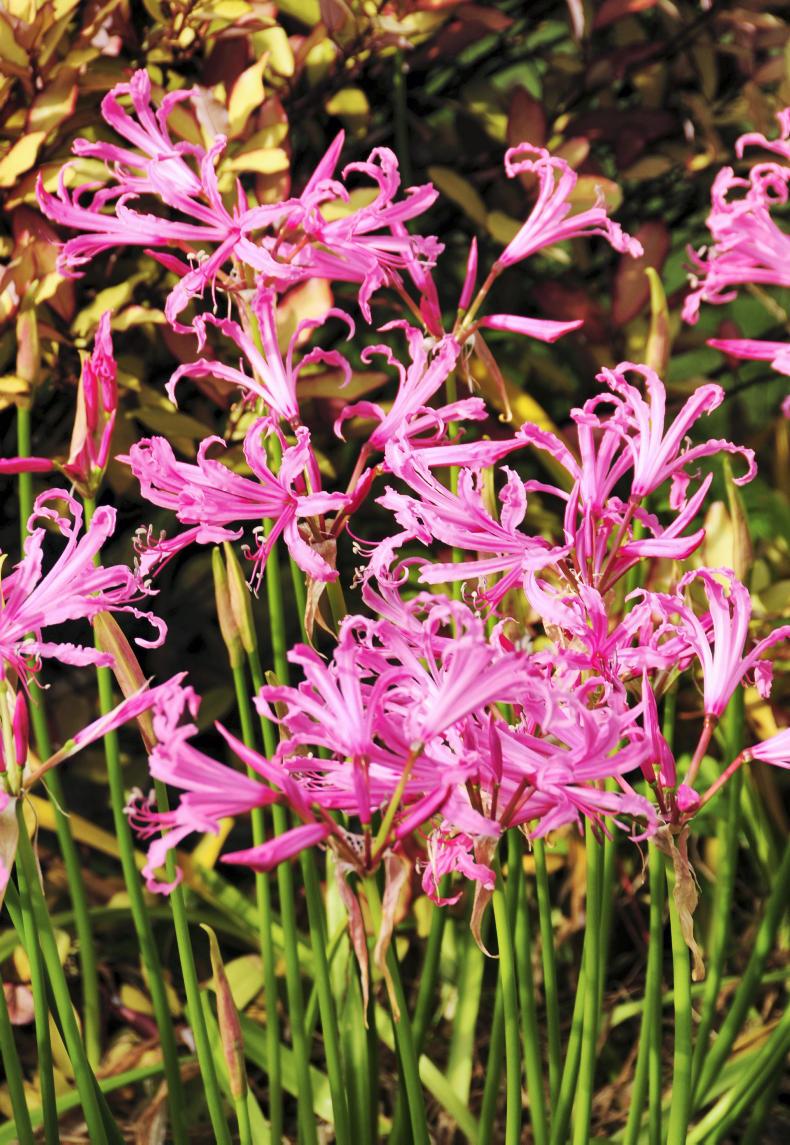
Pink nerine.
The flowers are really slow to develop and the bulbs need to be of a certain size, about the size of a small onion, elongated.
The rounded flower head carries about 10 individual flowers and these open in succession in October, a brilliant pink with a glistening shiny surface to the petals. The individual petals are frilled or ruffled along the edge, curled back.
The flowers open just as the leaves finally turn yellow and rot away. The flowers occasionally carry a seed berry or two, though not many and young bulbs splitting off is the main means of increase. The flower stems can be cut away after flowering, but they are not unsightly and the plant can re-absorb most of the nutrients back into the bulb if the flower stems are left in place.
When planting nerines in the garden, choose a spot near the front of a bed or border.
The flowers are only knee-high and are ideal for the front of a bed where they can be seen to best advantage. When the flowers fade and the narrow strappy leaves appear, they make a very pretty arching ground cover that is low-growing and inconspicuous.
It is best to plant the bulbs as a group and to locate a few groups so that they play off each other, a remarkable effect on a sunny day. Choose a sunny spot in well-drained soil and avoid any disturbance over the years.
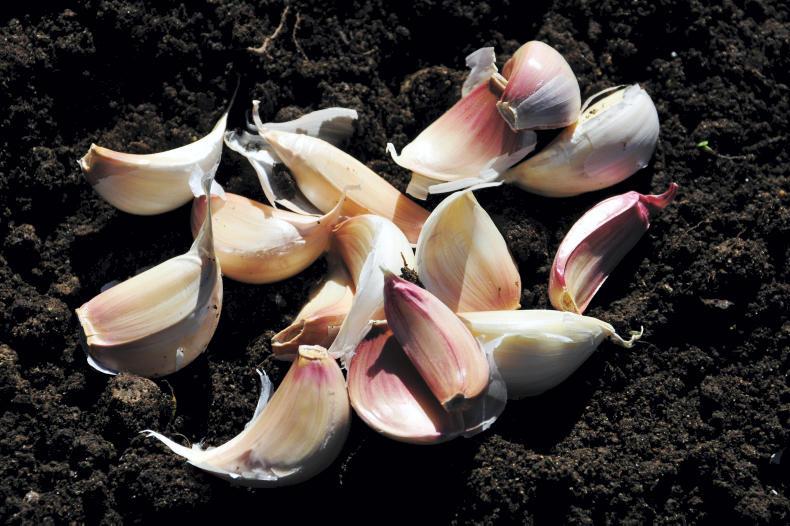
Garlic.
Plant garlic now
Some years ago, garlic was a rare sight in gardens, but it is now a popular herb to grow, and it is easy. The freshly harvested bulbs have much better flavour and they can be used as needed, and the rest stored for winter. It keeps well in a cool dry place. Garlic can be planted in autumn or spring because it is hardy and the shoots that appear on the over-wintered plants are not damaged except by very severe frost.
Pick a sheltered, warm spot with good fertile soil, well-fed with compost and well-drained, but not too dry either. Make rows about 30cm apart and 20cm between the cloves, which are the bulbils broken out of the bulb of garlic. Set them about 8cm deep on their side or upright, cover and mark the rows. Keep the plants weed-free until harvest.
Trees, shrubs and roses
Preparations for late-autumn tree planting could be made now, controlling existing grass and weeds. Because of the good growing year, many rambler roses have a few late flowers and pruning could be delayed to get the benefit of these. Evergreen shrubs could be mowed now. Hedges can still clipped, do not leave evergreens longer.
Fruit, vegetables and herbs
Tidy up and remove old crops and weeds. Plant spring cabbage into ground where early potatoes were lifted. No fertiliser is needed because the potatoes would have been adequately fed. Bring pumpkins under cover if the weather is not good. Lift carrots if there is damage by slugs. Potatoes for storing can be lifted.
Lawns
Lawns are in good condition after recovering well from the drought, and some autumn lawn fertiliser or a low-N, high K product could be applied in the coming weeks to strengthen the grass before winter. If moss is also growing, sulphate of iron could be applied now to knock back the moss and give the grass a chance to grow.
Flowers
Plant spring bulbs as soon as possible. Conditions are ideal with heat in the soil and adequate moisture to encourage rooting immediately. Hanging baskets could be kept going a little longer with some liquid feeding. Hardy annual flower seeds can still be sown but do not delay more than a week. Divide perennials that have spread too far.
Greenhouse and house plants
Be careful not to over-water from now on. Water should be given only on the basis of need and soil and compost should be just moist, not wet. Ventilate on dry, breezy days to air the greenhouse. Remove leaves and debris from the floor of the green house. Make sure house plants are not standing in water in a saucer.
The nerine lily has a remarkable effect on any garden in which it is grown. The lively neon-pink flowers lift the area around them, displaying an iridescence that is lively and eye-catching, and offers a counterpoint to the yellow, orange and red of the autumn leaf colours. The lily-like flowers are carried at the top of strong green stems that do not give up until flowering is a long time finished.
Each individual flower is carried on a slender (though robust) flower stem, creating an explosion of the frilled petals that lend a delightful jauntiness.
The best time to look at them for electric neon-pink colour is towards dusk with a red-sky in the west – unforgettable.
The bulbs are usually quite exposed on the surface, as the bulbs like to be, pushing each other half-way out of the ground. But then, they are usually only seen in gardens in the milder parts of the country, and frost is not so bad in those places.
It can be grown even in cold areas with a cover of coarse gravel in winter, and it has been around for a long time. In the 17th century, it was named Nerine sarniensis, meaning the nerine from Guernsey. It had been found growing on that island, washed up after a ship sailing from the Far East to Holland was wrecked. It is native to South Africa and ships took it on board at the Cape when they were being re-provisioned for the final leg of their long voyage.
There are several species of nerine lily and immense variation within the wild populations. Some species, such as Nerine sarniensis, are predominantly red in many shades from deep red to light pink, rose and brilliant scarlet.
But the commonly grown kind is Nerine bowdenii, mostly in shades of pink, and it is a form of this species that is widely grown in Europe, including Ireland, and it is considered the hardiest. There are others, named varieties in many shades of red and orange. However, these are not robust enough for outdoor use and are normally grown only in pots as greenhouse specimens.
Pink nerine.
The flowers are really slow to develop and the bulbs need to be of a certain size, about the size of a small onion, elongated.
The rounded flower head carries about 10 individual flowers and these open in succession in October, a brilliant pink with a glistening shiny surface to the petals. The individual petals are frilled or ruffled along the edge, curled back.
The flowers open just as the leaves finally turn yellow and rot away. The flowers occasionally carry a seed berry or two, though not many and young bulbs splitting off is the main means of increase. The flower stems can be cut away after flowering, but they are not unsightly and the plant can re-absorb most of the nutrients back into the bulb if the flower stems are left in place.
When planting nerines in the garden, choose a spot near the front of a bed or border.
The flowers are only knee-high and are ideal for the front of a bed where they can be seen to best advantage. When the flowers fade and the narrow strappy leaves appear, they make a very pretty arching ground cover that is low-growing and inconspicuous.
It is best to plant the bulbs as a group and to locate a few groups so that they play off each other, a remarkable effect on a sunny day. Choose a sunny spot in well-drained soil and avoid any disturbance over the years.
Garlic.
Plant garlic now
Some years ago, garlic was a rare sight in gardens, but it is now a popular herb to grow, and it is easy. The freshly harvested bulbs have much better flavour and they can be used as needed, and the rest stored for winter. It keeps well in a cool dry place. Garlic can be planted in autumn or spring because it is hardy and the shoots that appear on the over-wintered plants are not damaged except by very severe frost.
Pick a sheltered, warm spot with good fertile soil, well-fed with compost and well-drained, but not too dry either. Make rows about 30cm apart and 20cm between the cloves, which are the bulbils broken out of the bulb of garlic. Set them about 8cm deep on their side or upright, cover and mark the rows. Keep the plants weed-free until harvest.
Trees, shrubs and roses
Preparations for late-autumn tree planting could be made now, controlling existing grass and weeds. Because of the good growing year, many rambler roses have a few late flowers and pruning could be delayed to get the benefit of these. Evergreen shrubs could be mowed now. Hedges can still clipped, do not leave evergreens longer.
Fruit, vegetables and herbs
Tidy up and remove old crops and weeds. Plant spring cabbage into ground where early potatoes were lifted. No fertiliser is needed because the potatoes would have been adequately fed. Bring pumpkins under cover if the weather is not good. Lift carrots if there is damage by slugs. Potatoes for storing can be lifted.
Lawns
Lawns are in good condition after recovering well from the drought, and some autumn lawn fertiliser or a low-N, high K product could be applied in the coming weeks to strengthen the grass before winter. If moss is also growing, sulphate of iron could be applied now to knock back the moss and give the grass a chance to grow.
Flowers
Plant spring bulbs as soon as possible. Conditions are ideal with heat in the soil and adequate moisture to encourage rooting immediately. Hanging baskets could be kept going a little longer with some liquid feeding. Hardy annual flower seeds can still be sown but do not delay more than a week. Divide perennials that have spread too far.
Greenhouse and house plants
Be careful not to over-water from now on. Water should be given only on the basis of need and soil and compost should be just moist, not wet. Ventilate on dry, breezy days to air the greenhouse. Remove leaves and debris from the floor of the green house. Make sure house plants are not standing in water in a saucer.






SHARING OPTIONS